
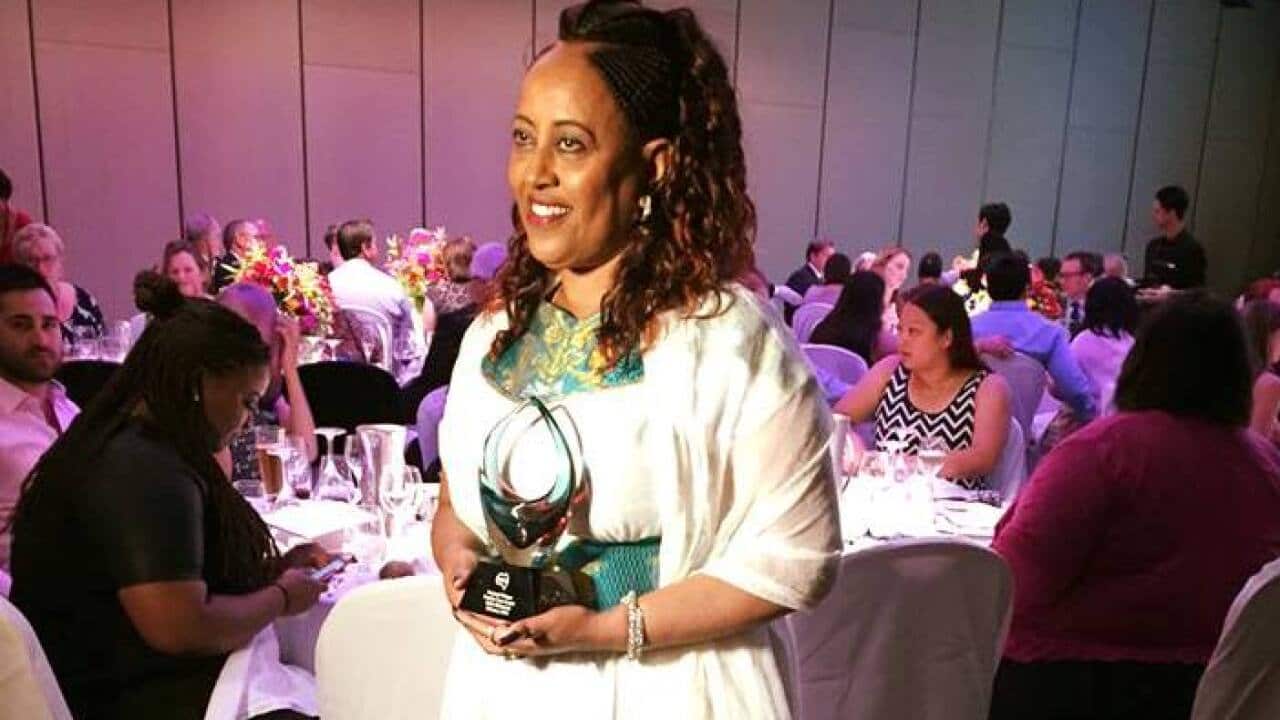
Mulu Mihretab is an example of the deep resilience seen in many refugees. Pregnant, she migrated with from Eritrea through Sudan to New Zealand in 2000 with five children, then once her sixth child was born with a profound disability, she struggled to find the support and acceptance she needed from government and community.
She subsequently navigated a divorce from her husband, and raised her disabled daughter Heaven along with her other kids on her own in New Zealand and Australia.
Doctors had told her Heaven would not survive, but thanks to Mulu’s loving attendance, she still lives today, and Mulu has been awarded for her dedicated work as a carer.
“Being in a new country with no English language to communicate, plus family separation while I was pregnant with my daughter was very hard-hitting,” Mulu tells SBS Tigrinya.
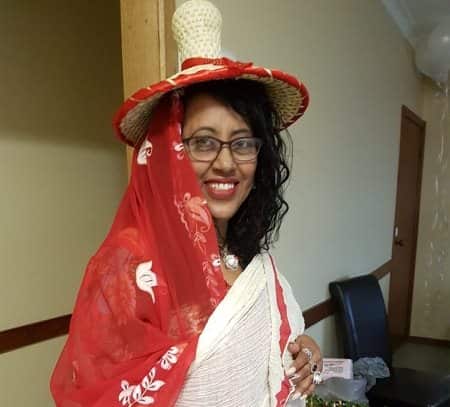
She prefers not to talk about the reasons for her divorce from her husband during those hard times. But she knew, as a single mother, there would be a difficult time ahead of her life when, on top of her five kids, her sixth child Heaven was born severely disabled with severe cerebral palsy, amongst other issues.
“When I was going to New Zealand, I thought I was going to a green pasture where I will enjoy life with my family, but it turned out to be an upside down,” she says of her separation and the immediate need to care for her sixth child.
The Eritrean and Ethiopian community in Oakland, New Zealand was very small, and Mulu says she did not receive much support from them. Indeed, she says she was judged harshly in the community for her divorce and daughter.
“After I separated from my husband, there came a lot of rumours and gossips among the small community of us about my divorce cases and my disabled daughter.”
She received little support from News Zealand’s government too.
“I could not communicate my problems properly with the authorities there and was denied all the support I needed. I had to depend on charity organisations and the Catholic Church for day-to-day expenses.”
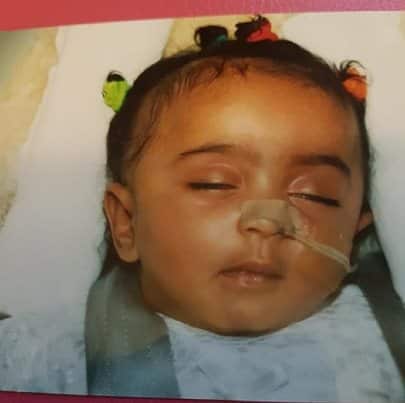
Another traumatic issue Mulu had to deal with was being told by the doctors that her disabled daughter was not likely to live for very long.
“I grew up in a culture where no one should be told the date of the passing of loved ones,” she says. “It was painful to be told that my daughter’s life would end in a matter of days. When I heard this, I would not let my daughter off my lap for days without sleep and I would try to feed her as much as possible before the final day the doctor’s had expected would arrive.”
These pressures that came from cultural shock, lack of financial and emotional support and community isolation all impacted deeply on Mulu’s wellbeing. As such, she began to seek other places to live and raise her kids in peace.
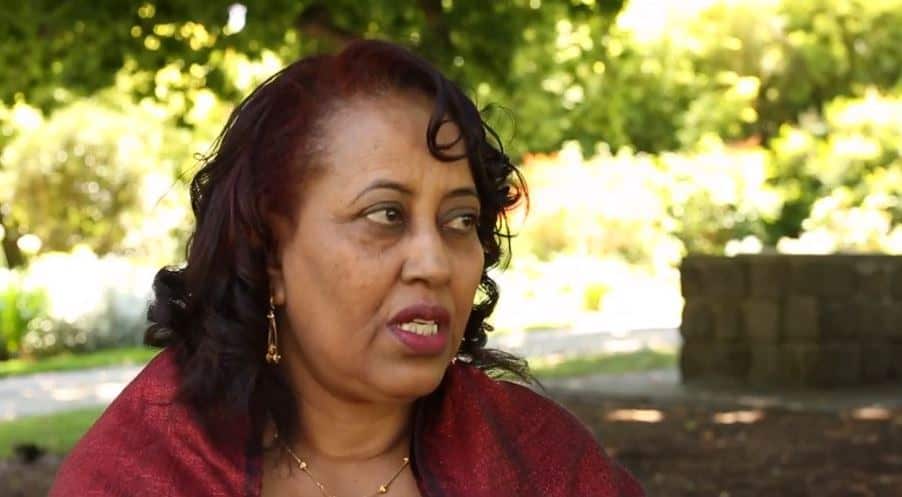
In 2004, she came to Melbourne seeking opportunities for her kids’ schooling and medical care for her daughter Heaven.
“I then decided that I had to leave all the troubles that I had in NZ behind and start a new life in Australia,” she says.
Mulu spent more than one month living with Eritrean families in Melbourne before she settled into a new home. As a New Zealand resident, she was told that the Australian government would not support the costs of her disabled daughter.
The family also had access to just $260 per fortnight from Centrelink despite Mulu’s extensive caring responsibilities and expenses. Mulu and her family were declined Australian permanent residency status in 2011, yet she could not return back to New Zealand as her daughter’s health and lung function were deteriorating.
“I sustained my family’s life by getting assistance from charity organisations and food coupons. As long as my kids were going to school and Heaven was cared for, I did not mind queuing with homeless for daily bread.”
After a long fight for residency in Australia was successful, Mulu’s family was recently granted citizenship recently and has been receiving caring support from the NDIS.
Mulu had a caseworker in Baptcare’s Family Services named Rose Indomenico, who has since passed away, but described her own experience with the mother of seven on the Baptcare website:
“Mulu has had an incredibly challenging life since Heaven was born. I have worked with Mulu and her family for over nine years and she continues to inspire me with her positivity and dedication. Heaven requires nursing level medical care and Mulu has effortlessly been able to learn the skills to be able to continue to care for Heaven at home.”
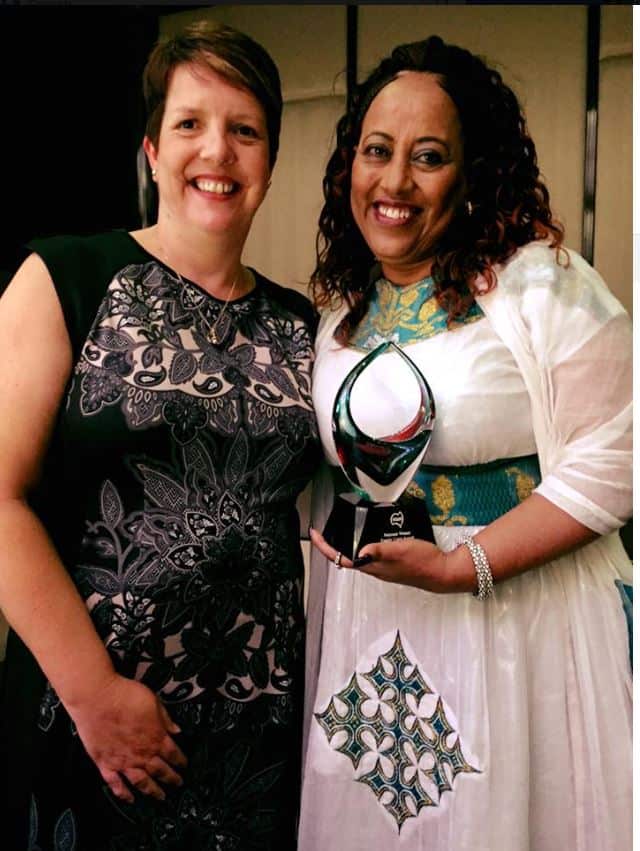
In 2016, the late Ms Indomenico nominated Mulu for the Victorian Family Carer of the Year Award, and Mulu was subsequently awarded both Victorian and National Carer Awards that year.
She is grateful for such awards but Mulu says the greatest victory for her is the success of her children. Four of her children have now graduated from university with Bachelor’s degrees, two of which have two degrees each.
“I am the luckiest person,” she says. “I am now supported by the NDIS and my kids are supporting me. We see Heaven as the centre of our house and will always feel happy caring her for the rest of her life.”




