
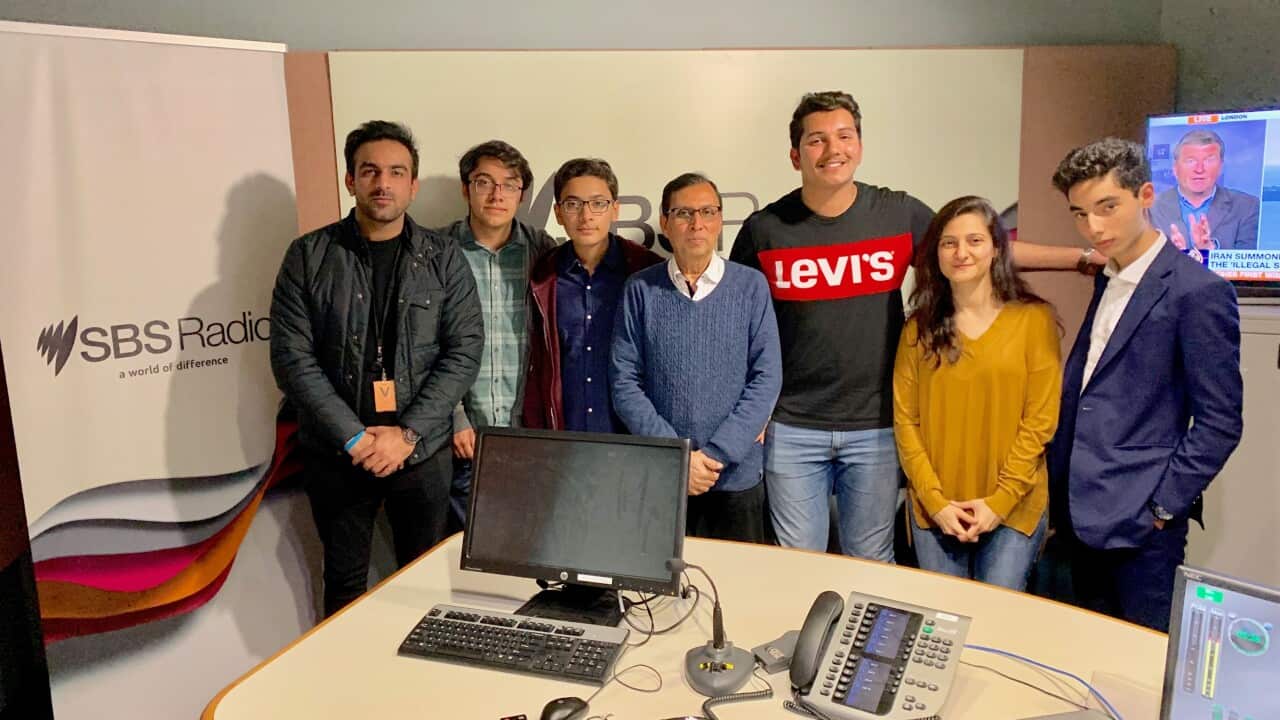

Team IVY Super League is the only team from Pakistan that participated at the First LEGO League Championship at Macquarie University Sydney.
Students from over eighty countries participated in the First Lego League Championship held in Sydney at the Macquarie University.
The 'Team Ivy Super League' represented Pakistan and comprised of students from various schools in the country.
"We have students from various backgrounds including science, business and IT in the team." Coach of the team, Amna Askari told SBS Urdu.
"But before coming to Australia for the event, the team had to participate in several regional matches before qualifying for the tournament in Sydney.
“Initially we participated in the regional championship in Pakistan. Then there was another round in which sixty-two teams from all over the country took part.
“We won the National Championship in the capital city of Pakistan, Islamabad.”
The tournament included several challenges for the team to overcome and win the tournament.
According to the event organiser First Australia, the robot of a team had to operate on pre-programmed instructions, and complete as many tasks as possible in only 2 minutes and 30 seconds during the challenge. The teams were also required to exhibit teamwork and cooperation.
“This year the theme was Space and Science and also required a researched project." Amna said.
"We identified a possible problem for astronauts and proposed and solution.
“Robotics education in the country at school level is very limited but we worked to develop a team that could participate in the First Lego League tournament."
Although the team was not able to win the tournament, Amna said that it was a great learning experience for the young minds.
“Not only in Robotics, but the students have developed several skills including critical thinking and team-work. They experienced different elements that children usually experience in colleges.
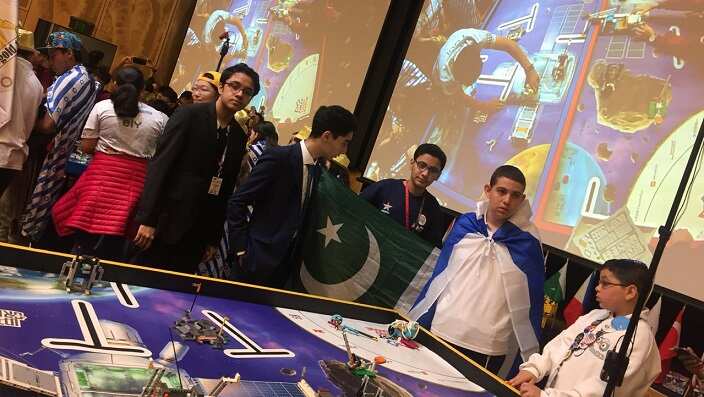
Team member, Ahad Imran who focused on the physical side of the project says it was a great learning experience.
“Robot is based on hardware and software. For a great project to run efficiently, it is important that the hardware must be accessible and compatible with the software.
Team member Abdullah Khan worked on the research project. He said that he tried to work on the mental health issues of the astronauts and suggested a solution.
But he said that the learning methods are different in Australia.
“Compared to what we learn at our school, we witnessed a lot of team building here.
“In Australia, the team is considered a family, so you not only work but also enjoy what you are doing.”