

Housing affordability is a big problem for many in Australia's cities, but especially for young people. The high cost of living and the erosion of mid-skilled jobs has left young Australians calling for help in next week's federal Budget ((tue)) so they might set themselves up for the future.
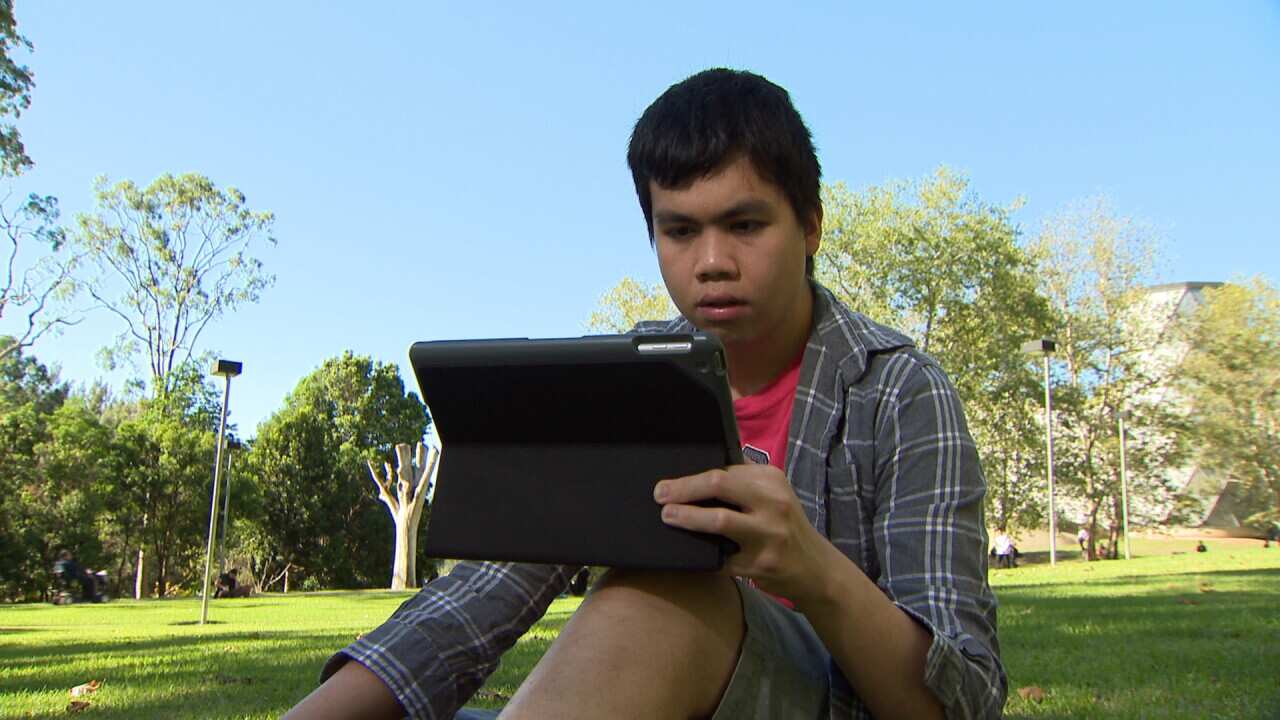
Jose Francisco moved from Newcastle to Sydney to study for a university degree in Commerce and Science.
He says the struggle to manage financially is very real.
"The rent, food and other expenses are very expensive, especially if no-one is supporting you.
Mr Francisco receives government assistance to pay his rent and has a casual job he juggles with the demands of his double degree.
Like most young Australians, his dream is to graduate, build a career and buy a home.
That dream might now be a bit closer.
Australian capital-city house prices fell 0.2 per cent in March, the fifth consecutive monthly price drop, bringing the annual growth rate to 0.8 per cent.
Last May, it was 11.4 per cent.
Yet, despite that respite, Youth Action's Katie Acheson says the government needs to do more to help young people enter the housing market.
"It is the government's job to create the conditions to make housing affordable, and so what we should be seeing in the budget is some really great leadership from the government to try to tackle housing affordability in Australia."
But the independent Grattan Institute's John Daley says the federal government cannot do much.
He says the fundamental issue is a lack of supply to meet the housing demand and state governments need to take responsibility.
"If we're serious about affordability issues, it's the state governments and, particularly, their ability to change planning laws that have the really big influence over outcomes."
Labor is already promising a complete review of government allowances if it wins the next federal election.
John Daley says an area where the federal government could improve the situation is by increasing Newstart allowances.
"For young people, some of whom are struggling to get a job, they face a very uncertain future. If they're unlucky, if they don't get a job, they know that, financially, they are likely to be in a very precarious position. And so looking at Newstart and essentially increasing that rate is something the Commonwealth should probably be looking at."
While rising property prices and the accumulation of HECS debt are big enough problems for young people, there is also the issue of the ever-changing jobs market.
The director of research at the Melbourne-bassed Demographics Group, Simon Kuestenmacher, says it means graduates need to be flexible and adaptable to find work.
"It's absolutely crucial for young people to choose a degree, whether it be in TAFE or university, that actually leads somewhere, where you can see there is a progression in the career steps that you can take, and, as a general rule, most university courses should provide that. Most jobs in business don't require the specific university education beforehand, but they simply require you to be knowledgeable enough."
Census data shows middle-skilled jobs in Australia have grown by only 1 per cent in the five years from 2011 to 2016.
In contrast, highly skilled jobs have grown by 46 per cent in the same period and lower-skilled jobs by 18 per cent.
Jose Francisco says he knows what his dream jobs would be.
"My first preference would be working in the media-and-communications sector. The second option would be working in a corporate company. I'd prefer to work in the aviation industry."
Mời vào phần audio để nghe toàn bộ nội dung
Thêm thông tin và cập nhật Like SBS Vietnamese Facebook
Nghe SBS Radio bằng tiếng Việt mỗi tối lúc 7pm tại sbs.com.au/Vietnamese