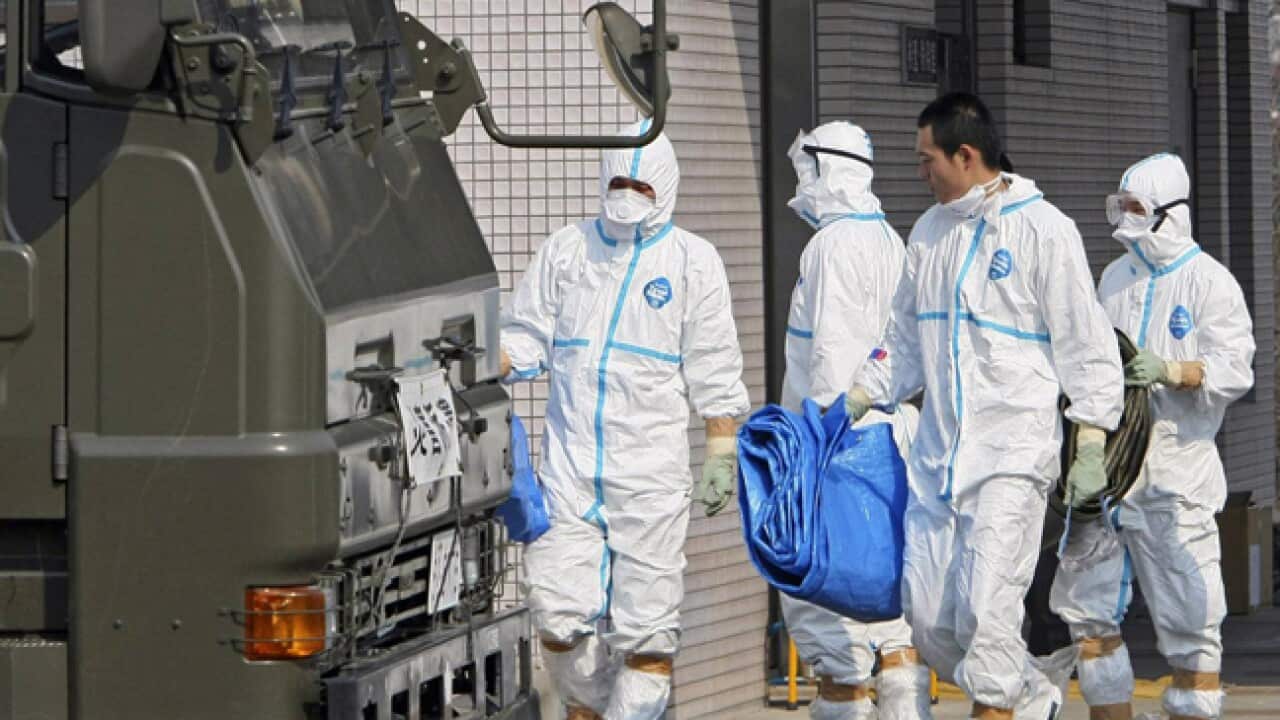
Up to 1,000 bodies of victims of Japan's quake and tsunami remain uncollected in the exclusion zone around a stricken nuclear plant because of radiation fears, a report said.
Citing police sources, Kyodo News said that authorities had intended to transport the bodies outside the 20-kilometre evacuation zone imposed around the Fukushima power station, but were reconsidering the plan.
The bodies had been "exposed to high levels of radiation after death", the report quoted a source as saying, adding elevated levels of radioactivity were found Sunday on the body of a victim about five kilometres from the plant.
News that makes sense
Your trusted source for staying up-to-date with the world around you. Get free daily news updates and analysis, straight to your inbox.
Local police decided not to retrieve that body because of the radiation, the report said.
Over 28,000 people have been confirmed dead or listed as missing since the twin natural disasters which hit on March 11, devastating the northeast coast and crippling the atomic plant, which has since been leaking radiation.
Workers have struggled to cool the plant, prevent a large-scale meltdown and dispose of thousands of tonnes of highly contaminated run-off water, while radioactive substances have tainted foodstuffs and groundwater nearby.
Japan said Thursday the plant would be scrapped following the crisis.
Authorities are considering decontaminating the bodies in the nuclear exclusion zone where they are found, but are concerned that the process could damage decomposing bodies further, hampering identification, Kyodo said.
If the bodies were handed back to relatives without decontamination, cremating them could spread plumes containing radioactive substances, while burying them might contaminate the soil, the report added.
After the tsunami transported some victims long distances, and families were separated by the wave of destruction, many in the disaster-hit region have spent the time since the disaster seeking signs of their missing friends and family.







