In Brief
- The Fair Work Commission has delivered an increase to minimum wages, taking the hourly rate to $26.
- The commission cited a number of factors including the war in the Middle East as contributing to its decision.
Almost three million workers have been handed a 4.75 per cent increase to their minimum wage from 1 July, in a move the government insists is a "sustainable, real wage" increase but employers warn could be the "tipping point" for business viability.
The 4.75 per cent increase is more than the rate of inflation — which was 4.2 per cent in April, according to the Australian Bureau of Statistics — though it's lower than what unions had asked for and much higher than what employers were seeking.
For the 100,000 lowest-paid workers under modern awards, wages will increase to $1004.90 per week, or $26.44 per hour. This will take effect from 1 July 2026.
The Fair Work Commission (FWC), the country's workplace relations tribunal, handed down its annual wage review decision on Tuesday, saying this year's decision was "particularly challenging" given a number of economic factors, including the Middle East conflict and inflation coming in above forecasts.
News that makes sense
Your trusted source for staying up-to-date with the world around you. Get free daily news updates and analysis, straight to your inbox.
Questions over real wage increase
FWC boss Adam Hatcher said last year's decision of a real wage increase "narrowed the real wage gap" but rising inflation has increased it again.
With the central bank forecasting that the headline rate of inflation for the year to June 2026 will be 4.8 per cent, it would now take a wage rate increase of well over 5 per cent to close the gap, he said.
"We have concluded regrettably that it would not be practicable or responsible ... to award a real wage increase for employees ... that would be sufficient to close the real wage gap entirely," Hatcher said.
When asked whether this was a real wage increase, considering inflation, Treasurer Jim Chalmers said it was, when compared with the 4.2 per cent April inflation figure and the 2.5 per cent budget forecast for 2026–27.
"And so by all of those measures, this is a real wage increase. It is, in our view, sustainable. It takes into consideration all of these economic considerations," he said.
Unions had been calling for a 6 per cent increase, which would have been the biggest increase to award wages on record, and would have taken the minimum wage to $26.45 per hour.
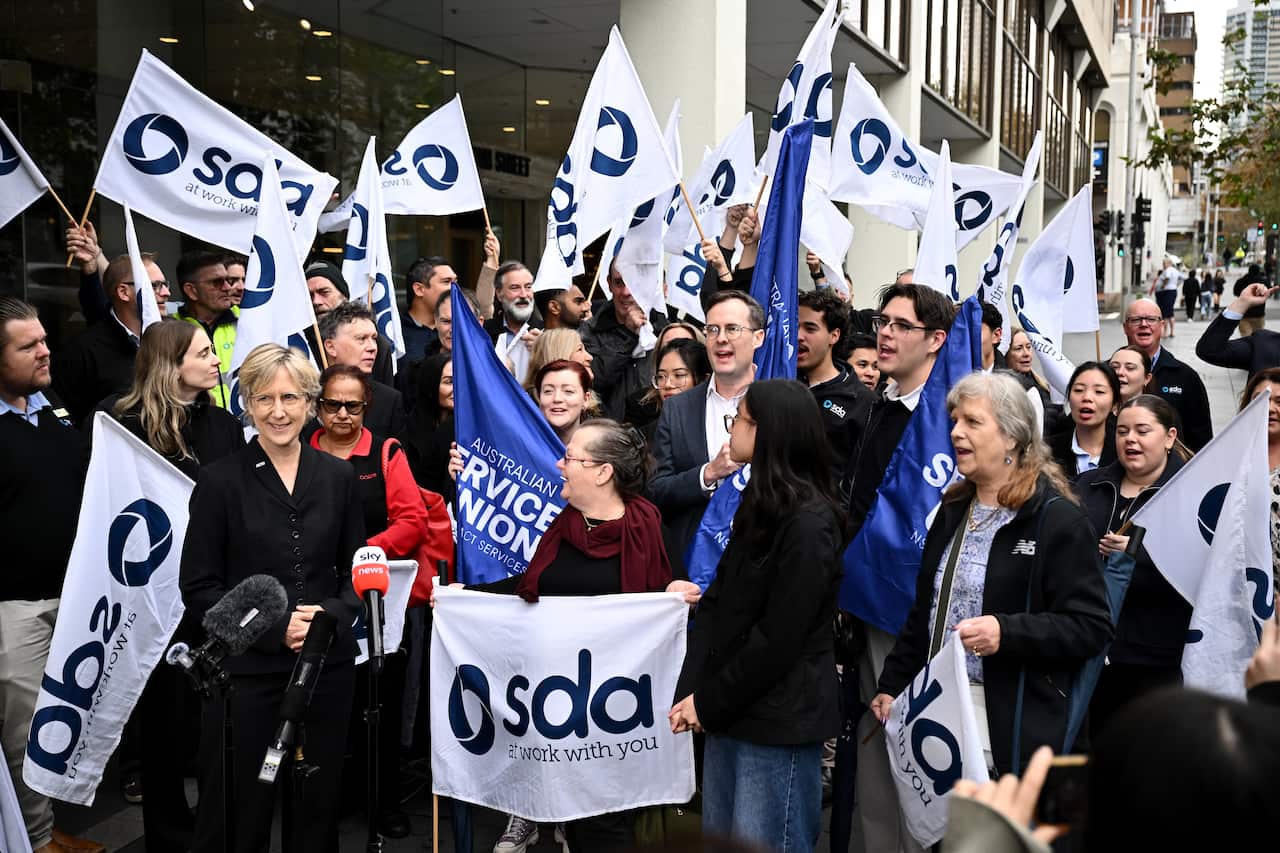
The Australian Council of Trade Unions (ACTU) had argued that rate would allow workers to meet living expenses, catch up on lost wage growth and prepare if global economic conditions worsen.
But it still welcomed Tuesday's decision, saying 4.75 per cent was above inflation and would still make a difference to workers.
"We would love the Fair Work Commission to make a decision that catches everyone up immediately. In order to do that, as they said, it would need to be a 5 per cent increase," ACTU secretary Sally McManus said.
"They do want to get there — they just don't want to get there as fast as we want to get there."
McManus said if workers didn't get an adequate pay rise, it would affect businesses too.
"If they don't get pay rises that get ahead ... people cut back on food, they cut back on things like going to the doctor's.
"Your workers are usually your customers as well. And if they go backwards and if they have to cut back, they're going to cut back on spending."
Employers, however, called the union's proposed 6 per cent target "ludicrous" and instead proposed a 3.9 per cent increase, in recognition of the "deeply uncertain circumstances confronting" the economy.
"Given we are facing into recessionary conditions, to grant more would cause significant damage to both business and workers," the Australian Industry Group (AIG) chief Innes Willox said.
"Businesses simply do not have an endless capacity to absorb costs — including wage increases — without passing them on to consumers or fundamentally changing how they work, including the composition of their workforce."
The Australian Chamber of Commerce and Industry (ACCI) said the 4.75 per cent increase would be "too much to bear" for the nation's small businesses, who will have to pass on the costs to consumers or wear the cost themselves.
"It could be the tipping point for some businesses," ACCI policy chief David Alexander said.
"Others will scale back their investment intentions. So this is not good news for the business community."
He said pay increases must be tied to a business' success.
"That's how you get genuine, underlying prosperity.
"What these commission decisions are doing is eroding the linkage between productivity and wage outcomes."
For the latest from SBS News, download our app and subscribe to our newsletter.







