In brief
- A coroner has found that a police investigation from 1988 was influenced by racist attitudes.
- The family of Mark Haines has fought for almost 40 years to prove that racism marred the investigation into his death.
Aboriginal and Torres Strait Islander readers are warned that this story contains the name and image of someone who has passed away.
A profound silence fell over a court room when Don Craigie spoke in his deep, authoritative timbre.
"That train would still be there if it was a white boy," Craigie firmly told an inquest in late 2025.
"They would have turned that train engine over."
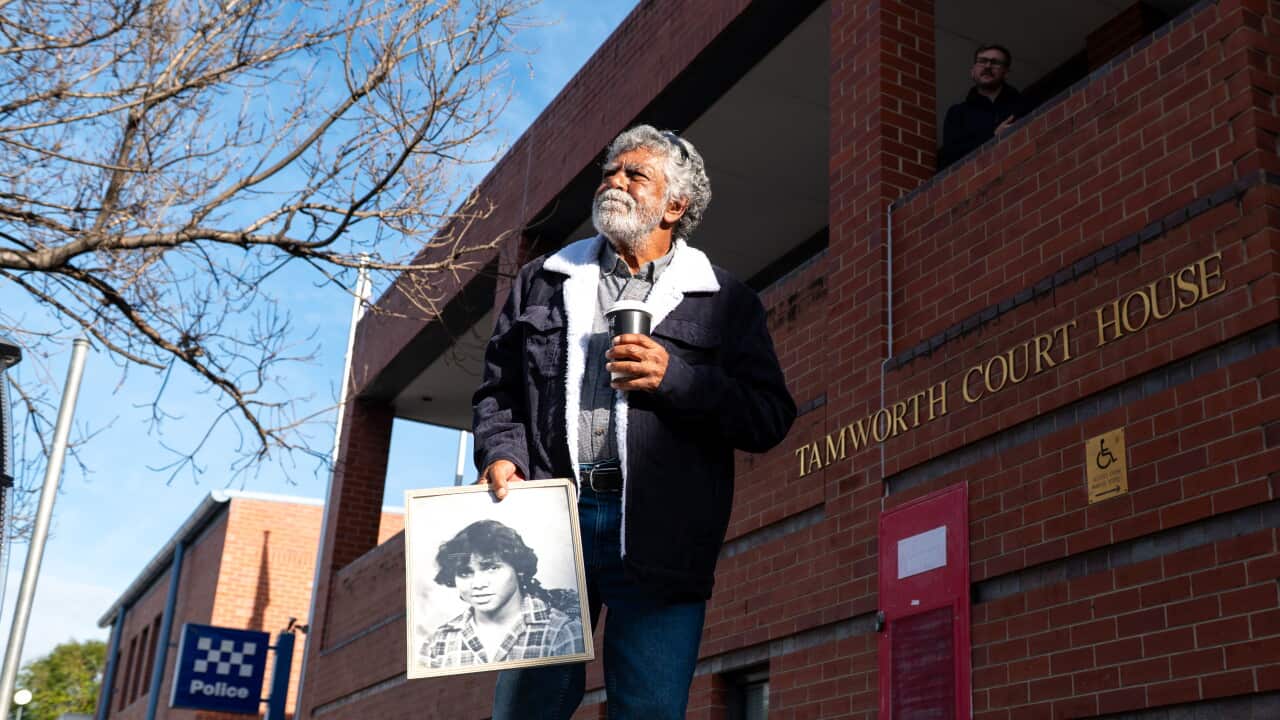
Craigie fronted the inquest into the death of his nephew Mark Haines nearly four decades after the Gomeroi teenager's body was mysteriously found on train tracks outside Tamworth in rural NSW.
News that makes sense
Your trusted source for staying up-to-date with the world around you. Get free daily news updates and analysis, straight to your inbox.
On Thursday, a coroner found police were influenced by prevailing racist attitudes in the regional city and the investigation was deeply flawed from the beginning.
Craigie always believed racism marred the haphazard police investigation into the 17-year-old's death on 16 January, 1988.
For years, he made it his mission to have the case re-examined.
The teenager's body was discovered on the tracks early on a rainy Saturday morning, with a towel under his head.
A stolen Holden Torana was found crashed nearby.
An autopsy showed Mark died from a traumatic brain injury and police initially ruled he laid on the tracks either deliberately or in a dazed state.
His body was moved quickly after it was discovered, while the car and train were not forensically tested and several strong leads were not pursued, Deputy State Coroner Harriet Grahame found.
She said it was impossible to ignore the experience of Craigie and other Aboriginal people who lived in Tamworth in the 1980s, a time when members of the community were routinely called racist names and barred from renting houses.
The region's police force had only recently come under scrutiny over the 1985 death in custody of Bruce Leslie, who suffered a skull fracture.
"I question how a police investigation could be quarantined from these attitudes," Grahame said, delivering her findings at Tamworth court house.
"I find it inconceivable that such a superficial investigation would have taken place ... had a young white teenager from the right side of town been found on the train tracks in similar circumstances."
Grahame ruled out suicide, noting the placement of the towel.
She also found a theory about the possible involvement of local boxer Eddie Davis to be an "unsubstantiated rumour", but that Mark's close friend Glenn Mannion likely knew more about what happened that night.
Mannion gave evidence at the inquest and has always denied knowing more.
"I am satisfied that Mark's death is suspicious in that some of the people involved did not or have not come forward," Grahame added.
She said it was a "deep personal regret" the inquest did not result in a breakthrough for Mark's heartbroken family.
The case was referred back to the unsolved homicide unit for recommended re-examination, including testing of a cigarette lighter found at the scene.
The Aboriginal Legal Service's managing coronial advocate James Pender said Craigie's advocacy was tireless and revealed entrenched racism within the police force.
"This coronial finding highlights the need for further truth-telling about its impact, as well as action to address it," Pender said in a statement.
Before the findings, Mark's sister Lorna Haines spoke of her enduring love for her charismatic big brother.
Haines quietly wept before she could speak.
Their parents died without knowing what happened to their "shining light" and their father continued to grapple with Mark's death in his final years, she said.
"(I) would sometimes hear him call out Mark's name in his sleep," Haines said in her statement.
Craigie said he had done everything he could to seek some form of justice.
"Mark got the death sentence, the family got a life sentence," Craigie said.
"We miss him deeply."
For the latest from SBS News, download our app and subscribe to our newsletter.







