
Korey Rowe was on his first day of basic training for the United States Army when planes struck the World Trade Center on 11 September 2001.
Initially, he thought the attacks were part of a training exercise.
"I thought that was how every first day started — with alarms," he tells SBS News.
"Then I learned, as they pulled us into a room and turned the TV on, that this was a major event."
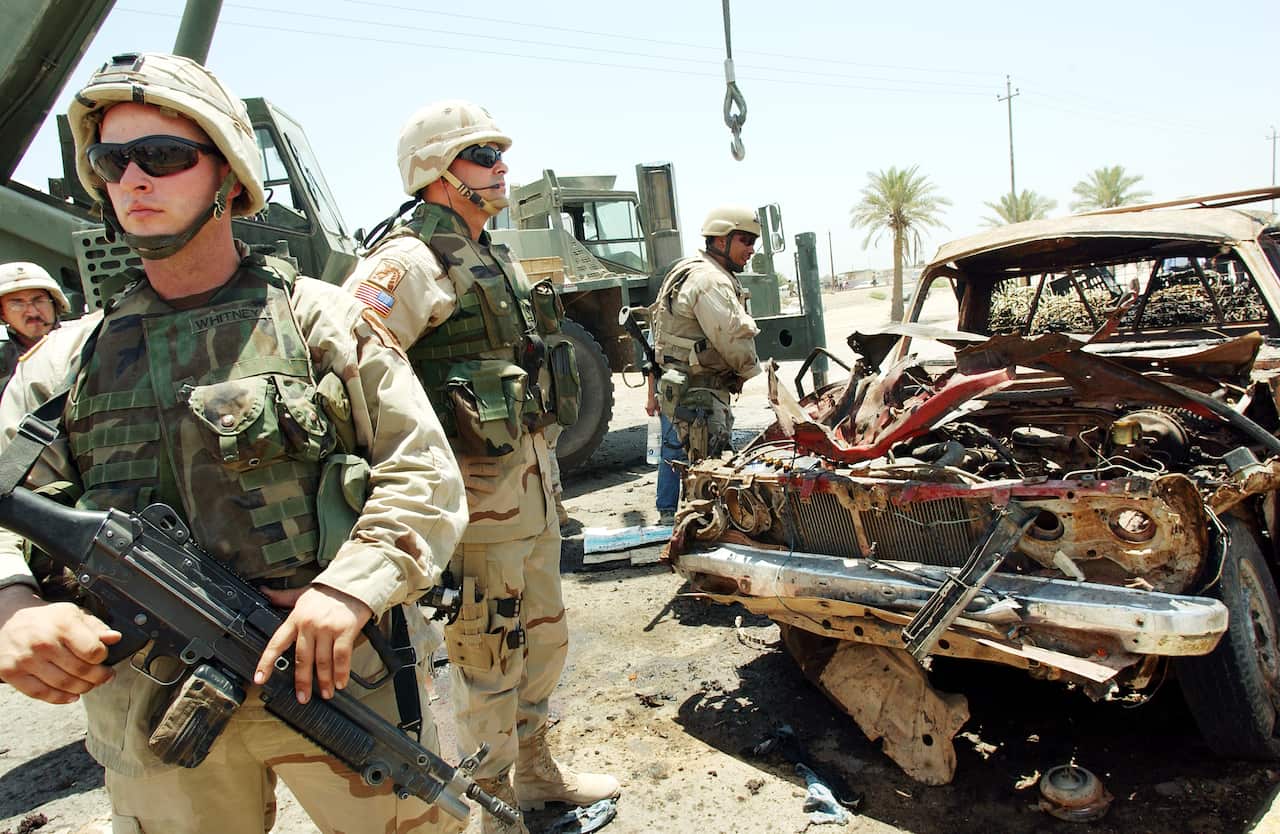
Four months later, the 18-year-old was in Afghanistan as part of the US-led invasion launched in response to the attacks. He would later serve in Iraq, where the US went to war in 2003 after the Bush administration and its allies alleged Saddam Hussein's government possessed weapons of mass destruction.
News that makes sense
Your trusted source for staying up-to-date with the world around you. Get free daily news updates and analysis, straight to your inbox.
No stockpiles were found after the invasion, and subsequent investigations identified significant failures in the intelligence used to assess Iraq's weapons programs.
At first, Rowe believed in the mission.
Around the time of his deployment, he was quoted in a newspaper in upstate New York, where he grew up, saying terrorism had to be "dealt with".
I was a young man who had not experienced much of the world, and so I largely was very patriotic and right in line with the mission.
But Rowe's experiences in Iraq left him deeply disillusioned.
Before he was due to deploy for a third tour of the Middle East in 2005, Rowe deserted the army, slipping out of Fort Campbell, on the Kentucky-Tennessee border, during the night.
He drove to Washington DC, where he linked up with his childhood best friend, Dylan Avery.
The pair committed themselves to a project they had already begun: a documentary about September 11.
Later that year, Loose Change was released.
Made on a shoestring budget, the film presented a series of claims challenging the accepted account of the September 11 attacks. It promoted theories suggesting the attacks were a false flag operation orchestrated by the US government.
It quickly spread through torrent sites and on Google Video — then one of the emerging online video platforms — attracting millions of views when social media was still in its infancy.
The film's reach helped turn a collection of existing 9/11 conspiracy claims into a mass online phenomenon.
Loose Change was not the only conspiracy documentary about 9/11. But it became one of the movement's most influential films, with Vanity Fair later describing it as the "first internet blockbuster".
Another innovation of the film was encouraging viewers to scrutinise official accounts themselves, an approach that has become a defining feature of online conspiracy culture.
The phrase "do your own research" would later become ubiquitous, from COVID-19 misinformation to political conspiracy theories.
Twenty-five years after the attacks, the theories Loose Change popularised have been thoroughly debunked.
Yet the distrust that fuelled them — of governments, powerful elites and official explanations — remains.
In the decades since, conspiracy theories have become a more visible part of mainstream culture, from Pizzagate and QAnon to the sovereign citizen movement and claims about the "deep state".
How much of today's conspiracy culture can really be traced back to September 11, and what can the movement that emerged around the attacks tell us about why conspiracy theories continue to resonate?
Why 9/11 sparked conspiracy theories
To understand the legacy of the 9/11 Truth movement, one must look at its origins.
Mark Fenster, a University of Florida law professor who studies conspiracy theories, says several factors made September 11 particularly fertile ground for alternative explanations.
"Virtually everyone in the US was affected by it … and so when a major event like that happens, where there is controversy surrounding what it was and what it means, and later what it meant at the time, people speculate," he tells SBS News.
The attacks were a global event, broadcast live to millions. They also came at a time of intense political division following the contested 2000 presidential election.
Unlike earlier conspiracy theories about the assassination of John F Kennedy or the moon landing, 9/11 arrived during the internet era, allowing the movement to rapidly spread online and reach audiences well beyond the activist and political groups where many of these ideas first circulated.
The increasingly unpopular Iraq War would further deepen distrust in the years that followed.
"Unsurprisingly perhaps, it's around [2006] that public polling seemed to show that more and more people were at least willing to contemplate the possibility that 9/11 was the result of some sort of conspiracy," Fenster says.
For Rowe, the success of Loose Change came down to the convergence of three things: the growth of the internet and video-sharing sites, the availability of video cameras and personal computers, and the significance of September 11 itself.
"Loose Change just became the vehicle that carried those three things into the future," he says.
Conspiracy theories can provide a sense of control
The scale and trauma of the attacks may have made conspiracy theories psychologically appealing.
Stephan Lewandowsky, a cognitive scientist at Bristol University and co-author of The Conspiracy Theory Handbook, says conspiracy theories can give people a sense of comfort and control in an unpredictable world.
It's somewhat ironic, but for many people, they find it easier to accept that there are bad people doing bad things than to just accept the fact that sometimes, you know, sh-t happens.
As an example, he points to conspiracy theories surrounding Princess Diana's death, despite multiple inquiries finding her driver was intoxicated and speeding when the fatal crash occurred.
Lewandowsky says people who believe one conspiracy theory are often more likely to believe others.
"What they think is scepticism very often is actually gullibility," he says.
"There is research showing that conspiracy theorists, in some ways, are extremely gullible because they'll believe anything so long as it is attacking the government or the official story. So it's not really scepticism."
What did 9/11 conspiracy theorists believe?
The theories surrounding September 11 vary widely.
Some suggested members of the US government had advance knowledge of the attacks and deliberately allowed them to happen. Others argued the attacks were an "inside job" orchestrated by the government.
The motives proposed by believers range from the US government wanting an excuse to launch wars in the Middle East to the establishment of a "new world order" ruled by an authoritarian global government.
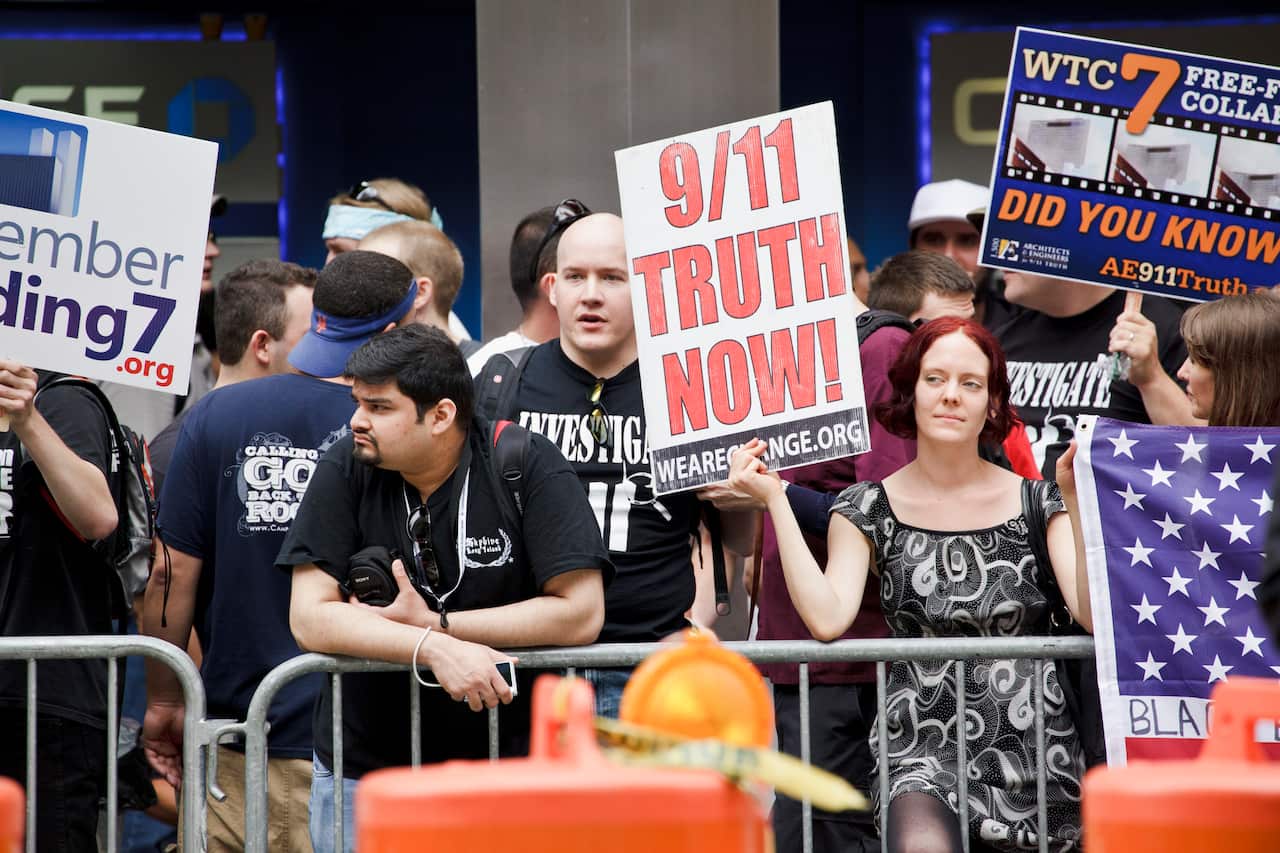
A key claim was that the collapse of the Twin Towers and nearby World Trade Centre (WTC) building 7 had been caused by controlled demolitions, an allegation rejected by official investigations.
The collapse of building 7 — which was not hit by an aircraft but was damaged by debris from the collapse of the North Tower and burned for several hours — was announced by BBC News correspondent Jane Standley during live coverage, while the building was standing in the background.
It emerged that the Reuters news agency had mistakenly reported the building's collapse before it happened, quickly issuing a correction, and the BBC had picked up the report just before the correction.
However, the clip later circulated online, cited as evidence of alleged foreknowledge and media organisations being part of a conspiracy.
The National Institute of Standards and Technology's subsequent investigation concluded fires caused the collapse of WTC building 7 after prolonged heating weakened critical structural components, triggering a sequence of failures that led to the building's progressive collapse. It found no evidence that explosives had been used.
Other theories claimed United Airlines Flight 93 — which was hijacked by al-Qaeda but prematurely crashed in a field after passengers fought back — was shot down. Others included that the Pentagon was struck by a missile, or that Jewish WTC employees had been warned to stay home.
Joseph Uscinski, a political scientist at Miami University who specialises in conspiracy theories, says the movement had failed to provide credible evidence to support any of those claims.
This is the thing: we're 25 years on now, and all the evidence that has been put forward by the conspiracy theorists to justify their 9/11 conspiracy theories hasn't really gone anywhere.
"There's been no smoking gun. There's been no evidence that clearly indicates either explosives or a government plot, and they might be convinced that their evidence does, but they've just been terrible at convincing everyone else," Uscinski tells SBS News.
Distrust after Iraq
For Rowe, his beliefs about September 11 cannot be separated from what happened afterwards. He had gone to war as a young soldier believing in the mission but returned a changed person.
"As a soldier who was 19 years old, who was living through the experience of Iraq, the United States government broke their trust with me in that experience, and there's no way that they can get that trust back," he says.
"There is no anthem that I will sing. There is no flag that I will pledge to. I just live here because this is where I was born, and this is the system that I'm in.
Am I a proud American? Absolutely not. I am an embarrassed American. I am just beside myself with what this country has done to this world.
"I am pissed at my government, and I've been pissed since I got back from Iraq."
The Iraq War did not prove the theories promoted by the 9/11 Truth movement, but the failure to find the weapons of mass destruction cited by the Bush administration as a justification for the invasion contributed to broader questions about the credibility of the US government and the intelligence used to support the war.
Fenster says the movement was initially made up of those on the political left and the anti-war movement.
Over time, it became detached from a single political ideology, with right-wing figures such as InfoWars founder Alex Jones among the movement's early backers.
Rowe himself rejects the label of "conspiracy theorist".
He says he has never considered himself one, and his views have not changed since Loose Change was released. He recently wrote a book about his experience with the film and in the Middle East.
"I still believe that we were led into Iraq based on lies. I know that 9/11 needs to be re-investigated," he says, arguing that no satisfactory explanation has been provided for the collapse of WTC building 7.
An early internet phenomenon
Rowe also rejects the suggestion that Loose Change should be seen as linked to modern conspiracies such as QAnon or Pizzagate.
"That's a lazy and rather vindictive kind of angle to take because what it ignores is 98 per cent of what we did," he says.
We were kind of early creators in social media, early creators in influencer technology, and yet nobody gives us the credit for that.
There is little doubt, however, that Loose Change was an early example of how independent filmmakers could use the internet to reach a global audience.
Loose Change gained a broader audience after Jones, who had questioned the official account of September 11 on live radio within hours of the attacks, became an executive producer and helped finance the 2007 final cut of the film.
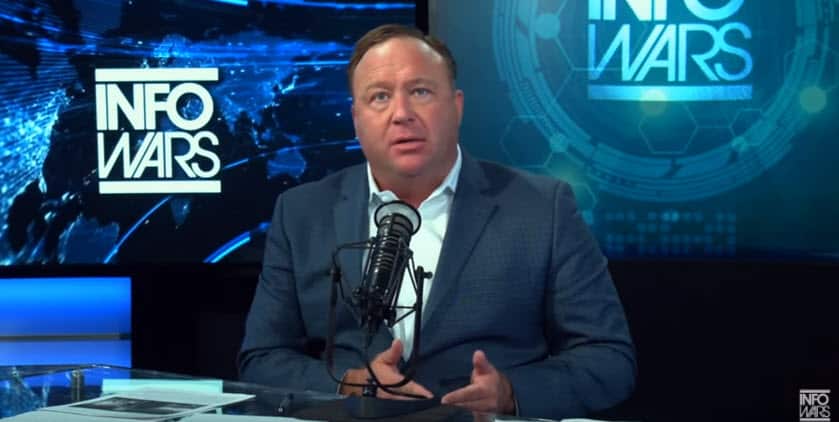
Rowe and Avery later sought to distance themselves from Jones, who has become one of the prominent figures in the conspiracy media ecosystem — spreading false claims about the Sandy Hook school shooting, COVID-19 vaccines and former president Barack Obama's place of birth.
Rowe says Loose Change, particularly its early editions, has been largely removed from major platforms including YouTube, where it was flagged as hate speech, although users continue to re-upload it.
Did 9/11 shape today's conspiracy culture?
Whether the 9/11 conspiracy movement helped shape today's conspiracy culture is debatable.
There are similarities, including distrust of the government and suspicion that a powerful elite is pulling strings behind the scenes. The internet also allowed those with shared beliefs to connect and build communities around them.
But Uscinski cautions against viewing 9/11 as the start of a modern conspiratorial culture, which he sees as following similar patterns to past eras.
He says some people simply have a "conspiratorial mindset", likely stemming from their socialisation, which leads them to question all manner of events and institutions.
Most people would be unaware of another person's conspiratorial beliefs until a major event that everyone pays attention to occurs.
Not only are we going to notice the event itself, but we're going to notice the commentary about it, some of which is going to be conspiracy theories
Over the years, social media made conspiratorial beliefs more visible, he says, but not necessarily more widespread than in the past.
He also credits US President Donald Trump, who campaigned on "draining the swamp" and dismantling the so-called "deep state", with recognising an "underserved" electorate.
"There were people with conspiracy mindsets on both the left and the right … but mainstream politicians weren't really talking to them in the language that they wanted," he says.
"Jeb Bush was not going to appeal to a raging conspiracy theorist because he's as establishment as you can get, right? But an outsider like Donald Trump could speak that language, and he could do it quite well."
Whether Trump's beliefs were sincere or not, Uscinski says he did not know.
But he notes Trump spread conspiracies before he ran for office, such as the false claim that Obama was born in Kenya and was ineligible to be president.
Rowe rejects suggestions that Loose Change had contributed to a modern conspiracy culture.
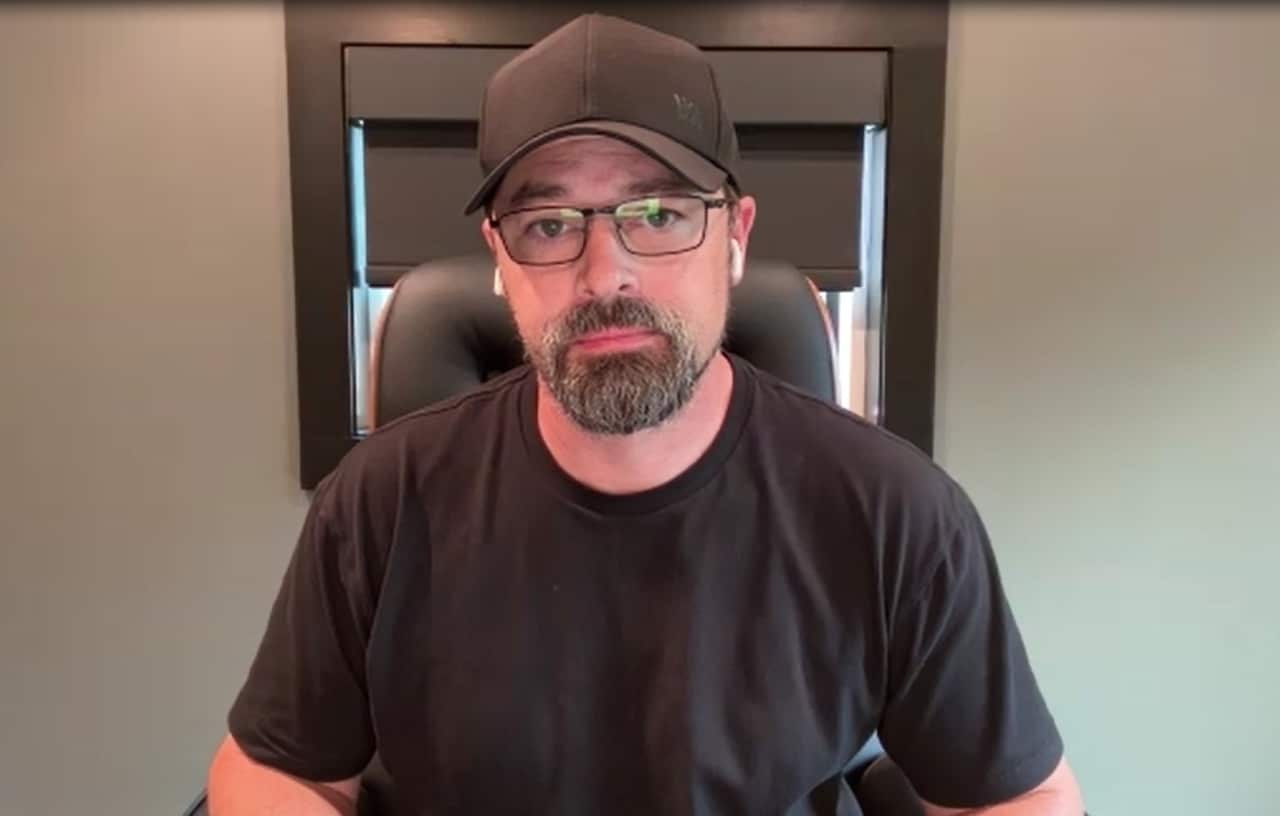
"Placing the bulk of the blame on a now decades-old internet documentary, made by two early twenty-somethings, too neatly absolves the most powerful peddlers of disinformation: the government and the mainstream media," he writes in his book.
Rather than providing answers, Rowe hopes Loose Change's legacy is to encourage people to ask questions.
What I hope that it does is set up a future where people dissent from mainstream information, and they ask questions.
"Because most of the time, the official version, especially here in the United States, is made-up bullshit, and we need to hold our government accountable."
For the latest from SBS News, download our app and subscribe to our newsletter.







