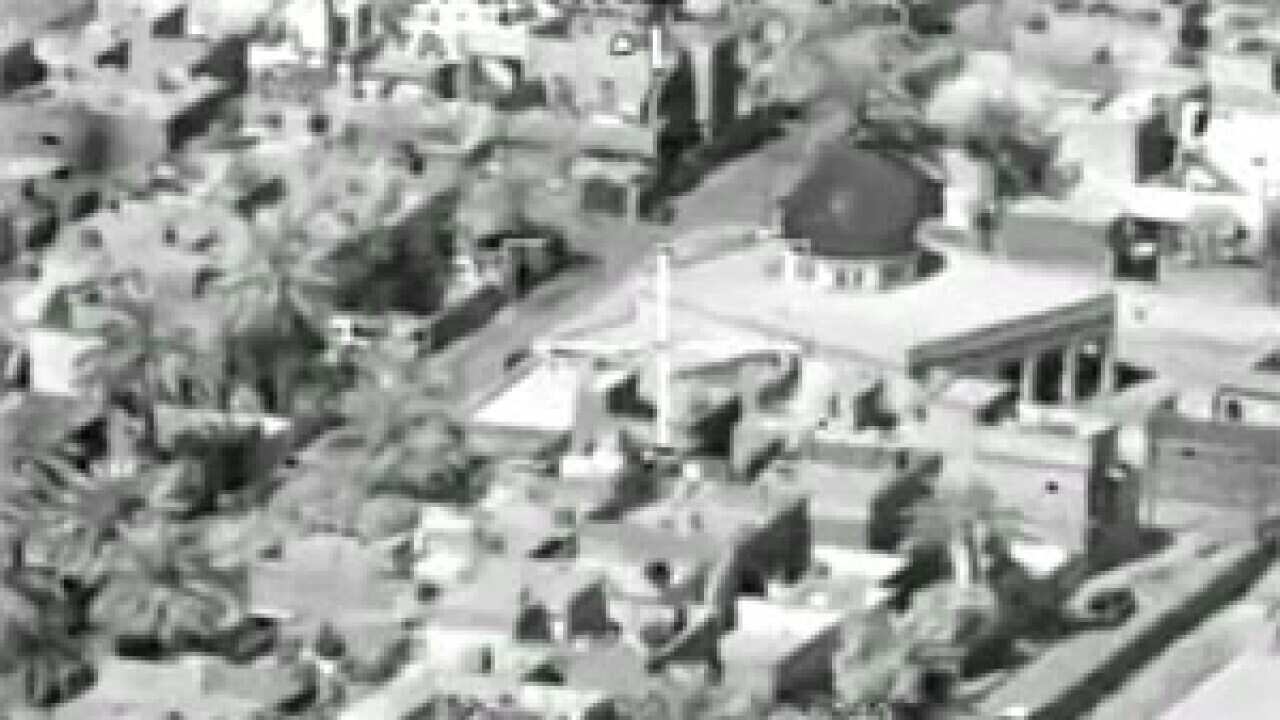
That's one way to describe the contents of a US military video released by an organisation called WikiLeaks last week.
If you missed it, it's video taken from a US Army Apache helicopter above Baghdad in 2007 that shows a group of Iraqis, that included two employees from the Reuters news agency, being targeted, shot, and killed.
It was not a good day for anyone involved.
News that makes sense
Your trusted source for staying up-to-date with the world around you. Get free daily news updates and analysis, straight to your inbox.
Most people have seen an edited 17-minute version of the original 39-minute video that also includes a horrifying scene where a van, seemingly collecting dead bodies from the street, is also attacked.
Two kids are later found wounded in the van by US soldiers.
On any other day, Specialist Josh Stieber would have been among those soldiers from Bravo Company 2-16 seen in the video but on that day in July, 2007, he'd been left back at base.
After refusing to fire his weapon when ordered during an earlier encounter, it's fair to say his superiors weren't keen on taking him back into Baghdad's mean streets.
The edited 17-minute version of the video sparked heated reactions.
In summary, the US Army were “murderers”; they were immoral trigger-happy killers who couldn't have cared less for injured kids; alternatively, I was told, that looks like an awesome video game.
One thing is for sure: it has brought attention back to what was and is happening in Iraq and Afghanistan.
“What happens in the video is the product of exactly how the military trains people,” Stieber told SBS News.
“If we're claiming all these good things can come from war and that we are in Iraq trying to help an oppressed people, spreading freedom and democracy around the world, [the video] certainly doesn't look like the way to do it.
“It will certainly inspire more resistance to what we are trying to do than help anything. It creates a vicious cycle.”
According to Stieber, the video shows part of a mission where troops on the ground are going door-to-door searching houses for weapons or anything deemed “suspicious”. On most days, helicopters would not be present but this particular incident was part of a large mission. Aerial support had been called in to protect troops on the ground.
“In the longer video, there were weapons on the ground so, for the folks in the helicopter, they were doing what the military requires them to do and that is to protect the people they were supposed to cover,” Stieber explains. “This is not to say it was morally justifiable but… it's your responsibility to keep the people you are assigned to watch over safe.
“Putting this in a larger context, the major threats that are coming to soldiers in Iraq are often faceless – the roadside bombs and sniper attacks. Often you don't know where they are coming from so there is an extreme amount of paranoia for any little thing to be perceived as a threat.
“The mindset that is produced from that, combined with the military training that puts you through a huge psychological process, leads to a mindset of shoot first and ask questions later.”
Stieber has described his experience in Baghdad as similar to a horror movie – specifically Saw. It wasn't pretty – neither physically nor mentally.
“The video shows what it is like on a day-to-day basis and it shows why this version of warfare is so counterproductive,” Stieber said.
“We need to understand that this is what we are asking our soldiers to do, they are doing exactly what they are told, and this is what it looks like.
“If we're shocked by this video, and we think it's wrong, then it adds a much greater responsibility for everyone to be working on a day-to-day level on how we can solve problems and change the world other than with the violence in this video.”







