IN BRIEF
- Ratko Mladić was in prison in The Hague for genocide and other crimes when he died last month.
- In Belgrade, he was given military honours and public tributes, drawing criticism from the EU.
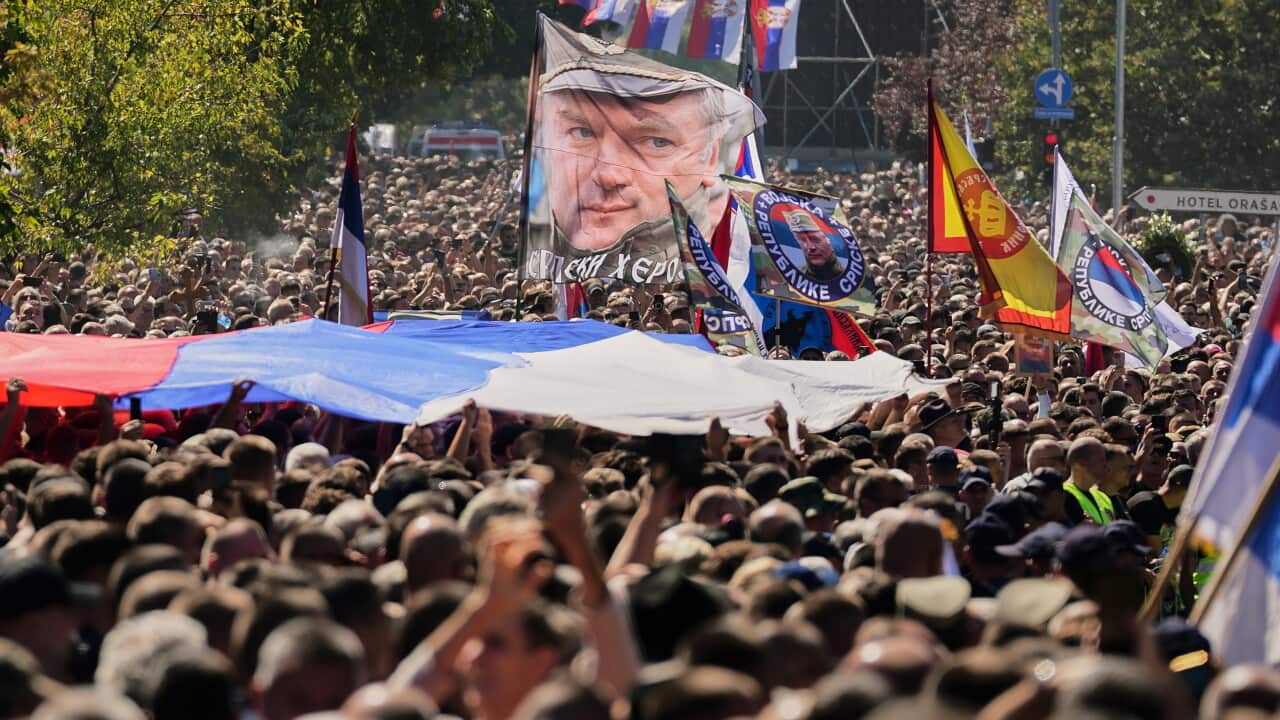
On Monday in Serbia, thousands of people waited in line to attend the funeral of the former Bosnian Serb military commander and convicted war criminal dubbed the "Butcher of Bosnia", who died last month aged 84 while serving a life sentence at The Hague.
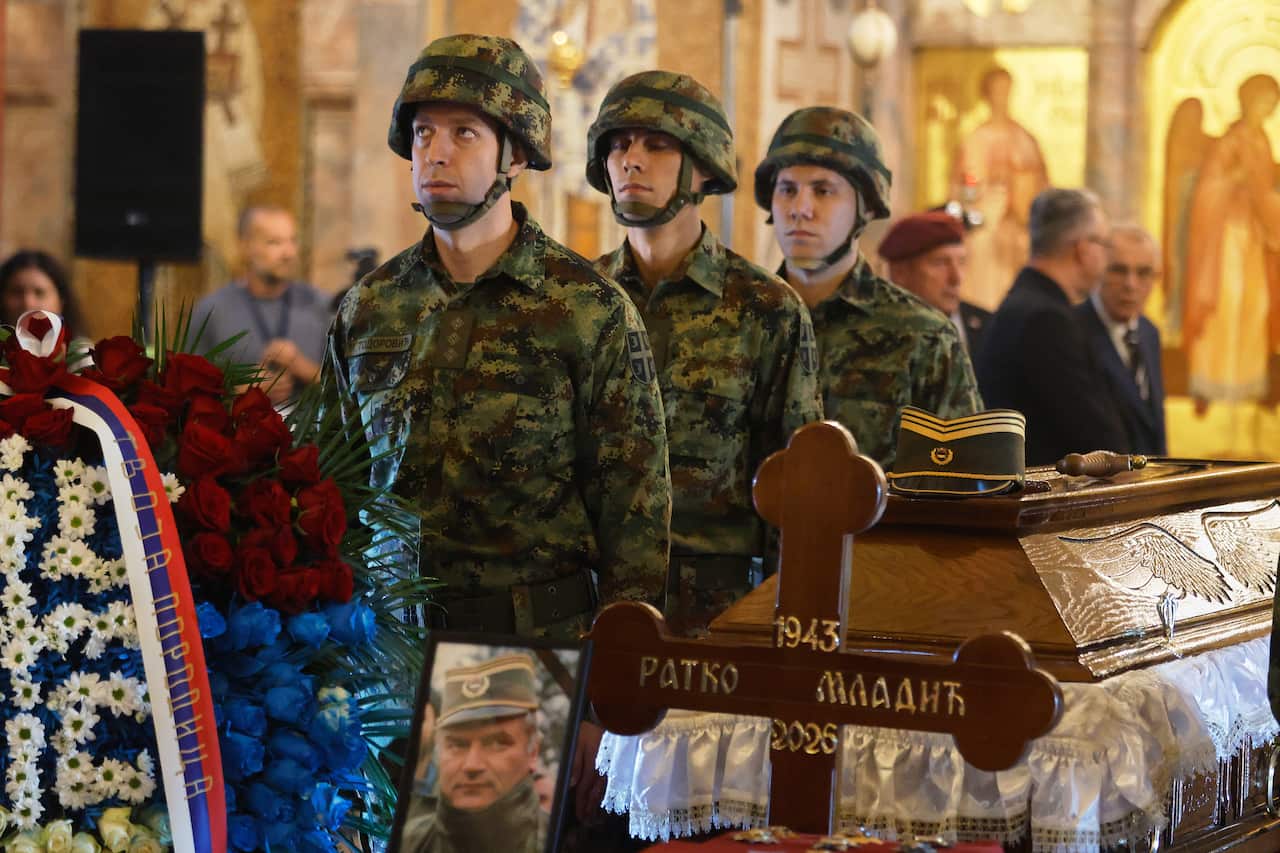
Ratko Mladić's body lay in state at a Serbian Orthodox Church in the capital Belgrade, his coffin given military honours and flanked by soldiers in fatigues — a show of support that defied European Union warnings against allowing public tribute to the man charged with the continent's worst atrocity since World War Two.
In 2017, the International Criminal Tribunal for the former Yugoslavia convicted Mladić on charges of genocide, crimes against humanity and war crimes committed during his time as a senior military official, including terrorising the civilian population of Sarajevo during a years-long siege of the Bosnian capital, and for his role in the Srebrenica massacre.
A United Nations-declared "safe zone" for Bosnian Muslims during the Bosnian War, Srebrenica was overrun in July 1995 by Serbian forces who made men and boys strip before killing them and bulldozing bodies into mass graves.
More than 8,300 men and boys were killed in the massacre on Mladić's orders.
News that makes sense
Your trusted source for staying up-to-date with the world around you. Get free daily news updates and analysis, straight to your inbox.
In addition to the killings, ethnic cleansing was confirmed by the court, with an estimated 20,000 to 30,000 civilians abused and expelled from the area.
Condemnation from Brussels
Mladić's funeral drew immediate criticism from the EU, further threatening Serbia's years-long bid for admission already contested by the country's democratic decline, crackdown on press freedoms and refusal to sanction Russia for its war on Ukraine.
Christian Wigand, a spokesperson for the EU's diplomatic service, the European External Action Service, said glorification of war criminals had no place in EU candidate countries.
"Any glorification of war criminals, genocide denial and revisionism contradict the most fundamental European values and have no place in the EU or in EU candidate countries," he said in a statement released on Monday.
"We are standing in solidarity with all victims, survivors and their families who suffered from war crimes in countries of former Yugoslavia."
The European enlargement commissioner Marta Kos cancelled a planned trip to Belgrade this week over what she described as the "glorification" of Mladić.
"Ratko Mladić was convicted of genocide, crimes against humanity and war crimes. The return of his remains to Belgrade reminds Europe of the darkest pages in our recent history," Kos said in a post on X.
"The glorification surrounding his death is incompatible with the values on which the EU path is built."
Serbia's populist president Aleksandar Vučić told reporters Kos' explanation was "extremely short, but stupid, as usual".
Though the Serbian government had sent a plane to bring Mladić's remains to Belgrade, Vučić denied involvement with the funeral.
The former extreme nationalist described the event as an "emotional outpouring", but skipped attendance to meet with the Uzbek leader.
Olivera Simić, professor at Griffith Law School and author of two books on the former Yugoslavia, said the funeral was an "extreme move".
"You don't do this with someone who is just an old military officer. There were tens of thousands of people."
She said Vučić may not have shown up, but representatives of his government were there, and he sent his son as well.
"He didn't go there, so it may give him a card to say, 'I wasn't there, so it wasn't a state funeral'. It's an indefensible argument.
"Whether it's state or not state, I think this is completely irrelevant."
Vučić, who has been in power since 2017, has faced accusations of facilitating the veneration of convicted war criminals.
A 2025 report from the Youth Initiative for Human Rights, a regional network of non-governmental organisations with programs in Serbia, Croatia, Montenegro, Bosnia and Herzegovina and Kosovo that tracks historical war crimes, documented at least 110 instances of 1990s war crimes denial and glorification by Serbian state officials, institutions, and public actors.
It noted that Vučić and other top government officials frequently employ strategies that acknowledge violent events occurred while rejecting their formal legal classifications, like genocide or war crime verdicts.
Nina Marković Khaze, board member of the Serbian Council of Australia, said the controversy over the funeral illustrated political tensions within Serbia, and that the backlash could have several consequences.
"It may lead to greater EU scrutiny and slower progress on accession-related reforms, particularly concerning rule of law and reconciliation," she told SBS News. "It could also strengthen nationalist narratives within Serbia that Brussels is interfering in Serbian historical memory."
But she said it could instead reinforce the argument among pro-EU Serbs that Serbia needs to address its wartime past more honestly if it wants to join the EU.
A contested legacy
Mladić's genocide conviction and life sentence were upheld in June 2021 following a final appeal, with the chief tribunal prosecutor Serge Brammertz stating: "His name should be consigned to the list of history's most depraved and barbarous figures."
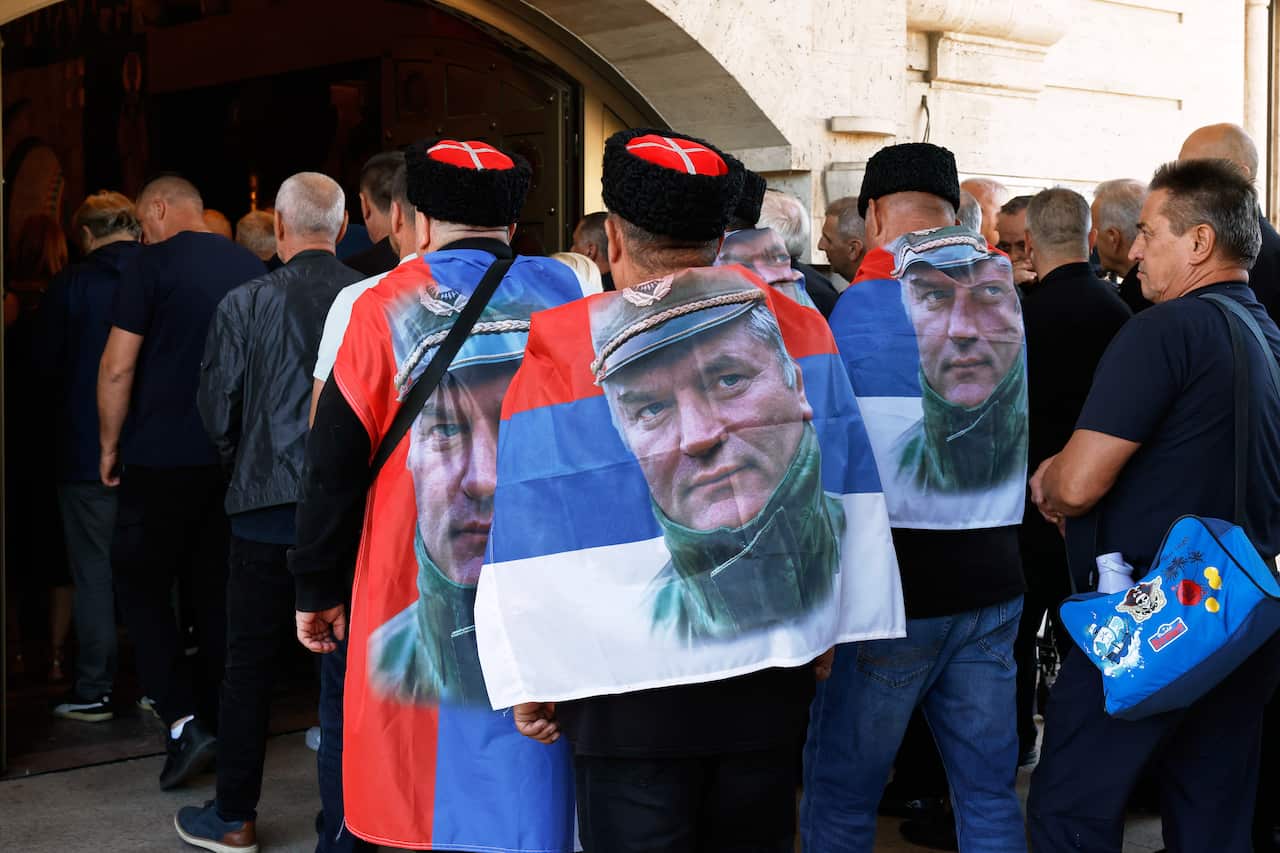
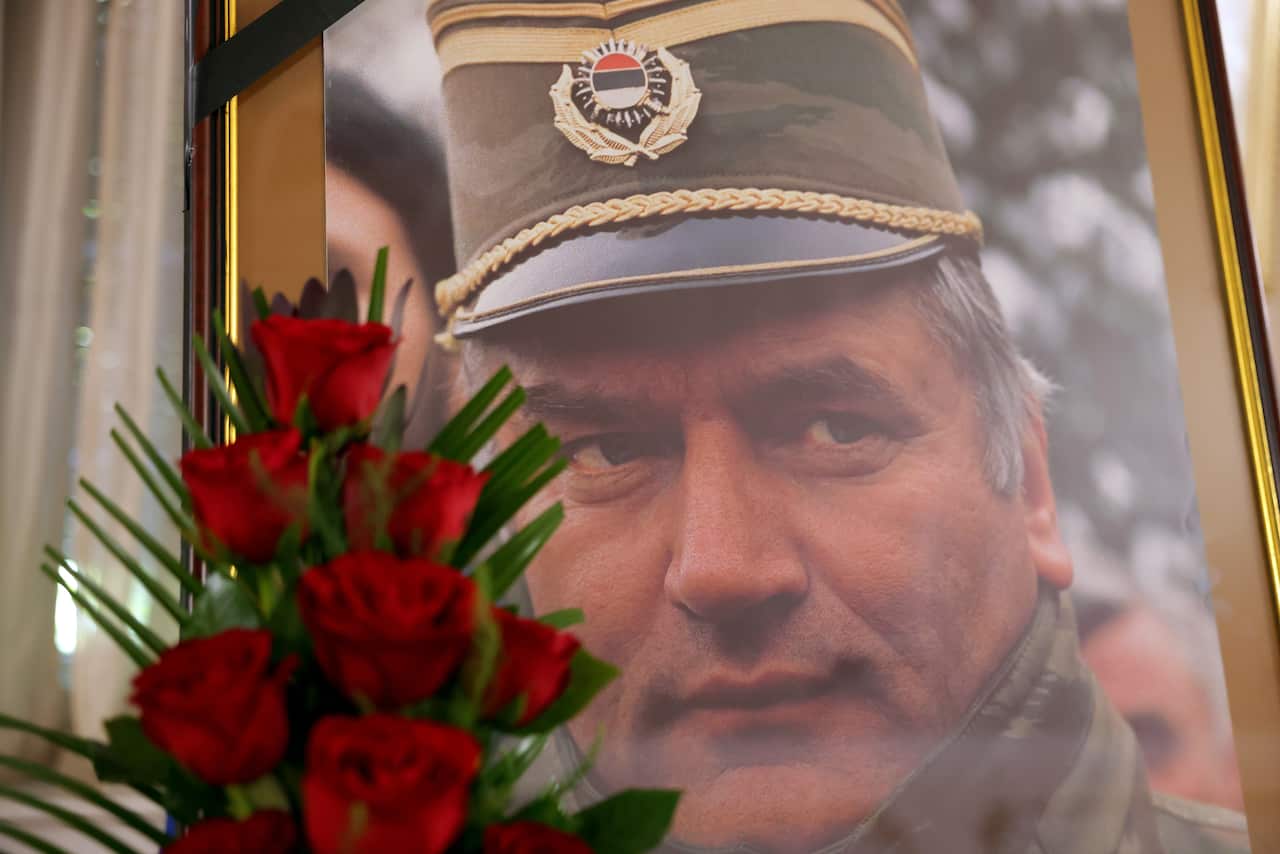
But among some Serbs, Mladić is still remembered as a hero. Footage from the funeral shows dozens of men wearing black T-shirts with his image, and flags bearing his portrait.
Marković Khaze said Mladić remains a deeply contested figure.
"Some Serbs continue to view him positively or through the lens of national defence and Serbian victimhood, despite his conviction," she told SBS News.
Marković Khaze said the situation had to be understood in the context of the region's "unresolved wartime memories".
"For Serbs who experienced displacement, ethnic cleansing or the forced loss of ancestral homes in Croatia and elsewhere, discussions of the wars can evoke very personal memories of loss and insecurity," she said.
"Recognising those experiences does not diminish the suffering of other communities or excuse crimes committed by Serbian forces. The two realities can, and should, be acknowledged simultaneously."
Simić said it was important to understand that in some parts of Serbia and in Republika Srpska — the Serbian constituency of Bosnia and Herzegovina, where the majority of Bosnian Serbs live — Mladić has been constructed and portrayed as a Serbian hero, as a soldier who defended the Serbian people during the Bosnian war.
"This is true for the last few generations of Serbs," she said.
"It's part of the Bosnian Serb curriculum. This narrative has been embedded in political discourse, in families, in education, in public spaces and popular culture. If you go to Serbia or Republika Srpska, or have been for the past 20 years, you would see the graffiti of Mladić as a hero.
"So for those of us who have been watching this for years, it is unfortunately no surprise, because there has been this historical revisionism and indoctrination without impunity since the war ended."
For the latest from SBS News, download our app and subscribe to our newsletter.







