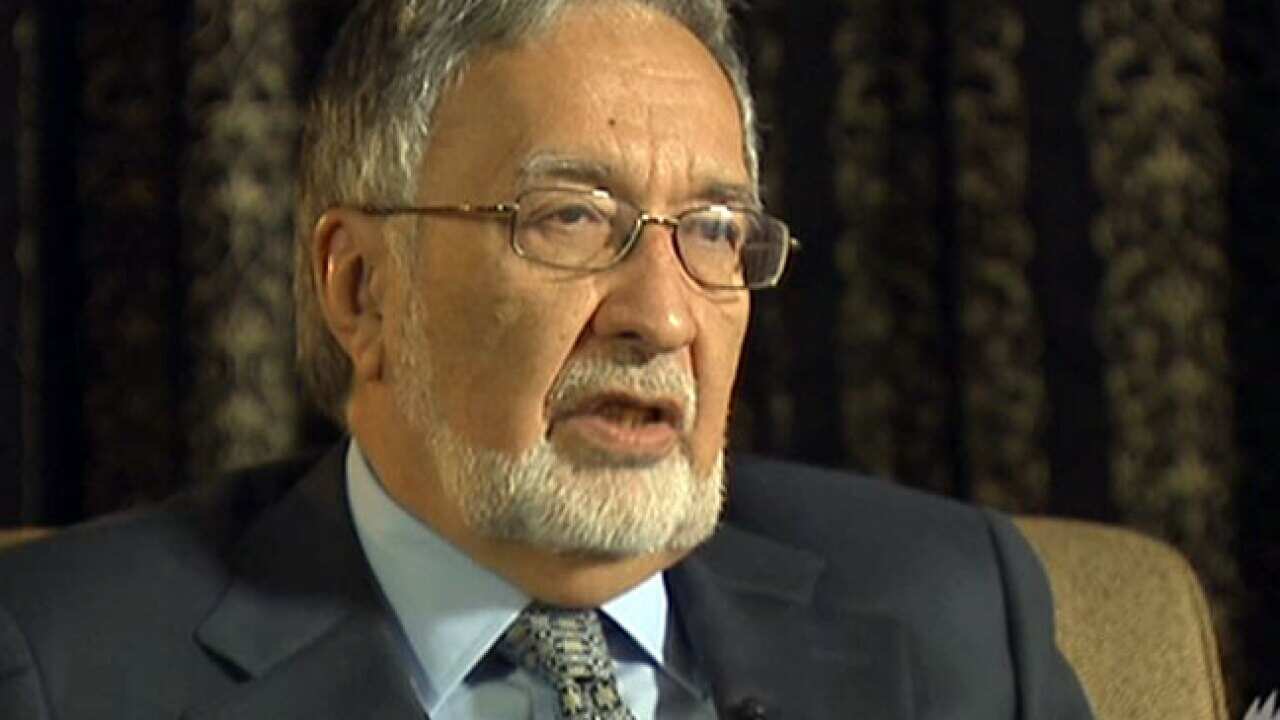
Afghan Foreign Minister Dr Zalmai Rassoul has denied that if Hazara asylum seekers were sent back to Afghanistan they would face persecution, but says a voluntary return would be better than forced repatriation.
Dr Rassoul spoke to SBS before a Sydney court awarded a Hazara refugee a last minute reprieve. Asked whether Hazaras would face persecution if they came back to Afghanistan, the minister replied: "Not at all. They would come back to their country and we would try to provide them all the facilities possible."
"Definitely there are people that may, for economic reasons, or maybe they feel they are not secure about their future of Afghanistan. But I believe Afghanistan is [a] safe country and people should stay in Afghanistan to build the country," he added.
Dr Rassoul said Afghanistan and Australia should work together to find a solution for Afghani asylum seekers which suits both sides.
Such solution would be "a voluntary and safe return of those who want to come back".
News that makes sense
Your trusted source for staying up-to-date with the world around you. Get free daily news updates and analysis, straight to your inbox.
"We in Afghanistan, with the help of the international community, will try to accommodate them in the best way possible".
"Forced expatriation, of course, would cause some political problems for everybody," he said.
Today, a Hazara asylum seeker facing deportation to Afghanistan won a reprieve, after a court found the immigration department's bid to remove him was not carried out legally.
Prior to today's court ruling, community groups were concerned that the deportation of Hazara people - a Shiite minority in Afghanistan - would result in persecution.
Five judges ruled that Immigration Minister Chris Bowen's September decision to deport the Hazara man was not made according to law, nor according to procedural fairness.
"It is inexplicable why the minister accepts that the processes he has put in place must accord with procedural fairness and yet rejects the necessity for him to consider the recommendations and assessments made when making a decision," Justice Geoffrey Flick wrote in his reasons for judgment.
AFGHAN-NATO RELATIONS 'FUNDAMENTALLY OK'
The Foreign Minister also insisted that Afghan-NATO relations remain "fundamentally OK" despite NATO delays in handing over control of Afghani detainees back to the Afghan government.
“When you are talking about the detainees who must come under Afghan control, it's good for Afghanistan, it's good for [the] US, it's good for NATO.
"By the end of 2014 the NATO forces will leave Afghanistan, so whatever it is will come under the control of Afghanistan. Better to do it now while we have time until 2014 instead of leaving it until the last moment."
NATO forces are expected to pull out of Afghanistan by the end of 2014, however they have been slow in returning control of prisons back to the Afghan government for fear that detainees would be released and be a danger to troops and the local community.
"Those who are dangerous people, of course, they're a danger first to the Afghan people. So we will deal with them."
"The Afghan people suffered the most from terrorism in Afghanistan."
Dr Rassoul will meet with members of parliament in Canberra tomorrow.







