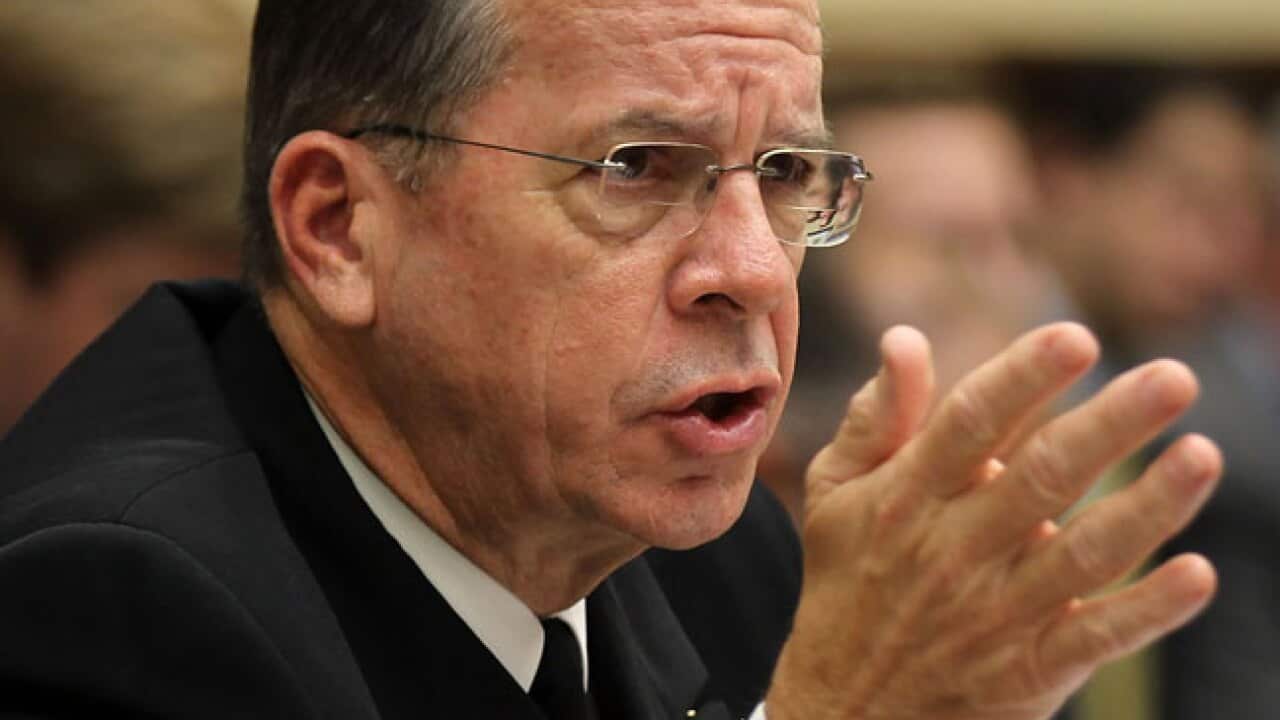
The United States' top military officer says security in Afghanistan has improved 'dramatically' since last year but expressed 'alarm' over the recent spike in violence.
Admiral Mike Mullen, the chairman of the Joint Chiefs of Staff, also warned during an interview with the BBC that victory in Afghanistan could only be achieved by stamping out insurgent activity in neighbouring Pakistan.
"I can see progress literally in front of my eyes," said the four-star admiral. "There is a dramatic difference from a year ago, but there are other concerns.
News that makes sense
Your trusted source for staying up-to-date with the world around you. Get free daily news updates and analysis, straight to your inbox.
"There are still significant security challenges and certainly the spike of violence brings alarm, but I'm not completely surprised," he added.
"The Taliban had an awful year last year ... and they vowed to fight back and this is the way they are fighting back."
Twelve policemen and a child were killed on Sunday when a suicide car bomber struck outside police headquarters in the southern Afghan city of Lashkar Gah.
The latest attack follows a spate of assassinations in southern Afghanistan in recent weeks, including that of the president's powerful half-brother, Ahmed Wali Karzai, in neighbouring Kandahar province.
Karzai was killed by his bodyguard earlier this month, while Kandahar mayor Ghulam Haidar Hameedi was assassinated last week by a suicide bomber who hid explosives in his turban.
Mullen admitted that insurgent "safe havens" over the border in Pakistan were an ongoing problem for the NATO-led International Security Assistance Force (ISAF).
"Those save havens have to be addressed in order to generate any long-term success," he continued.
"I define that as a stable Afghanistan and and a stable Pakistan and quite frankly right now we don't have either."
Speaking at the end of a two-day trip to the war-ravaged nation, Mullen earlier spoke specifically about Afghan institutions involved in the transition of power from international to Afghan troops and officials, which will eventually see all foreign combat forces leave by the end of 2014.
Some countries including the US have already started troop withdrawals as part of the transition process.
"I think it's fair to say that in the main, Afghan government officials must work on becoming more responsive to the needs and the aspirations of their people," Mullen told a press conference in Kabul.
"We know that some agencies and institutions vital to transition are infiltrated and subverted by criminal patronage networks."
"We must end impunity for criminals who are subverting the state and victimising the Afghan people," he said.







