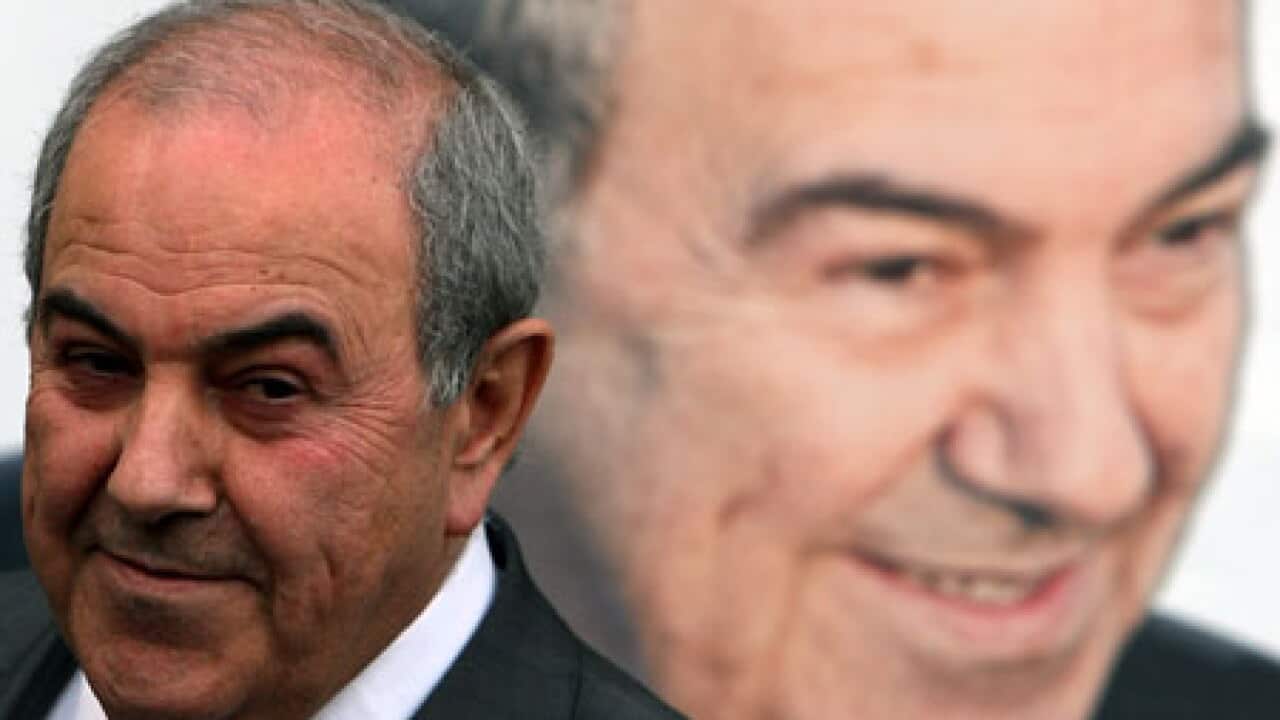
Former premier Iyad Allawi, who once plotted a CIA-backed coup against Saddam Hussein and was nearly murdered while in exile, is within reach of retaking power in war-ravaged Iraq.
The British-trained doctor's secular Iraqiya bloc won the most seats in the March 7 election, full results released by the election commission showed, narrowly edging out incumbent Nuri al-Maliki's State of Law Alliance.
Allawi, a 64-year-old Shi'ite, was provisionally appointed prime minister by Washington in June 2004 and led a transitional government for just under a year.
He had been a member of Saddam's now-banned Baath Party until 1971, but fell foul of the executed dictator and went into exile in Britain, where Iraqi agents tried to assassinate him.
His Iraqiya list includes several Sunni Arab parties, including the National Dialogue Front of Saleh al-Mutlak, who was barred from taking part in the poll separately over his alleged Baathist links, and also features current Vice President Tareq al-Hashemi.
News that makes sense
Your trusted source for staying up-to-date with the world around you. Get free daily news updates and analysis, straight to your inbox.
Allawi pledged to "work with all sides" to build a coalition following the announcement of the results, as his bloc's 91 parliamentary seats falls well short of the 163 required to form a government.
"Iraqiya will open its heart to all political forces and all those who want to build Iraq, and we will together bury political sectarianism," he said in a television interview shortly after the full election figures were published.
He has promised to "purge the armed forces and secret services of sectarian elements" if he formed Iraq's next government, in an interview with the BBC on Saturday.
The police force was "riddled with sectarianism," he charged, pinning much of the blame on Maliki with whom he said he would refuse to work in a coalition unless he changed his outlook.
The neurosurgeon-turned-politician won credibility during his interim term as premier for ruthlessly facing down the insurgency despite widespread corruption allegations.
Yet his unflinching support for US military campaigns against Sunni and Shi'ite insurgents in Fallujah and Najaf left him with few friends there.
His image of tough leadership was dented by attacks during campaigning for December 2005 elections in the holy city of Najaf, when he came under a hail of shoes and tomatoes.
He later charged it had been an assassination attempt.
It would not have been the first. In 2005, he thanked the Lebanese Shi'ite secular movement Amal for thwarting an assassination attempt against him during a visit to Lebanon.
However, his most famous escape came in 1978, when an assailant, probably sent by Saddam, attacked him with an axe and left him for dead during his London exile.
Allawi has excellent political and family credentials. His grandfather helped negotiate Iraq's independence from the British in the 1930s, and an uncle was health minister under the old monarchy, which fell in 1958.
An uncle on his mother's side was prime minister of Lebanon in 1973.
But this pedigree also comes with the baggage of a long exile and links to former Baathists, not to mention the CIA, which have made many Iraqis suspicious of Allawi.
He is seen, in particular, by his opponents in southern Iraq as a symbol of the return of executed dictator Saddam' Baath Party.
In 1991, together with former Iraqi military and Baathists, Allawi formed the Iraqi National Accord, under CIA tutelage, which staged an unsuccessful coup against Saddam in 1996.







