In brief
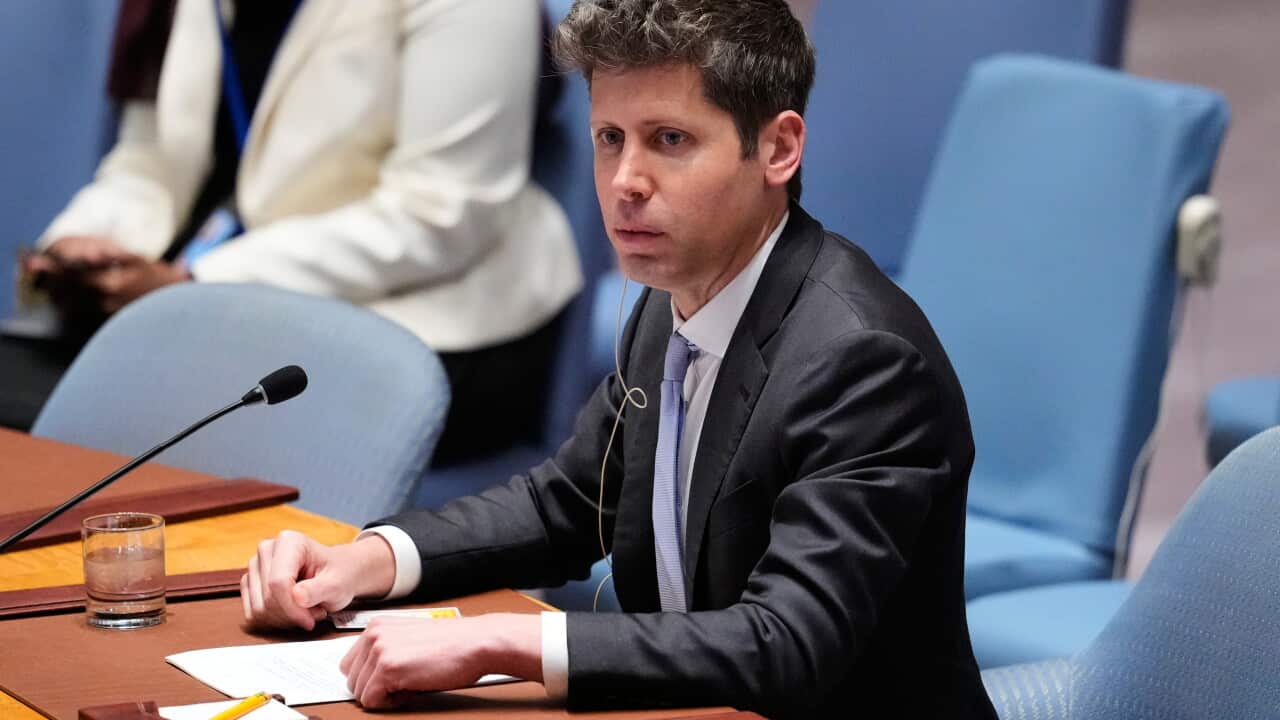
- OpenAI CEO Sam Altman has fronted a UN Security Council session on AI.
- Altman used his speech to urge the adoption of national and international standards for AI development and control.
OpenAI CEO Sam Altman warned the UN Security Council that artificial intelligence could help people "pursue dreams" or escape human "control".
"We have a choice in front of us," Altman said on Thursday.
"AI can either be more like a new renaissance of creativity and discovery, or more like a new industrial revolution of upheaval and disarray.
"The best version of AI is not about making people cogs in a giant machine, or optimising every part of life until the human parts disappear. It's about giving people more agency in an ever more complex world."
France organised the meeting during the annual UN General Assembly of world leaders, amid warnings that AI systems could soon self-improve and exceed human control.
News that makes sense
Your trusted source for staying up-to-date with the world around you. Get free daily news updates and analysis, straight to your inbox.
The Security Council first met on the risks of AI in 2023, when China said the technology should not become a "runaway horse" and the United States warned against using it to censor or repress people.
A 'bad science fiction plot'
Altman warned that "there are many things that AI cannot and should not automate".
"Some of the things people working to build AI have said are so dystopian that they sound like the plot of bad science fiction movies," he said.
Altman's speech comes after OpenAI, the developer of ChatGPT, urged the US to spearhead an international initiative to establish global technical standards for advanced AI.
OpenAI stated in a blog post on Monday that it's essential to develop a mechanism for complementary national and international frontier standards.
"As AI systems become more capable and more autonomous, they can move faster than our institutions ... or make decisions that people no longer understand or control," Altman said.
"That concern becomes especially important as we approach systems that can improve themselves and future versions of themselves, often called recursive self-improvement."
'Unilaterally' slowing down
Altman also asked the AI industry not to "accept too much technological risk just because the benefits are too great".
"Beating companies in a competitive race is not a reason to make rash decisions," he said.
"We have unilaterally slowed down in the past. We will do so in the future.
"It doesn't matter whether people put the risk of catastrophe at 10 per cent or 1 per cent or 12 per cent or 0.1 per cent. We should not train models that we cannot make an extremely strong case that will be able to keep under human control."
Earlier in September, Anthropic CEO, one of the world's biggest AI companies, called for an urgent slowdown in the development of the technology.
Altman supported the statement at the time.
US President Donald Trump has previously rejected warnings on AI, calling them a "hoax" and rejecting making guardrails to slow down its development.
Trump told world leaders at the UN General Assembly on Tuesday that he "rejects any attempt to construct a globalist scheme to control" AI, describing the technology as amazing but noting that the US would be careful.
'We are at a crossroads'
Altman also warned about another aspect of AI, saying the system "could concentrate too much power into a few hands".
"No one person, company, or country should be able to use the most powerful AI models to impose their worldview on everyone else," Altman said.
"A company or country that believes only it can be trusted with this technology can use that belief to justify almost anything else."
"If AI is to be democratic, the most important decisions cannot be made by labs in San Francisco alone," he said.
"They must be shaped through democratic processes and by governments accountable to the people that they serve. At the international level, this will require cooperation."
"We are at a crossroads," Altman said.
"One path leads to a world where power is concentrated, decisions are opaque. And people feel that the most important technology of their lifetime is something being done to them.
"The other path leads to a world where AI works for people, because people, through democratic institutions, help decide how it should develop and guide it ... Where this technology continues to give individuals and communities greater power to live life as they choose.
"This is a future of realised potential, excitement and wonder, and it is the future we believe is worth building."
— With additional reporting by Reuters news agency.
For the latest from SBS News, download our app and subscribe to our newsletter.







