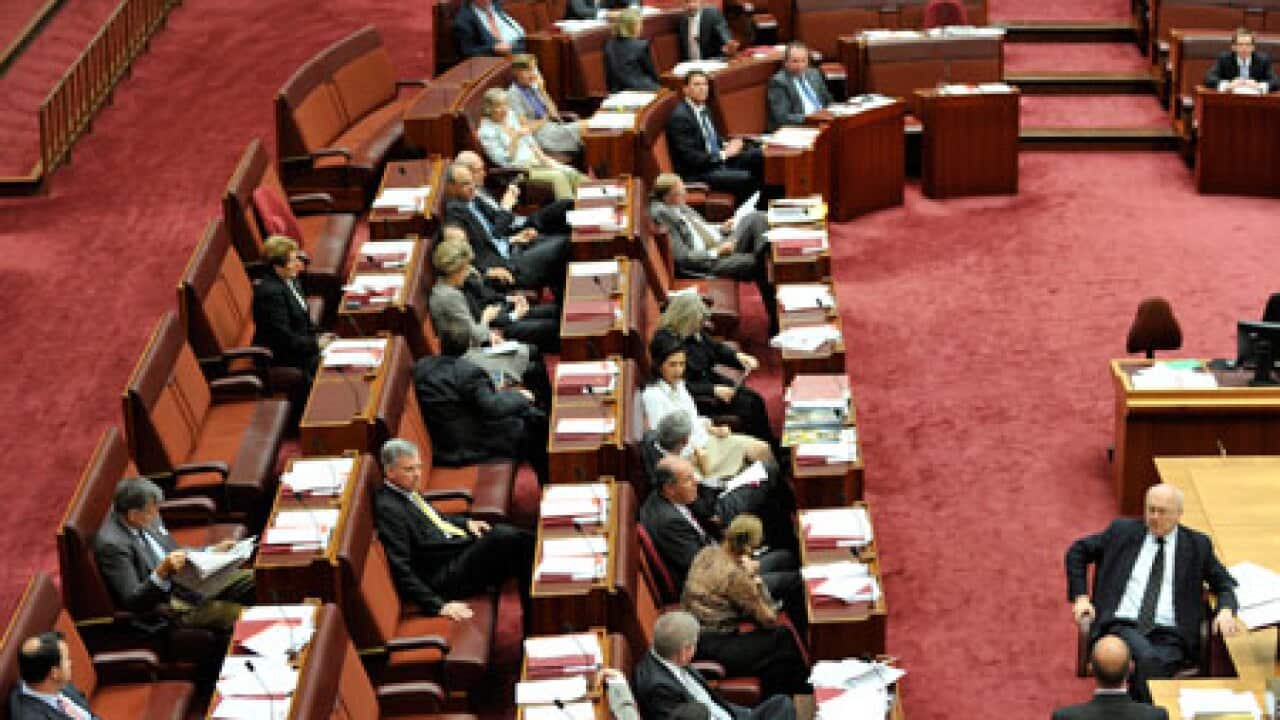
On Thursday, Nationals' Senator Fiona Nash introduced a bill in the Upper House that that would extend Youth Allowance for some regional students.
This bill has now placed the Gillard Government in a very tricky position.
This controversy all hinges on whether or not the bill is an appropriation bill – that is, a bill dealing with the spending of money. According to the Australian Constitution, bills of this nature can not originate in the Senate.
News that makes sense
Your trusted source for staying up-to-date with the world around you. Get free daily news updates and analysis, straight to your inbox.
The Constitution sets out that government is formed in the Lower House, or House of Representatives. The Government – and the Government alone – is given the responsibility on how to tax the population and how to spend the revenue raised.
To become law, a bill must pass through both houses of Parliament.
Private Members' bills - which originate from the Opposition or crossbenchers - are almost always defeated in the House of Reps, where the Government necessarily has a majority of seats.
However, in this case, it is possible that the Private Member's bill could actually pass, given the narrow margin with which Labor governs in the House. If this bill has the support of key crossbenchers – the five independents and one Greens MP – then it could be passed.
And that's where the problem lies.
The government argues that the bill itself is unconstitutional, as it originates in the Senate.
The Opposition disagrees.
It's the Governor-General, acting on Government advice, who officially transfers a bill from one house to the other.
The Government could advise her to declare the bill unconstitutional and not send it to the House. But that would be likely to spark constitutional debate and attract the criticism that the Government is politicising her position.
Instead, the Speaker of the House is seeking advice from the House Clerk on the bill's constitutionality. If that advice says it's unconstitutional, the Speaker will report that to the House and the Government will move to simply “take note” of the bill, not formally debate it.
If the bill was to proceed, and win the support of enough House independents to pass, the implications are unclear. The Opposition might seek to approach the Governor-General, arguing that the Prime Minister has lost control of the House and demanding an election.
The complexities of those arguments would keep lawyers busy for a while.







