In brief
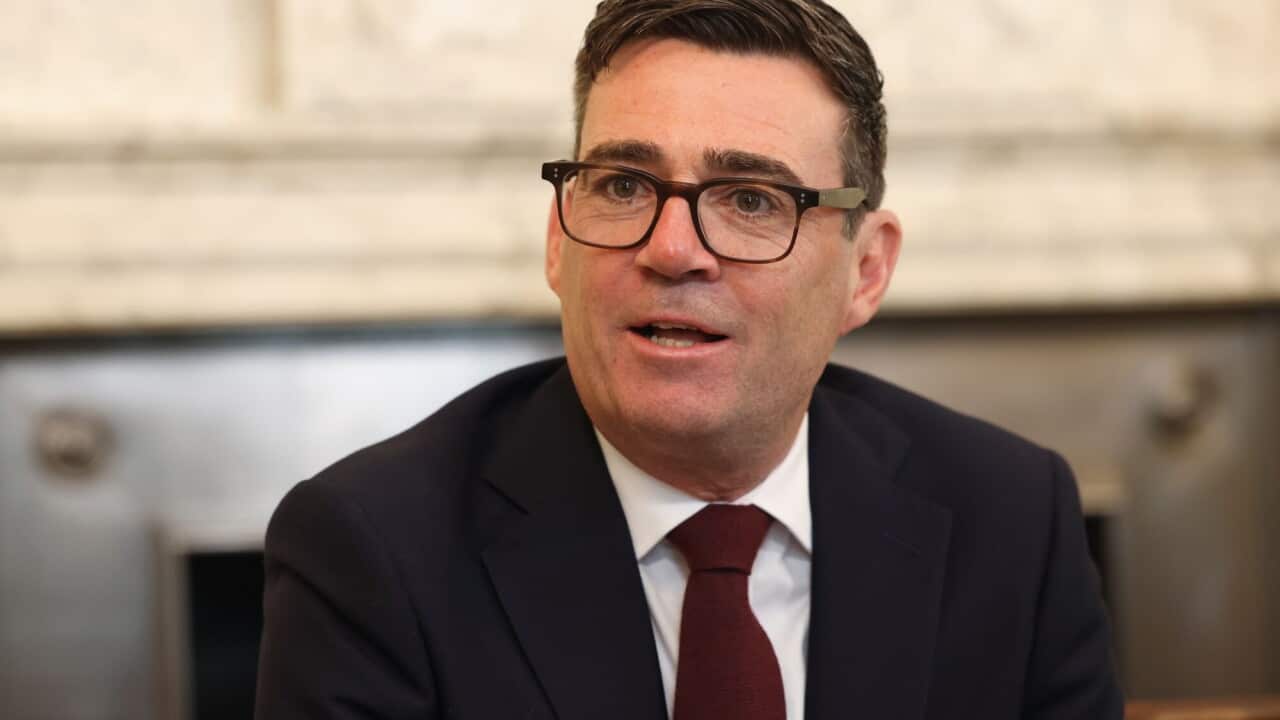
- Andy Burnham was the mayor of Greater Manchester before replacing Keir Starmer as the United Kingdom's prime minister.
- Burnham says he'll lead a "cost of living government", with one of his first policies cutting taxes on electricity bills.
Andy Burnham, sworn in this week as the United Kingdom's seventh prime minister in a decade, has opened his tenure with a slew of new policies, branding his own political ideology as "business-friendly socialism".
Burnham was sworn in as the UK's new prime minister on Monday, replacing Keir Starmer, who resigned following months of pressure from his own MPs after just over two years in the job.
The former Greater Manchester mayor, nicknamed the 'King of the North' for his defence of the region during his nine-year stint as mayor, used his first days in office to signal a new leftward shift for the Labour government.
On his first full day, Burnham told the inaugural meeting of his cabinet that he would lead a "cost of living government".
By the second day, his first concrete policies had arrived.
News that makes sense
Your trusted source for staying up-to-date with the world around you. Get free daily news updates and analysis, straight to your inbox.
What are Andy Burnham's policies?
Burnham has branded his political ideology "business-friendly socialism" — with a distinct focus on cost of living measures.
He has unveiled some early policies designed "to do some things that people will feel and feel quite quickly", especially those on the lowest incomes — adding that a longer-term plan would be set out later in the year.
On Tuesday, Burnham announced he will cut taxes on electricity bills — one of the main drivers of the UK's cost of living crisis — in his first move to ease pressures that have angered the public and helped stoke political instability.
Burnham said his government would remove the value-added tax from domestic electricity bills from 1 October, cutting about £45 ($86) from the average annual bill of about £1,860 ($3,554) that households pay.
"We're taking immediate action to cut taxes on energy bills, put more money in people's pockets and bring back hope," Burnham said in a statement, having pledged to give people more "breathing space" in their lives.
The government said it would be funded by cancelling Starmer's plan for a digital ID scheme that would have cost the taxpayer £1.8 billion ($3.44 billion) — but former minister Darren Jones said the ID program had been "unfunded".
The energy announcement is designed to show that Burnham will move quickly to improve living standards after years of stagnation.
He said on Monday his early policies might not "take all of the pressure off" people struggling with rising prices, and that his 10-year plan will be unveiled later this year.
What else is on the agenda?
During his first speech as prime minister on Monday, Burnham also said his first ambition was to end rough sleeping in the UK.
He is reportedly considering rent control measures, alongside plans to build more public housing to help bring down welfare spending.
Burnham has pledged to re-industrialise the country and push through greater public control of utilities.
He is also expected to look at possible caps on bus fares — an echo of his policy in Manchester, where riders would not pay more than £2 ($3.80) — and other measures to back up his assertion that he would "put the care of people at the heart of everything I do".
He has long supported the idea that social care should be more of a universal system, but says he wants to see a "fair and lasting" reduction to welfare spending — through improving employment support rather than cutting payment benefits.
On immigration, Burnham recently said net migration "needs to fall further", though he hasn't set a specific target.
He also intends to decentralise power away from London to other cities and regions, promising the biggest-ever "rebalancing of power".
As part of this, he will spend "at least one day a week" working in Manchester at 'No. 10 North', and will move some government operations from London to Manchester.
He also said last September that he would like to see the UK back in the European Union within his lifetime, but said he does not want to re-run a Brexit referendum at the moment.
— With additional reporting by Reuters, Agence France-Presse, and the Australian Associated Press.
For the latest from SBS News, download our app and subscribe to our newsletter.







