IN BRIEF
- Jewish leaders urged governments to fully fund community security as rising protection costs continue to mount.
- Hearing block 6 begins in Sydney next week, focusing on frameworks to respond to antisemitic conduct.
The relationship between police and Jewish community security groups came under scrutiny as the Royal Commission on Antisemitism and Social Cohesion wrapped up its fifth hearing block in Melbourne.
Across five days, the inquiry heard evidence about the growing financial burden of security for Jewish Australians, police responses to antisemitic incidents, media coverage of the Hamas-Israel war and preparations for future hearings into last year's Bondi terror attack.
Police responses and security partnerships examined
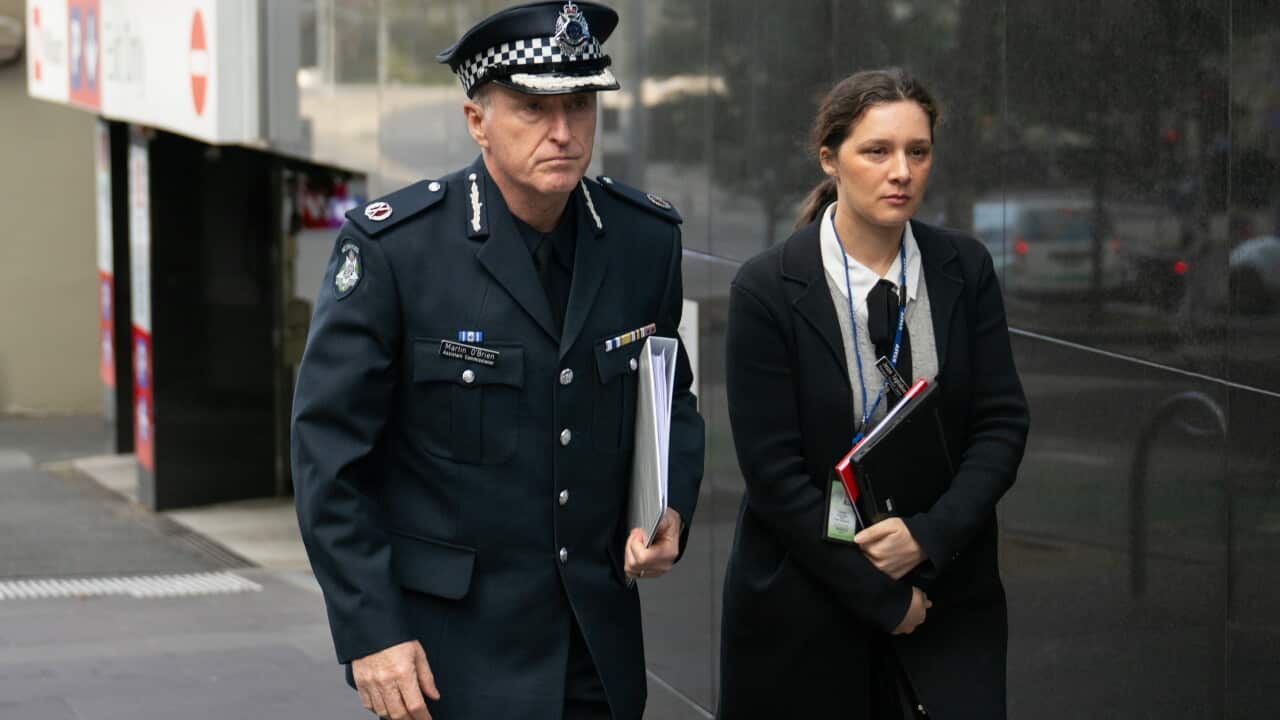
Today's hearings focused on the relationship between police and Jewish community security organisations, with Liberal MP Julian Leeser, Dor Foundation chief executive Tahli Blicblau, AFP assistant commissioner Stephen Nutt and Victoria Police assistant commissioner Martin O'Brien among those appearing before the commission.
The evidence is expected to help shape the commission's understanding of police data collection, security risk assessments and the role of emergency preparedness in responding to threats against the Jewish community.
News that makes sense
Your trusted source for staying up-to-date with the world around you. Get free daily news updates and analysis, straight to your inbox.
Victoria Police also faced scrutiny over how antisemitic incidents are recorded. The commission heard an abusive phone call to a synagogue, in which the congregation was allegedly described as "genocidal" and "maggot rat Jews", was not recorded as a prejudice-motivated incident.
O'Brien confirmed no incident fact sheet had been logged for the call, which is required for any prejudice-motivated crime that relates to racial, political or ideological circumstances.
O'Brien said the force had "automatic scanning" every day of incidents, along with human analysts to consider threats.
A separate incident involving a 5.5m Nazi hakenkreuz symbol painted on a construction site was also not categorised under the relevant reporting system.
Jewish leaders call for governments to fully fund community security
Security funding emerged as one of the dominant themes of the week's hearings, with Jewish community leaders telling the commission families, schools, places of worship and community organisations continue to bear much of the cost of keeping their communities safe.
On Thursday, the commission heard government funding since 2023 has covered about half of the security costs incurred by the Executive Council of Australian Jewry, which received $25 million to distribute to community organisations, places of worship and events.
More than 160 applications seeking a combined $42 million were made that year.
Executive Council of Australian Jewry co-chief executive Peter Wertheim told the inquiry governments should ideally reimburse the council for all security costs it handles, while almost 200 organisations have applied for the latest federal funding allocation of $124 million over three years.
The inquiry also heard vulnerable synagogues and Jewish organisations in Victoria had previously been unable to access some security grants because they could not meet co-contribution requirements, while NSW officials said no such requirement existed in that state's security funding programs.
Schools and synagogues describe the impact of rising antisemitism
Community leaders fronted the commission on Wednesday, describing the growing financial and emotional toll rising antisemitism has had on Jewish Australians.
Representatives from Jewish schools told the commission parents were paying annual security levies worth millions of dollars collectively. Bialik College in Melbourne charged an $840 security levy per student this year, while Melbourne's Mount Scopus Memorial College charged $1,130 per student in 2025.
The inquiry heard security costs at Bialik College had increased by 230 per cent since 2022, with some parents volunteering alongside armed guards to help protect students during school drop-off and pick-up.
Earlier in the week, faith leaders also described the lasting trauma following the firebombing of Melbourne's Adass Israel Synagogue, with the commission hearing the synagogue had unsuccessfully sought government funding to improve security before the December 2024 attack.
Witnesses also described the social impacts of antisemitism, telling the inquiry some Jewish children had been excluded from birthday parties and social media groups, while families felt less comfortable openly expressing their faith and culture. Progressive synagogues also reported bomb threats and declining preschool enrolments.
Bondi attack a key focus
Earlier in the week, concerns emerged the commission could miss potentially significant evidence relating to last year's Bondi terror attack after a former source for Australia's intelligence agency, known as Marcus, was denied a visa to travel to Australia.
Marcus said he warned the Australian Security Intelligence Organisation about the father-and-son gunmen behind the attack years before the shooting. The commission has said the information he outlined "clearly and directly engages" its terms of reference, but stopped short of intervening in his visa application.
Instead, it said it remained eager to find a practical way to receive his evidence or take a statement from him.
Separately, more than a dozen eyewitnesses and survivors of the Bondi attack were granted anonymity this week after a court extended suppression orders to protect their identities and reduce the risk of re-traumatisation and threats to their safety.
What happens next?
Hearing block five wrapped up in Melbourne on Friday, with the commission announcing protests and police responses will come under scrutiny during a future hearing block in August.
The inquiry will next move to Sydney, where hearing block 6 will run from Tuesday 28 July to Friday 31 July.
It will examine guidance, training and frameworks for responding to antisemitic conduct across different sectors, including how government agencies and institutions can better prevent and respond to manifestations of antisemitism.
For the latest from SBS News, download our app and subscribe to our newsletter.







