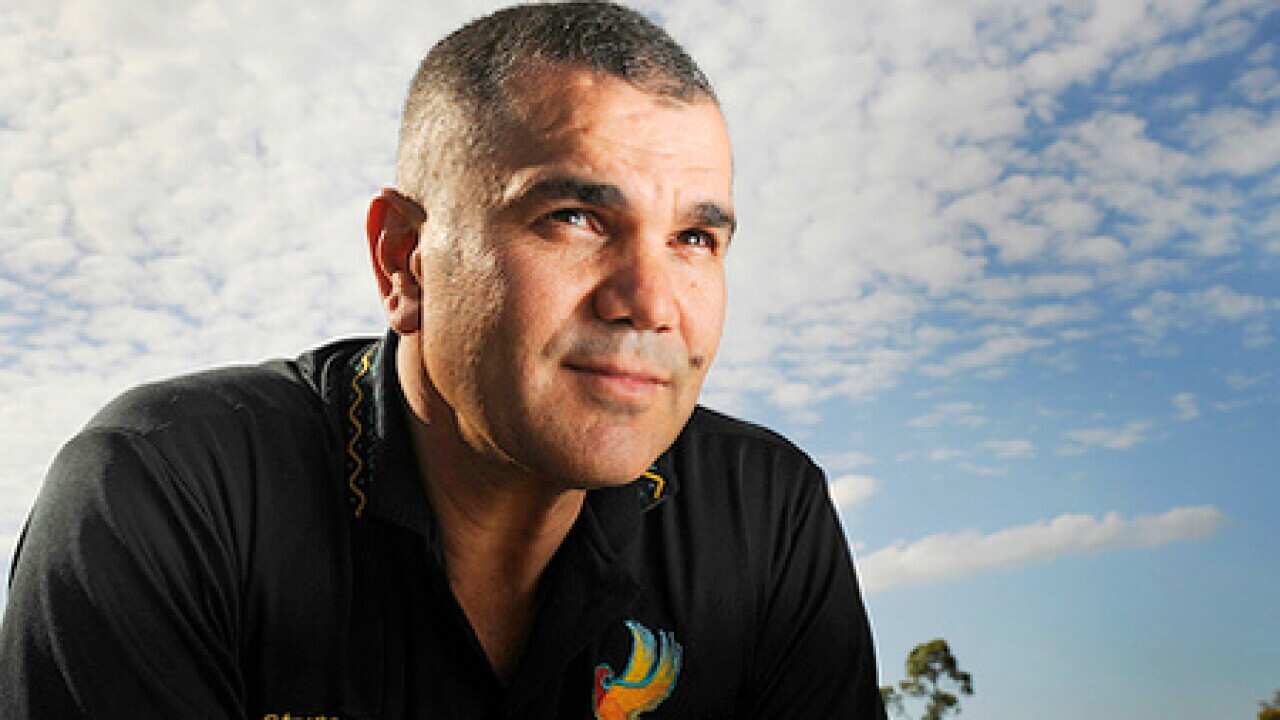
Chris Sarra says the way to close the gap between indigenous children and their peers could be to have specialist English teachers working in remote communities.
Queensland's nominee for Australian of the Year said the idea was guaranteed to boost literacy and numeracy.
The Queensland government's landmark 2007 Closing the Gap Report showed marked differences between indigenous and non-indigenous Year Seven students' reading, writing and math benchmarks.
News that makes sense
Your trusted source for staying up-to-date with the world around you. Get free daily news updates and analysis, straight to your inbox.
'Specialist skills'
Dr Sarra said progress would be made if English-as-a-second-language teachers worked in remote Aboriginal and Torres Strait Islander schools, where local languages often predominate.
"If you look at metropolitan schools where there is a high migrant intake or refugee population, there are teachers with specialist skills and strategies," Dr Sarra told AAP.
"The same is needed in remote areas."
Dr Sarra is best known for introducing the Strong and Smart program as principal at the Cherbourg State School, an area with high rates of alcoholism and domestic violence in Queensland's southwest, between 1998 and 2005.
Children started monitoring their own "unexplained absences" as a class, an Aboriginal studies program was central to the curriculum, a school uniform and song were introduced and elders were invited to forge a school vision.
Drastic cuts in absenteeism
The program led to a 94 per cent cut in absenteeism and hikes in literacy and numeracy.
Dr Sarra now heads the Stronger Smarter Institute at the Queensland University of Technology in Caboolture, which is rolling out a $16 million program to about 60 schools.
He said welfare-linked reform, such as the Family Responsibilities Commission operating in four Cape York communities, did not appear to work as effectively.
Under that scheme, authorities are notified of school absenteeism, child safety reports, court convictions and tenancy breaches.
'Narrow strategy'
The FRC can then impose conditions on welfare payments, refer people to community support services or have them enter into family responsibility agreements.
"I think it is a pretty narrow-minded strategy and one that doesn't really address the true cause of the issue and that is: what is it that makes a child want to come to school and makes children and parents want to be involved in the school?" Dr Sarra said.
Dr Sarra said that governments were often reluctant to take big leaps and that policy needed to be reassessed from a different angle.
"It is just too easy to assume Aboriginal children are broken and need fixing," he said.







