Key Points
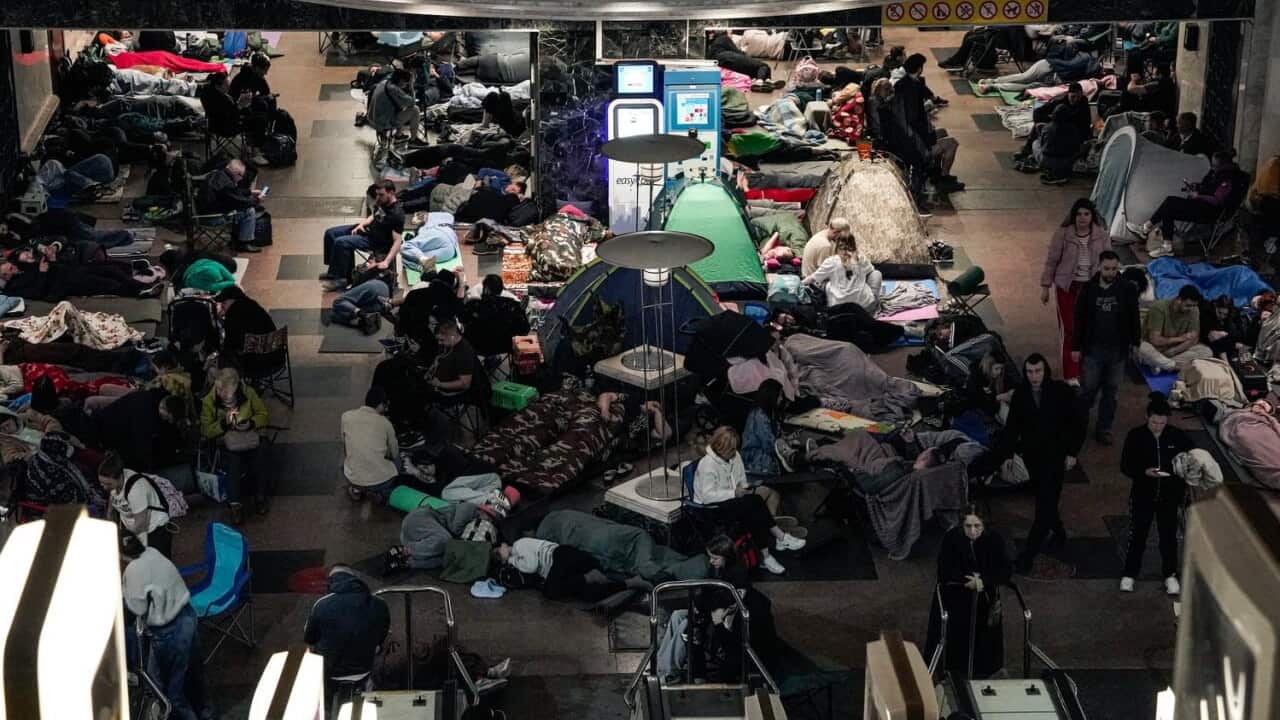
- Kyiv's metro — 46 stations across the city — has become an emergency refuge for the capital under bombardment.
- Russia's defence ministry said the strikes targeted military production sites and denied targeting civilians.
More than 40,000 people took shelter in Kyiv's metro system overnight as Russia launched one of its largest attacks of its war on Ukraine, killing at least 22 people and wounding 130 across the country.
The strike, which Ukrainian officials said involved 73 missiles and 656 drones, was the third heavy assault on the capital in under a month.
Russia has targeted Ukraine's power supply and infrastructure in a war more than four years old, while Ukraine has stepped up attacks on Russian oil facilities.
The Kremlin warned that it intended "systematic strikes" on targets in Kyiv in response to a drone attack on a dormitory in Ukraine's Russian-held region of Luhansk, which killed 21.
Ukraine denied the attack.
News that makes sense
Your trusted source for staying up-to-date with the world around you. Get free daily news updates and analysis, straight to your inbox.
Authorities said 16 people — including two children — died in the south-eastern city of Dnipro when a four-storey apartment building collapsed. Seven were killed in Kyiv.
Anastasia, a Kyiv resident whose building was damaged in the attack, described a "loud" and "terrifying" night huddled in her bathroom before evacuating.
"All the windows were blown out completely; there are no windows at all. It wasn't just one explosion here all night," she told Agence France-Presse. "The night here was just a nightmare."
Another resident, Olha Mudra, spoke to Reuters at the site of one strike with her six-year-old daughter Natalia, her face and clothes covered in dust.
"We couldn't understand what was happening," she told Reuters. "Some kind of apocalypse?"
A city sheltering underground
Kyiv's metro — 46 stations across the city — has become an emergency refuge for the capital under bombardment.
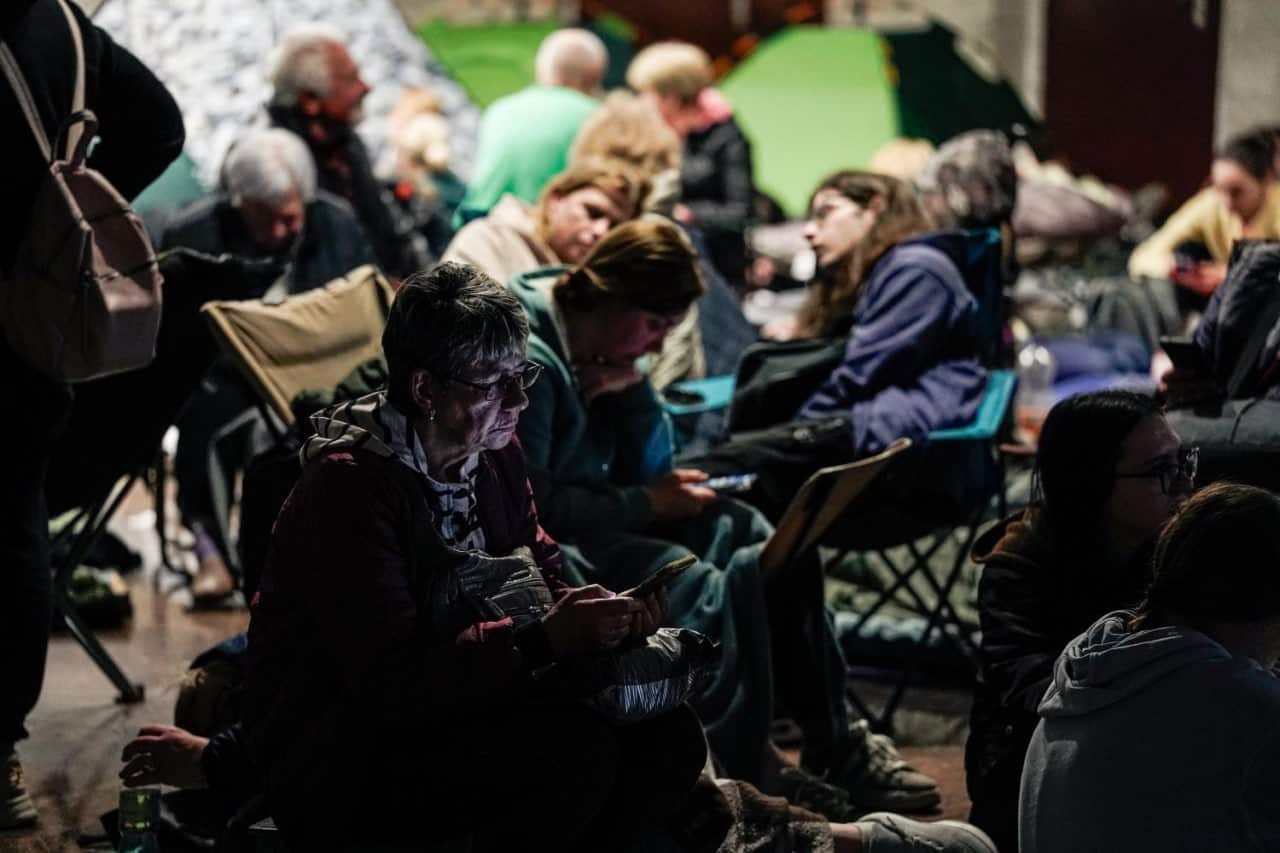
Kyiv Metro said more than 41,000 people, including almost 4,500 children, sheltered in its subway network during the shelling.

"This is the highest number of people in the metro during a nighttime air raid in recent years," Kyiv Metro said. "During an air raid alert, 46 underground metro stations operate in shelter-in-place mode, and all lobbies are open for entry without exception.
"There are usually fewer people at central stations during an air raid alert. Therefore, the metro recommends using them in times of danger, if possible."
Kyiv Metro advised people seeking shelter not to bring bulky items or tents so that more people could use the space, and asked passengers to be considerate of staff working through the night to keep the network running.
It also advised those sheltering to bring warm clothes, blankets and sleeping mats, noting the underground temperature sits at 17 to 18 degrees.
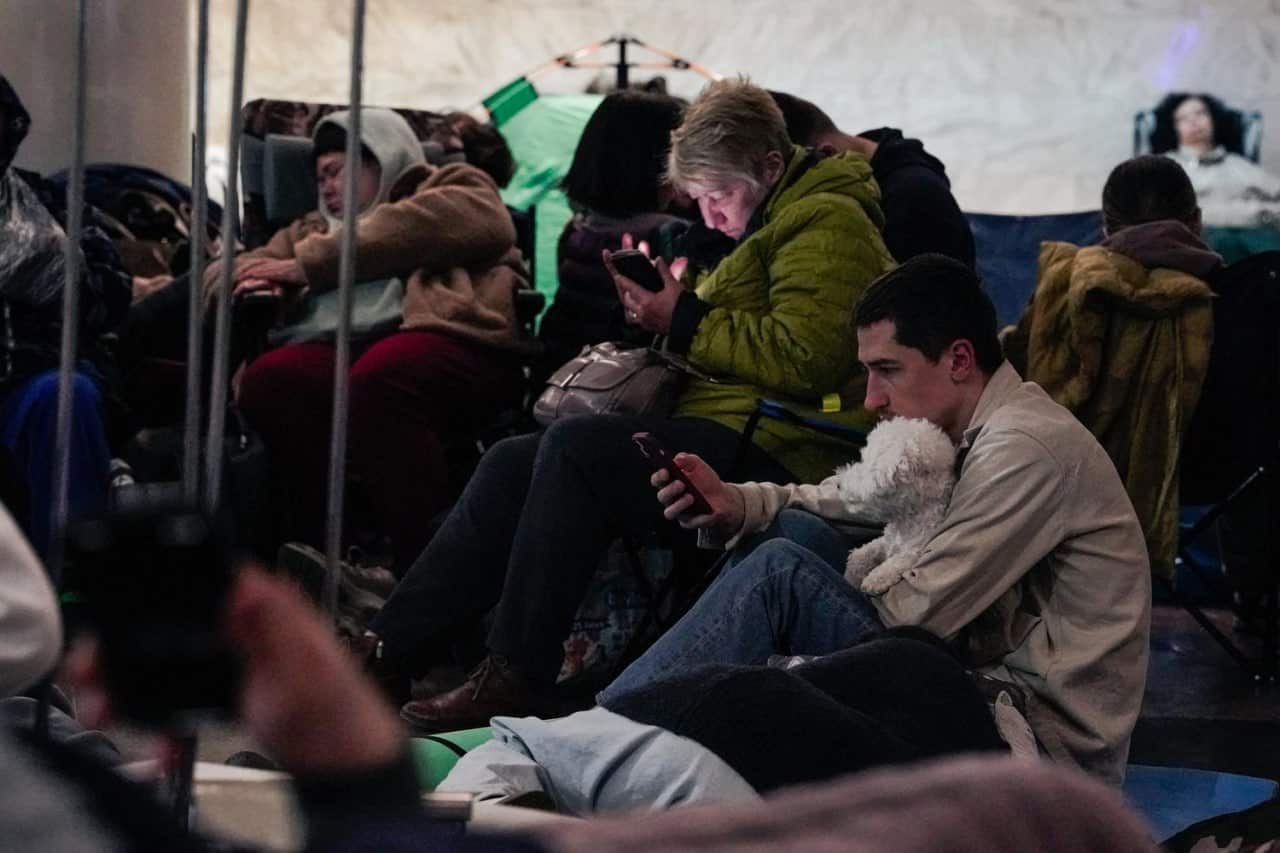
Metro stations have been operating except for when an air raid alert has been declared.
Warnings of a second attack
Ukrainian President Volodymyr Zelenskyy said it was a "brutal strike" and warned that intelligence suggested Russia could launch a new assault for the second night in a row.
"According to our intelligence, another large-scale attack may occur tonight," he said in his nightly video address, urging residents to listen to air raid alerts.
He repeated that Ukraine was short of weapons to counter incoming Russian missiles.
"Unfortunately, the current level of supplies for our air defence does not enable us to intercept a significant portion of the missiles," he said.
Zelenskyy said he had written to United States President Donald Trump and US Congress the previous week, asking for air defence systems.
As of Monday, officials said he had not received a response.
"This was a large-scale attack and an absolutely clear statement from Russia: if Ukraine is not protected from ballistic and other missile strikes, these attacks will continue," Zelenskyy said on Telegram.
Ukraine's air force said the attack included 33 hard-to-shoot-down ballistic missiles and eight Zircon hypersonic missiles — believed to be the largest number of the weapon used in a single attack during the war.
In Kyiv, at least nine high-rise buildings, a kindergarten, a clinic, offices and administrative buildings were damaged. The attack cut power to 140,000 residents, power company DTEK said.
In Odesa, a maternity hospital was struck while women were in labour and newborns were inside, though authorities reported no casualties.
Fifteen people, including a child, were wounded in the eastern city of Kharkiv that lies near the Russian border, according to the mayor, Igor Terekhov.
Russia's defence ministry said it had carried out a "massive strike" on Ukraine's defence industry facilities using high-precision long-range weapons and denied targeting civilians.
Russian regions also came under attack.
The Ilsky oil refinery, in the southern Russian region of Krasnodar, caught fire after a drone attack, local authorities said.
In Russia's Belgorod region bordering Ukraine, an 11-year-old boy was injured after a Ukrainian drone hit a home.
— With additional reporting by Reuters and Agence France-Presse.
For the latest from SBS News, download our app and subscribe to our newsletter.







