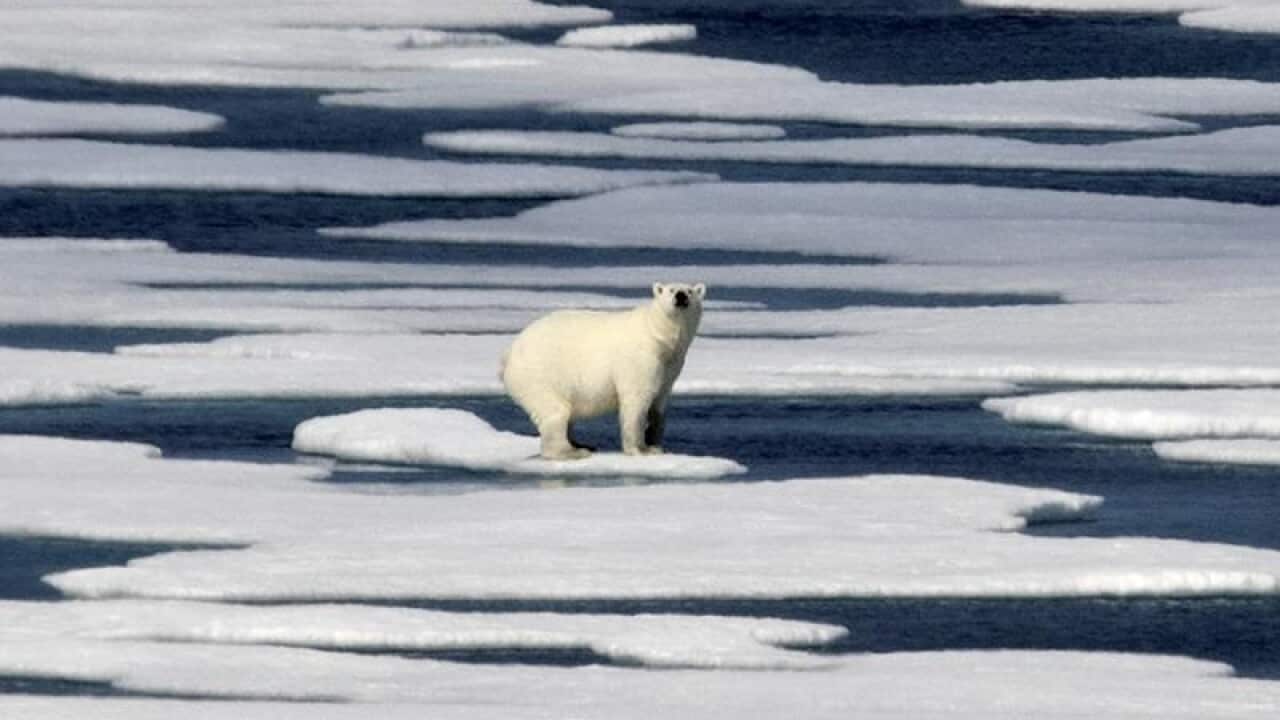
Arctic sea ice may be thinning faster than predicted because salty snow on the surface of the ice skews the accuracy of satellite measurements.
A new study from the University of Calgary's Cryosphere Climate Research Group was published on Tuesday in the academic journal Geophysical Research Letters.
It found satellite estimates for the thickness of seasonal sea ice have been overestimated by up to 25 per cent.
That means the Arctic Ocean could be ice-free much sooner than some scientific predictions, which forecast sea ice will first disappear completely during summer months between 2040 and 2050, according to lead author Vishnu Nandan.
Ice-free summers in the Arctic Ocean would impact global weather patterns by increasing the magnitude and frequency of major storms, and alter the Arctic marine ecosystem, making it harder for animals like polar bears to hunt.
News that makes sense
Your trusted source for staying up-to-date with the world around you. Get free daily news updates and analysis, straight to your inbox.
There are a wide range of projections as to when Arctic sea ice will start disappearing in summertime as a result of warming global temperatures, and the University of Calgary study calls into question satellite measurements provided so far.
"The problem is, microwave measurements from satellites don't penetrate the salty snow very well, so the satellite is not measuring the proper sea ice freeboard and the satellite readings overestimate the thickness of the ice," Nandan said.
The sea ice freeboard refers to ice that can be seen above sea level and co-researcher John Yackel said, "Our results suggest that snow salinity should be considered in all future estimates on the Arctic seasonal ice freeboard made from satellites."







