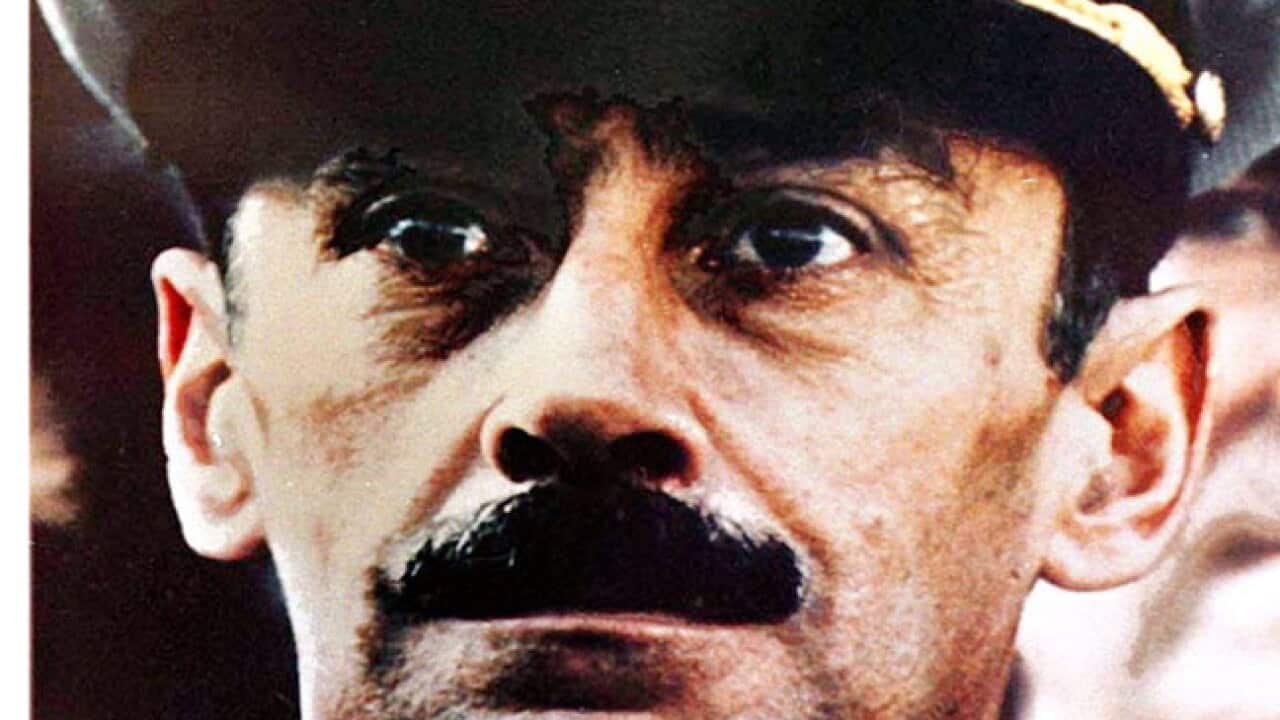
Former Argentine dictator Jorge Videla admitted for the first time in a new book that "7,000 or 8,000 people" disappeared under his regime between 1976 and 1981.
Caferino Reato, author of the book called "Final Disposition," says Videla admitted the disappearances during 20 hours of interviews in the federal military prison where he is held.
"Let's say there were 7,000 or 8,000 people who had to die to win the war against subversion," the book quotes Videla as saying.
News that makes sense
Your trusted source for staying up-to-date with the world around you. Get free daily news updates and analysis, straight to your inbox.
Sentenced to life in prison for crimes against humanity, the former dictator, 86, also admitted he decided on "the disappearance of the bodies to avoid provoking protests inside and outside the country," according to the book by Reato, who is a journalist and political scientist.
"Each disappearance must certainly be understood as a way to hide, to conceal a death," Videla is quoted as saying in excerpts published on the website of publisher Random House Mondadori.
Videla was the first president of the last Argentine dictatorship, which ran from 1976 to 1983.
He said insurgents compelled him to take action that ended in their disappearances and deaths.
"There was no other alternative," Videla said. Military leaders "were in agreement that it was the price that must be paid to win the war against subversion and we needed that it not be obvious so society would not realize it. It was necessary to eliminate a large group of people who could not be brought to justice nor shot either," he said.
The author drew the name of the book, "Final Disposition," from a comment made by Videla.
"'Final Disposition' was the phrase used. They are two very military words and they mean to take something out of service that is useless. When, for example, you're talking about a piece of clothing that you no longer use or is no good because it's worn out, it goes to final disposition."
The former general said that two months before the March 24, 1976 coup, military leaders began drawing up lists of people they thought should be arrested immediately after the overthrow of Isabel Peron, who was president from 1974 to 1976.
"There are no lists with the fate of the disappeared," Videla said. "There might be partial lists, but they're messy."
He added that "from a strictly military point of view, we did not need the coup. It was a mistake."
Humanitarian organizations estimate that about 30,000 people disappeared during the dictatorship, most of them in about 600 clandestine detention centers.
The Argentine government continues to prosecute some of the accused human rights violators of the military dictatorship. There were 84 new convictions in 2011 and 843 more trials are pending.







