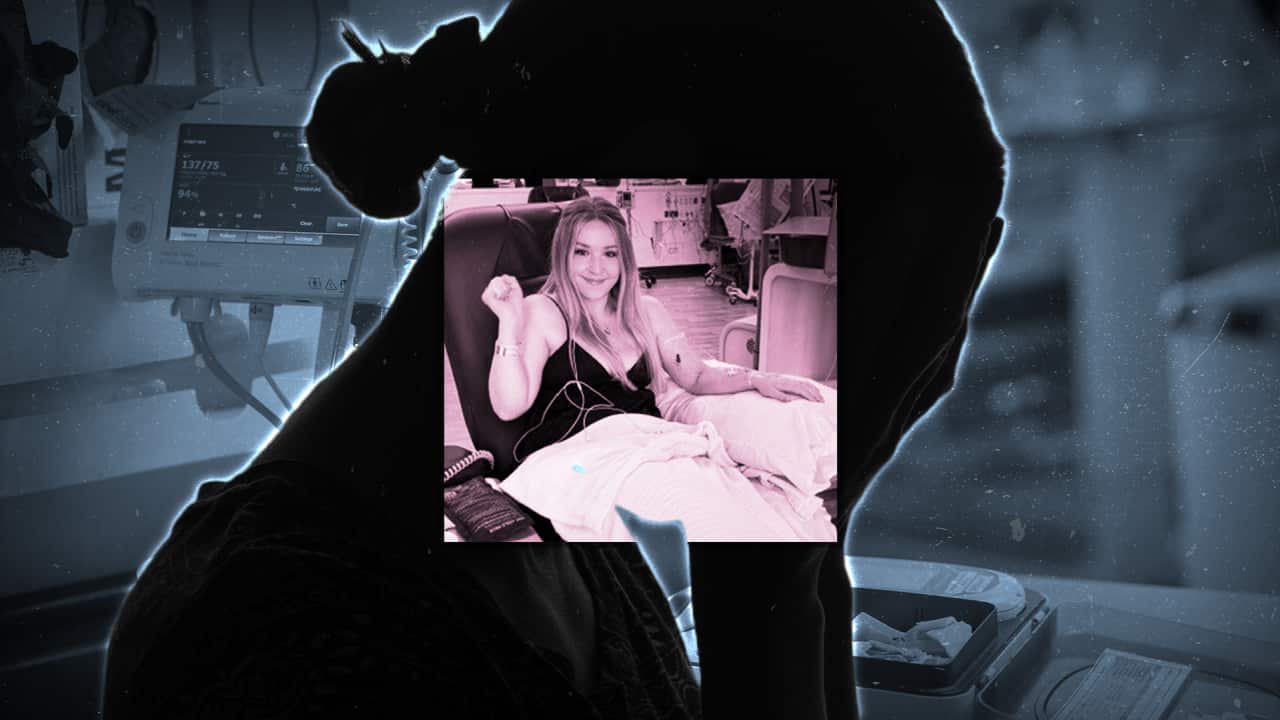
Ashleigh Middleton has spent months campaigning to keep a drug that's holding her cancer at bay on Australian shelves.
Now she's won — but says the uncertainty surrounding long-term access hasn't gone away.
The 31-year-old breast cancer patient was shocked when it was announced in April that Zoladex — a monthly implant used to suppress hormones in women with hormone-positive breast cancer as well as a range of other conditions affecting women — would be pulled from the Pharmaceutical Benefits Scheme (PBS) and no longer supplied through its usual distribution pathway from 1 November.
The decision, made by the drug's manufacturer, AstraZeneca, prompted concern among patients and clinicians who questioned how those who rely on the treatment would access an alternative and whether suitable substitutes would be available for all conditions the implant is used to treat.
Australia was the only market in the world affected.
News that makes sense
Your trusted source for staying up-to-date with the world around you. Get free daily news updates and analysis, straight to your inbox.
Angered by the move and worried about the precedent it could set for other medications, Middleton started a change.org petition, calling on AstraZeneca to reverse the decision and urging the federal government and the Pharmaceutical Benefits Advisory Committee to secure PBS-listed alternatives.
The petition has since attracted more than 42,000 signatures.
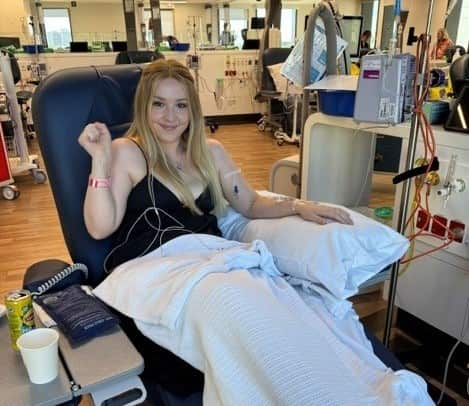
On 16 July, AstraZeneca reversed course.
The company now says it will provide the monthly implant free of charge to patients who have no suitable alternative, with no end date listed — a shift from its earlier plan to provide six months of free access while patients transitioned to other arrangements.
Asked whether AstraZeneca could guarantee the medication would remain available, a spokesperson told SBS News: "The Zoladex Continuity Program is not a time-bound program."
For Middleton, it's a win worth celebrating — but not one that has settled her nerves.
"It's a really, really good step in the right direction, but it's definitely not all the way there," she tells SBS News.
I think putting in that indefinite timeline does leave it a bit questionable — nobody really knows what that means.
"But I think AstraZeneca have recognised it was probably a bad decision on their part, so at least putting a little something extra in there, saying it's indefinitely going to be available and that there's no cut-off time, I think is a positive," Middleton says.
"But I think the indefinite will definitely run out of time."
Two weeks on from that announcement, with November fast approaching, those affected are left with a mix of celebration, confusion and ongoing concern about what access will look like in practice.
Why patients fear losing access
While many people may not have heard of Zoladex, its 3.6mg implant has become a lifeline for many of the patients who rely on it.
It's prescribed to suppress hormones in premenopausal women with hormone-positive breast cancer, helping reduce the risk of recurrence by suppressing ovarian hormone production.
It's also given to some patients with endometriosis who haven't responded adequately to other treatments. In some cases, it's used to protect ovarian function and preserve fertility in women undergoing chemotherapy, including those whose cancers are not hormone-driven.
The suitability depends on an individual patient's circumstances, and medical specialists determine whether it is the most appropriate treatment option.
In 2025, 13,580 patients were prescribed the medication in Australia.
In its announcement, AstraZeneca committed to supplying the 3.6mg implant "at no cost in Australia from 1 November 2026" for patients without a suitable treatment pathway.
"'Without suitable treatment pathways' means that if the clinician determines there are no suitable alternative treatments for the patient, then they will receive access to the Zoladex monthly (3.6mg) implant through the Zoladex Continuity Program," an AstraZeneca spokesperson tells SBS News.
"Therefore, if a clinician prescribes the implant as a new treatment option for a patient after 1 November 2026, they will be able to receive access to it through the Zoladex Continuity Program."
It's set to apply to patients currently taking the drug and those who may need to start it after that date, across the range of conditions the implant is designed to treat.
The Department of Health, Disability and Ageing says patients will continue to access the implant through their normal prescribing and dispensing arrangements until 31 October.
AstraZeneca says further advice for healthcare professionals, including details about registration and enrolment, will be released in September.
A second, higher dose — the 10.8mg implant, given every three months — is used to treat prostate cancer in men and is unaffected by the withdrawal.
AstraZeneca has applied to extend the 10.8mg implant's PBS listing to hormone receptor-positive breast cancer patients, but the Therapeutic Goods Administration is still assessing that submission.
AstraZeneca tells SBS News the 10.8mg implant is "registered for use in breast cancer in more than 70 countries" and that they had prepared a submission demonstrating it is "non-inferior" to the monthly dosage for certain types of breast cancer.
Before the reversal, Dr Christine Lai, a general surgeon who treats women with breast cancer, told SBS News the three-monthly dose is "not as efficacious in keeping the hormone levels suppressed in younger women".
She added that similar doubts had been raised about whether it's a viable substitute for endometriosis or fertility preservation at all, conditions Australia would be left to test alone as the only market affected by AstraZeneca's decision.
'It's caused so much stress'
Few people have felt the whiplash more than Kirsten — who, for privacy reasons, doesn't want SBS News to use her last name. She was diagnosed with endometriosis ten years ago but has lived with the condition for much longer.
The 32-year-old tried close to 20 different medications, several surgeries to remove the endometriosis, and a total hysterectomy three years ago to manage her pain and symptoms, leaving just one ovary in place at the recommendation of her specialist.
Zoladex is the only thing to have worked for her. Without access to it, she says her only other option may be surgery to have her remaining ovary removed — a decision she does not want to make without exploring other treatment options with her specialist.
"I'm really happy that endometriosis has been acknowledged in the access period and that it will remain available for me, but I don't know — I'm still concerned that they could change their mind at any time and remove it," Kirsten tells SBS News.
She doesn't fully understand the reasoning behind the reversal.
"If they can afford to offer it for free, then what's the problem with it being on the PBS? It doesn't make any sense whatsoever."
A spokesperson for AstraZeneca earlier told SBS News: "The decision to discontinue the Zoladex monthly [3.6mg] implant from Australia's Pharmaceutical Benefits Scheme reflects the way the PBS currently works, which means that the price offered is too low, making it unsustainable to supply the medicine on the PBS."
With November fast approaching, Kirsten remains unsure how the enrolment process will work and is worried about whether accessing the program will require additional appointments with gynaecologist — appointments she says can already be difficult to afford.
It's honestly terrifying not knowing what's going to happen.
"I want to be happy that they've opened up the access program, but all of the uncertainty on how it's going to work and whether I'm going to be able to get access from the get-go is so stressful," she says.
"I'm cancelling holidays. I'm making sure that I'm banking leave at work in case I can't get access to medication and start having flare-ups again and can't work."
A spokesperson for AstraZeneca confirmed to SBS News there should be "no difference for patients who need continuous access to the Zoladex monthly implant".
Kirsten says the experience has affected her trust in both AstraZeneca and the government, although she acknowledges the reversal has provided some reassurance.
"All of these decisions seem like they've come out of the blue," she says.
"Especially now with the backflip on the access program — it's caused so much stress and so much uncertainty that I don't know what to believe anymore."
"I don't know what's going to happen. I don't know anything."
'Smoke and mirrors'
Dr Sharmitha Kathurusinghe, a Melbourne gynaecologist who works predominantly with endometriosis patients, welcomed the reversal but says it raises questions about the long-term future of access.
"If it was too unsustainable and a low price to provide it on the PBS, what is motivating AstraZeneca now to provide this free for our patients? And for how long will they do this?" she tells SBS News.
"Is it because of criticism that they have faced in the light of the fact that women will not be able to have this medication?
It is reasonable for us to be concerned that this may just be smoke and mirrors.
"In my experience in gynaecology care, I have not personally seen this happen before."
Kathurusinghe is also concerned about how straightforward the September enrolment process will actually be for patients.
"They might have to jump through more hoops and have multiple people sign paperwork to make it more challenging and not as straightforward to start the medication," she says.
An AstraZeneca spokesperson tells SBS News a patient's clinician will determine the patient's suitability for the prescription, including whether there are suitable alternative treatments.
"Clinicians will need to enrol patients into the Zoladex Continuity Program."
What AstraZeneca says about ongoing access
In a letter seen by SBS News, AstraZeneca's director of Corporate Affairs for Australia and New Zealand, Penny George, referenced Middleton's "coordination of the 42,000+ signatories" to her petition.
Middleton sees the acknowledgement as recognition of the pressure generated by the campaign.
For Middleton, the significance of the past few months extends beyond securing continued access to Zoladex 3.6mg — it is also about demonstrating that patients can influence conversations about medicines they rely on.
"I think the reassuring thing for me is less about the indefinite option of having Zoladex and more about the fact that if we make a lot of noise, they do respond to it," she says.
"I think the anxiety of medications being taken away will probably never go away for people that have had this occur, because it's not fun to go through. But I think it's definitely a step in the right direction at least from AstraZeneca."
She's not shy about crediting the people who pushed for change alongside her.
"The breast cancer community, we're a force.
"So don't mess with us."
While allowing herself to celebrate, Middleton is clear-eyed that little here is guaranteed.
"Whenever a company as big as AstraZeneca makes a move like this, it does get that anxiety going," she says.
"I don't think that would particularly go away, especially now that we've seen that they can do it and that these companies are comfortable doing it," she says. "We still haven't gotten approval for the higher dose on the PBS."
Unfortunately, it hasn't brought any more comfort about the future issues with access.
The Department of Health, Disability and Ageing previously acknowledged the limits of the government's role, telling SBS News that pharmaceutical companies "make their own commercial decisions" and "cannot be compelled by government to continue to list a product on the PBS".
Kirsten, who is waiting for more information, is calculating how much time she has left before the changes take effect.
"This year, it seems like it's absolutely flying by," she says.
"If I look at it in terms of injections, then I've only got two that I'm somewhat guaranteed to be able to access before I'm affected."
Even Middleton, for all her relief, doesn't expect the uncertainty to disappear completely.
"As much as I appreciate the indefinite access and the free access, I think it's a really great start with the patients that have been affected by it.
"It still doesn't change the fact that it might be removed, and we're still not sure how that will look."
Disclaimer: This article is for general information only and should not be relied on as a substitute for professional medical advice. Readers are advised to consult a qualified health professional for guidance specific to their situation.
For the latest from SBS News, download our app and subscribe to our newsletter.







