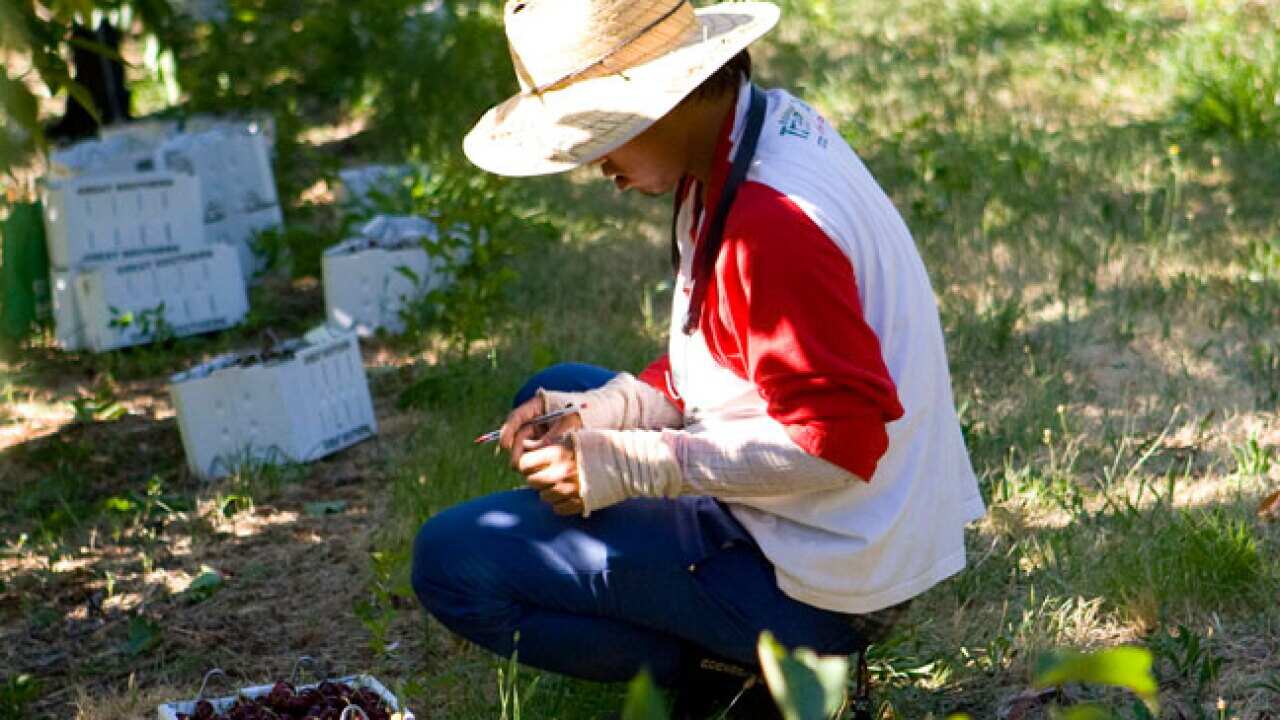
But they say there's a need to significantly improve support services for asylum seekers in rural and regional Australia, to boost the numbers willing to head to the bush to work.
(Transcript from World News Australia Radio)
The Department of Immigration says the current number of asylum seekers on bridging visas is about 5000.
In most cases, they can work while their applications to be recognised as refugees are assessed.
News that makes sense
Your trusted source for staying up-to-date with the world around you. Get free daily news updates and analysis, straight to your inbox.
Pamela Curr, from the Asylum Seeker Resource Centre in Victoria says they comprise an underutilised pool of potential workers.
"There are others who have gone out into the highways and byways of Australia as far north as Cairns as far West as western Queensland and NSW and managed to find work in meet works, stock feed, picking all manner of the agricultural jobs. Which are desperately begging to be filled. This is a godsend for Australia. This group of men whose families are in other countries so they're mobile, they will go anywhere for work."
Pamela Curr says the Asylum Seeker Resource Centre has been attempting to find employers in rural Victoria willing to take on workers on bridging visas.
But she says there's very limited support for people on bridging visas to take up work opportunities in the bush.
And she says employers are cautious about hiring this group of people.
"I was talking to a young bloke two weekends ago. He went from Melbourne to Rockhampton to the meatworks there where five or six of his friends who were on permanent visas, were working. They rang him and said they were desperate for work - they said come up here, you will get a job for sure. He arrived. This is a young man who actually worked in the meat industry in Iran. They took one look at his bridging visa and turned it down. Part of it is that they don't understand that on a bridging visa you've got the legal right to work. Immigration have refused to give these people a letter stating in clear terms that they do have the right to work. The government could assist by educating employers and giving these workers a letter stating unequivocally that they have got the right to work and giving them a hand to find, to link up with the employers."
The Asylum Seeker Centre is an independent, not-for-profit service in inner Sydney.
It provides a free recruitment service for employers, and ongoing support and advice when they recruit asylum seekers.
CEO Melanie Noden says generally asylum seekers on bridging visas are keen to get into the job market.
"The largest motivation is to be financially independent. That's extremely important. But we find that our clients have a high level of work ethic and have a high level of expertise and they work very hard. They're very eager to start a new life in Australia to contribute to their new community and to give something back and I also think like with all of us work provides them with an identity an occupation."
As for jobs in rural areas, Melanie Noden says many clients are prepared to travel for work but support services such as accommodation can be lacking.
And she agrees with Pamela Curr that many employers don't fully understand the potential of asylum seekers on bridging visas.
"I think the challenges are.. the first one probably is the lack of understanding by employers of the bridging visa and the fact that clients do have work rights. I think it's also convincing the employers that the asylum seekers are also capable of doing the job. Even if they might not have local work experience or local referees. Also the third probably main barrier is that their tertiary or professional qualifications are not recognised in Australia."
The Sydney-based organisation The House of Welcome helps people on bridging visas with housing and other services.
It encourages those on bridging visas to reduce their reliance on charities or other services, with the hope of them becoming self-sufficient.
The House of Welcome's Executive Officer Paul Bottrill says a number of factors work against people on bridging visas going to rural areas for work.
"We're actually trying to build relationships with groups in regional areas and we're undertaking a research project for services that are available in regional areas. Because when we try to encourage people to go to regional areas. The first question is generally what are the services going to be like. Particularly if you're on a bridging visa and you need to have appointments with Department of Immigration and Citizenship, people are thinking ok, am I going to have to travel from the rural areas to Sydney for those interviews? What access am I going to have to community connections? So we haven't seen ourselves any sort of interest or take up of the idea of going to rural areas for work. But it is something we want to encourage more but the only way we can do that is to increase the connections and increase the knowledge of the services available and to really try and promote that to our clients."
Paul Bottrill also says asylum seekers don't have the same access to English language classes that refugees do, making finding work hard and also increasing the risk of having to rely on charities to get by.
He thinks more funding for English language classes would be an effective measure for getting this group of people into work.
"One big challenge for asylum seekers is they don't have access to the English learning that a refugee actually does. Once they get their refugee status they're entitled to 510 hours of English classes. One of the largest barriers to employment is that language issue. But as an asylum seeker their dependent upon non-government funded programs like The House of Welcome to be able to provide some basic English classes that would help them to bring their language up to a level so that they would be able to get a job."
The National Farmers Federation says there's a critical skills shortage across all sectors of agriculture across Australia, with an estimated 100-thousand vacancies.
It anticipates that this number will increase, and it's been lobbying the federal government to make work conditions on visas more flexible.
Spokesman Brian Duggan says the main focus has been on an expansion of student and working holiday visas.
But he says the Farmers' Federation also sees a role for people on bridging visas in filling rural job vacancies.
"Principally if you look at the Australian economy, we're nearly effectively at full employment. There is a traction away to the mining sectors because our workers have the necessary skills. That is an issue that we need to address. There is the infrastructure problems that we face of our regional cities or towns that needs to be addressed. But farmers are of the belief that if they're willing to work with new Australians and also the current workforce that we have to give them productive and enjoyable jobs on the land."







