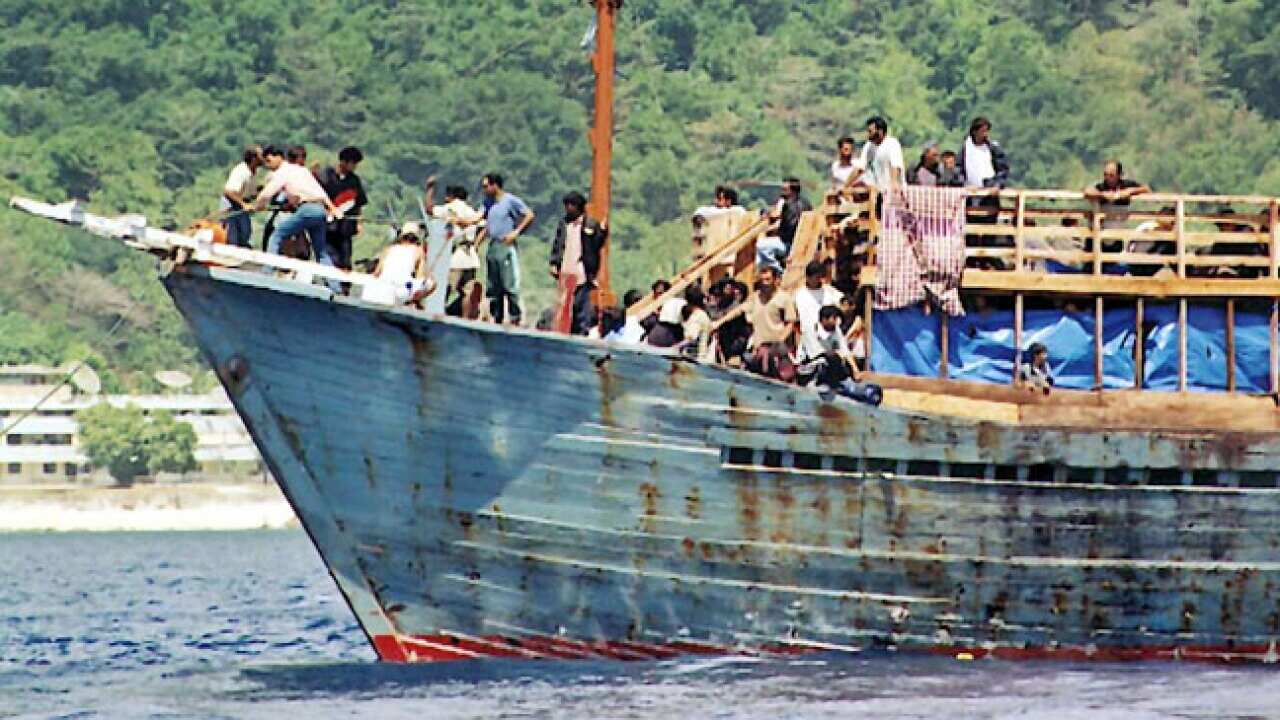
Australia, like many other countries in the world, detains individuals suspected of visa violations, illegal entry or unauthorised arrivals, until a decision is made by immigration authorities to grant them a visa or to repatriate them to their country.
Mandatory detention laws were introduced in Australia by the Keating Labor government, with bipartisan support, in 1992. It has since been maintained by successive governments with bipartisan support in parliament.
Australia has several detention centres across the country. The main ones are located at: Villawood, Christmas Island, Kimberley, Perth, Maribyrnong and Darwin. It also has Immigration Transit Accommodations and Immigration Residential Housing for 'low-flight and security risk detainees'.
Seeking asylum within Australia
News that makes sense
Your trusted source for staying up-to-date with the world around you. Get free daily news updates and analysis, straight to your inbox.
Australia provides protection for asylum seekers who meet the United Nations definition of a refugee, as defined in the 1951 Convention Relating to the Status of Refugees and its 1967 Protocol (Refugees Convention).
People in need of protection or asylum in Australia are resettled through Australia's Humanitarian Program. Such program is made of two components: onshore protection and offshore resettlement.
The onshore component is for people who apply for protection, or asylum, after arrival in Australia by plane or by boat.
The offshore resettlement scheme is for people who apply for a visa from overseas. It comprises two categories of permanent visas: Refugee and Special Humanitarian Program (SHP).
* The Refugee component is for people who are subject to persecution in their home country, who are typically outside their home country, and are in need of resettlement. The majority of applicants who are considered under this category are identified and referred by the UNHCR to Australia for resettlement. The Refugee category includes the Refugee, In-country Special Humanitarian, Emergency Rescue and Woman at Risk visa subclasses.
* The Special Humanitarian Program is for people outside their home country who are subject to substantial discrimination amounting to gross violation of human rights in their home country, and immediate family of persons who have been granted protection in Australia. A proposer, who is an Australian citizen, permanent resident or eligible New Zealand citizen, or an organisation that is based in Australia, must support applications for entry under the SHP.
Numbers
In 2009–10 a total of 13,770 visas were granted (of which 9,236 visas were granted under the offshore component and 4,534 visas were granted under the onshore component).
The Humanitarian Program for 2010–11 is set at 13,750 places (which comprises 6,000 places for Refugees and 7,750 places for applicants under the onshore program and the Special Humanitarian Program).
The government announced Australia will expand its humanitarian program to 14,750 places annually for the next four years.
Permanent and Temporary Protection Visas
Under current legislation all applicants for a protection visa who are found to engage Australia's protection obligations receive a permanent visa. This is since the current Labor government abolished temporary protection visas (TPVs) in 2008.
However, earlier this year, Immigration Minister Chris Bowen flagged the re-introduction of temporary protection visas for asylum seekers who riot in immigration detention centres.
Bowen proposed changes to the Migration Act meaning that any detainee convicted of a criminal offence could be denied a permanent protection visa. PM Julia Gillard clarified such visas would be different from Howard-era TPVs, as they would only be used for "people who commit offences whilst in immigration detention ... and they would not be an automatic policy for everyone".
Failed Afghan asylum seekers to go home
In January 2011, the government announced that failed Afghan asylum seekers would be sent straight back to the conflict-torn nation under a landmark immigration deal announced by the Australian government.
Under the agreement, Afghans declared genuine refugees will be allowed to stay but those who fail to meet the criteria can be automatically deported. About 50 Afghans in Australia were in limbo after failing the initial immigration process, but they may yet seek a judicial review, Mr Bowen said when making the announcement.
Refugee groups were disappointed with the agreement, saying it could not guarantee the safety of asylum seekers returned to Afghanistan. In September 2010, the immigration minister also announced the government would resume processing asylum claims from Afghan asylum seekers, which had been suspended for 6 months.
Detention of children
In October 2010 the government announced that it would move the majority of children and vulnerable family groups out of immigration facilities and into community-based accommodation by June 2011.
In March 2011 the government said following the announcement, 268 children under 15 had been approved for release into the community.
Changes following 2010 High Court ruling
In January 2011, the government announced changes to the refugee determination process for irregular maritime arrivals in response to the High Court decision that was handed down on 11 November 2010.
Under the new system, irregular maritime arrivals that meet the criteria for protection under the refugee convention will be considered for the grant of a protection visa.
The new Protection Obligations Determination Process will apply to asylum seekers who arrive by boat at an excised offshore place from March 1, as well as those who arrived previously and who had had not an assessment interview by that date.







