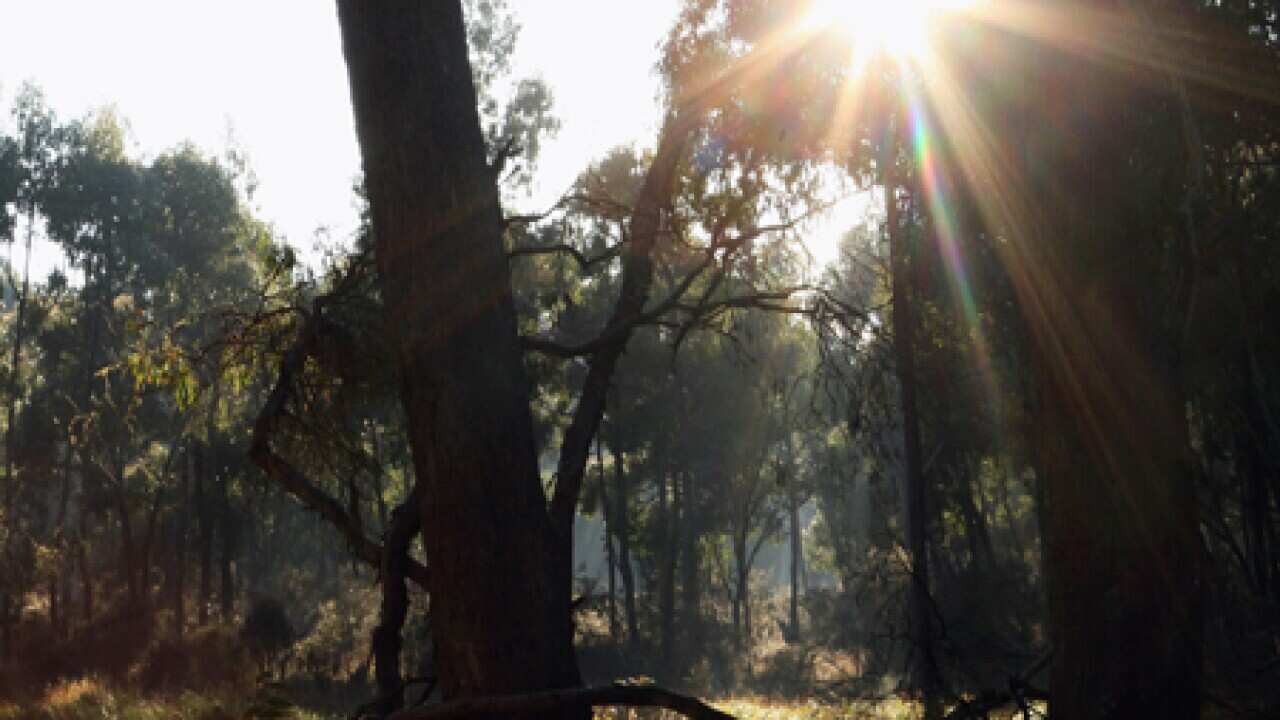
Australia's bush has been identified as a vast "pollution bank" that could be used to store 1.3 billion tonnes of carbon by 2050.
A study commissioned by The Nature Conservancy and the Pew Environment Group has found that 9.7 billion tonnes of carbon is stored in the forests, grasslands and woodlands of Australia's outback.
But if those environments were improved, more carbon could be stored - the equivalent of 7.5 million cars off the road every year for the next 40 years.
News that makes sense
Your trusted source for staying up-to-date with the world around you. Get free daily news updates and analysis, straight to your inbox.
Pew's Dr Barry Traill said improvements included better fire and grazing management, feral animal control, reducing land clearing and regrowing native vegetation.
"We can achieve a better future for our endangered animals, security for our natural heritage and a safer climate for a price tag of much less than $20 per tonne of climate pollution," he said.
The Nature Conservancy's Dr Michael Looker described the strategy as a "win-win-win" - preserving the outback, creating jobs and cutting pollution.
"We have a logical and inexpensive way to cut emissions right in our own backyard," he said.
The study, to be released in Canberra at 10am (AEST) today, says improving land practices in the bush could cut Australia's greenhouse emissions by five per cent by 2030.







