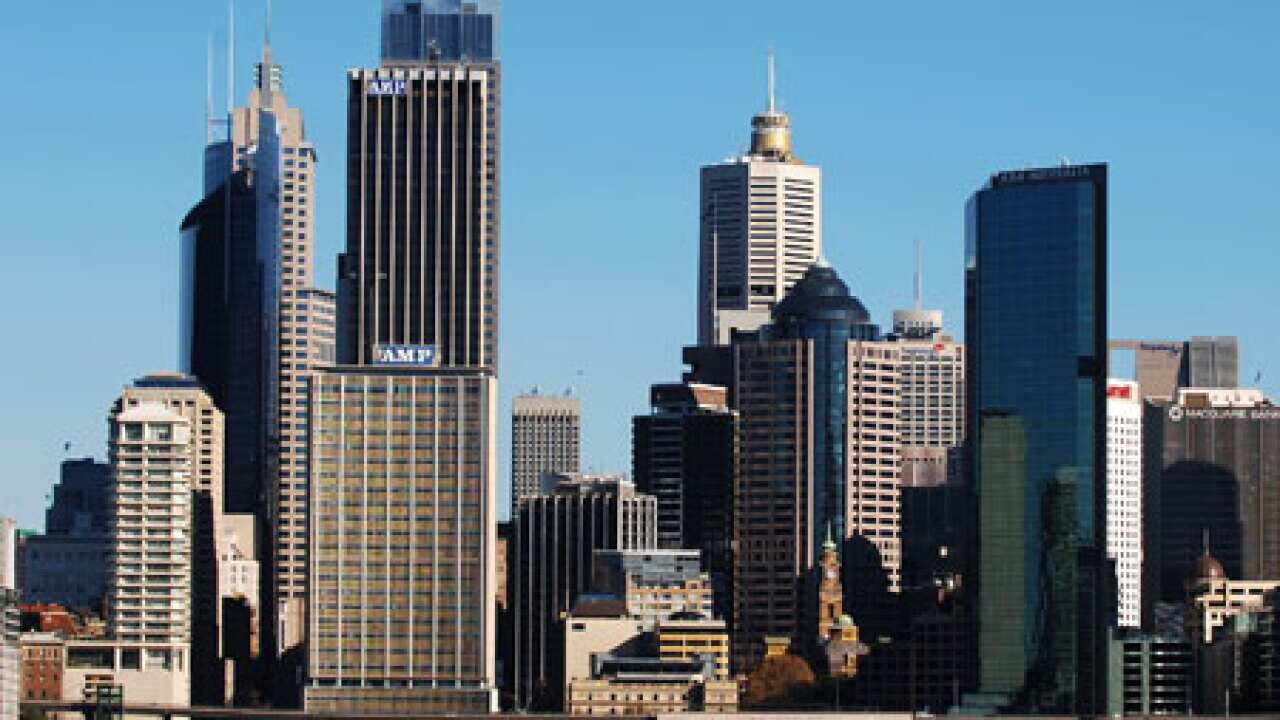
Smaller families in bigger homes and a continuing love affair with cars are putting pressure on Australia's cities, a new report shows.
Federal Infrastructure Minister Anthony Albanese on Friday released the State of Australian Cities report - a report card on how sustainable, liveable, and prepared our cities are for future growth.
Mr Albanese said the number of households in Australia is projected to increase from 7.4 million in 2001 to 10.2 million in 2026, with most of the growth concentrated in the nation's 17 cities.
News that makes sense
Your trusted source for staying up-to-date with the world around you. Get free daily news updates and analysis, straight to your inbox.
Demographic 'mismatch'
Efforts were needed to address the mismatch between demographic trends and housing stocks.
"The average number of people per household dwelling declined from 3.1 in 1976 to 2.6 in 2006, but the average number of bedrooms per dwelling rose from 2.7 to three," Mr Albanese said.
The proportion of dwellings with four-plus bedrooms increased from 17 per cent to 28 per cent between 1976 and 2006.
In some states and territories, up to 80 per cent of new dwellings are single detached housing, largely on greenfield sites, putting pressure on sustainability.
While national recycling rates have increased, total waste generation has also increased - by around 31 per cent between 2002/03 and 2006/07.
Emissions increase
Meanwhile, transport emissions are predicted to increase 1.58 per cent a year, or 22.6 per cent between 2007 and 2020.
Mr Albanese said urban congestion was hampering productivity, which was reliant on connections between businesses, people, goods and services.
The cost of road congestion, estimated at $9.4 billion in 2005, was likely to rise to $20 billion by 2020 without reform.
"Urban congestion contributes to traffic delays, increased greenhouse gas emissions, higher vehicle running costs and more accidents," Mr Albanese said.
Brisbane and Perth were expected to more than double in population size in the next 20 years, while Sydney and Melbourne would reach seven million.
Mr Albanese said sustainability needed to be not just an "add-on" but an essential component of urban policy.
"The cities of tomorrow will need to confront our energy-intensive lifestyles, our water consumption, the growth in motor vehicle dependency, in congestion and transport emissions," he said.
Cooperation with states urged
The report will form the basis of government policy and feed into a parliamentary inquiry into smart infrastructure, which is due to start next week.
Mr Albanese said the federal government wanted to work with state and local government on future planning, but was not looking for a fight.
"There is a real opportunity to be co-operative, rather than conflictive," he said.
All states are working on city plans, to be put in place by January 2012, following a decision by the Council of Australian Governments.







