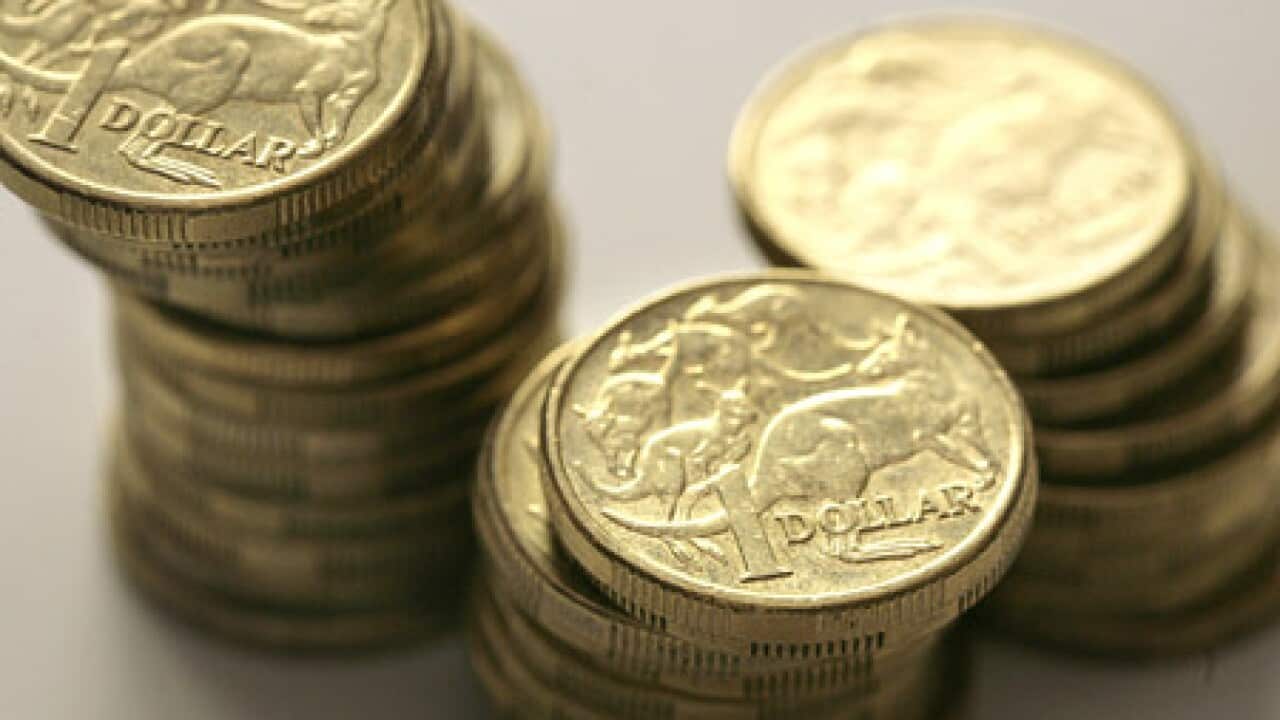
German backpackers Christian Morbe and Kathrin Veith were prepared for their stay in Australia to be expensive, but the skyrocketing Australian dollar is catching tourists like them by surprise.
"Five dollars for a bottle of water at the airport," exclaims 20-year-old Veith. "That's pretty heavy."
The Aussie, as the currency is known, has jumped almost 20 percent against the US dollar since June to post-financial crisis highs -- stunning foreign visitors who were expecting more value from the greenback.
News that makes sense
Your trusted source for staying up-to-date with the world around you. Get free daily news updates and analysis, straight to your inbox.
"All I know is that it's expensive," says Californian Wilfred Schulze of his Australian holiday from the harbourside forecourt of the Sydney Opera House, adding that his attitude was "spend it and cry later."
Tourism is one of the industries most affected by the rising Australian currency, which has hit its highest levels in two years in recent days, tipping close to 97 US cents after reaching 96.87 US cents on Tuesday.
And the dollar, once dubbed the Pacific peso, is showing no signs of stopping.
"We fully expect to see the Aussie dollar strengthening," Westpac chief currency strategist Robert Rennie said.
"If the Australian dollar is able to navigate October without a serious correction, I think the risks of us hitting parity (with the US dollar) by the end of this year will rise significantly."
The expectation of further global economic recovery and a rise in commodity prices over the next year to 18 months meant the Aussie would likely rally into 2011 and "potentially move above parity with the USD in the next six months", ANZ Bank said in a commentary.
Since it was first floated in December 1983, the Aussie has traded from below 50 US cents in early 2001 to its record high of 98.49 US cents in mid-July 2008.
The global financial crisis saw the currency drop to as low as some 60 US cents but the risk-driven Aussie has been on the climb during 2010 as the central Reserve Bank of Australia (RBA) has lifted interest rates.
Since June 7, 2010 -- when it traded at 80.97 US cents amid Greece's financial woes -- the Aussie has risen close to 20 percent as it benefits from Australia's mining boom, higher interest rates and a weakening US dollar.
"Very strong commodity markets and export markets are helping the currency directly, as well as by providing for a very strong domestic economy, pushing up our interest rates and our interest rate differentials for the rest of the world," ANZ chief economist Warren Hogan said.
"Most other major currencies are either weak because their economies are weak or weak because central banks in those places are trying to weaken those currencies."
Hogan said while the Aussie's recent run was "maybe a little bit overextended in the short-term", the currency was expected to consolidate in the mid-90 US cents range.
The rising dollar is placing a constraint on some sectors, particularly local tourism and wine exports, but at the same time Australians are taking advantage of the best exchange rate in years and flocking overseas.
Rennie said the Aussie's yield was attractive, and this would only increase if the RBA continued to lift rates from the current 4.50 percent, as expected, while rates in the US hovered at historic lows of little more than zero.
Indications that the US Federal Reserve will take further measures to boost a faltering recovery were also contrasting with the RBA's tightening stance as it confronts a strong and growing Australian economy, he said.
As fund managers scour the globe for safe but high-yielding investments, the Australia's nearest competition among G20 economies in terms of yield was probably Turkey, Rennie said.
"If you ask the question, Australia or Turkey, from a yield point of view which would you rather own, the answer that's always going to come back every day of the week from here to eternity -- 'I would much rather own the Australian yield'," he said.







