This audio is voiced by AI and may occasionally mispronounce words.
Share your feedback and help us improve this feature. Read more about how we use AI at SBS here.
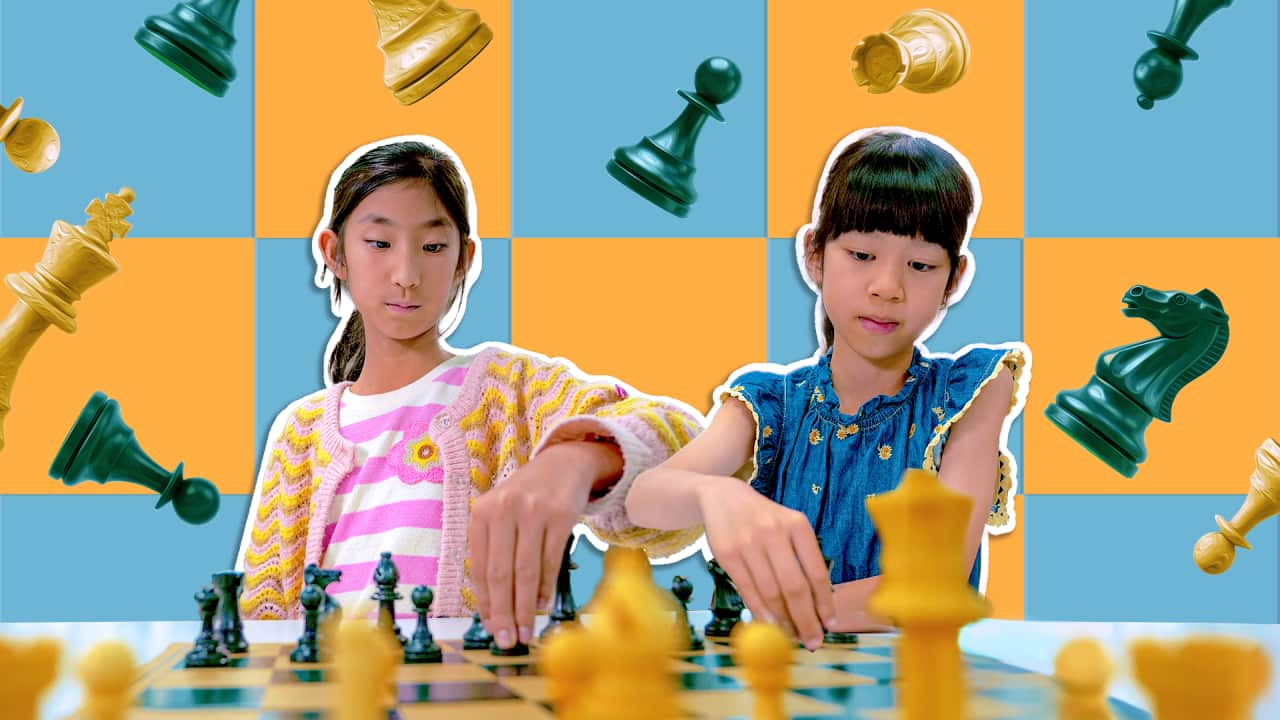
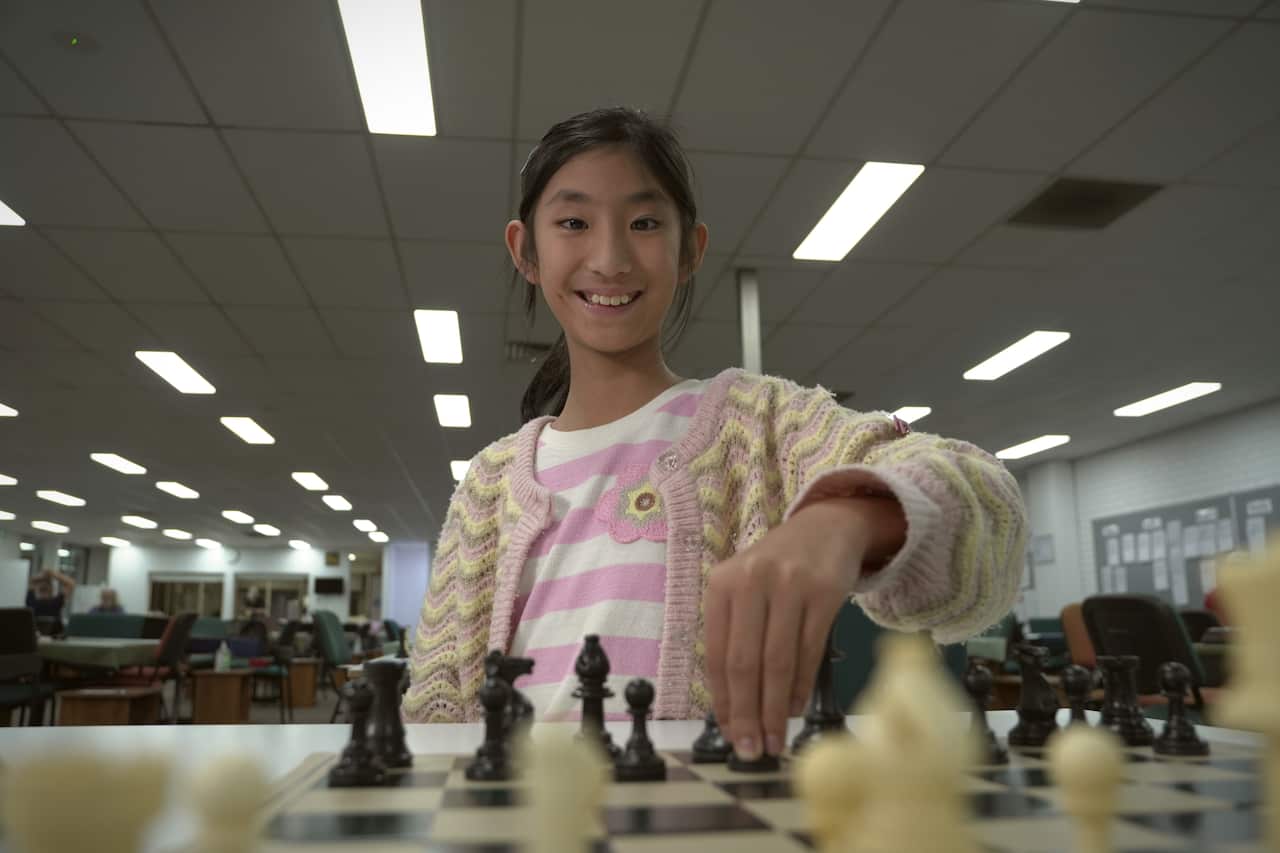
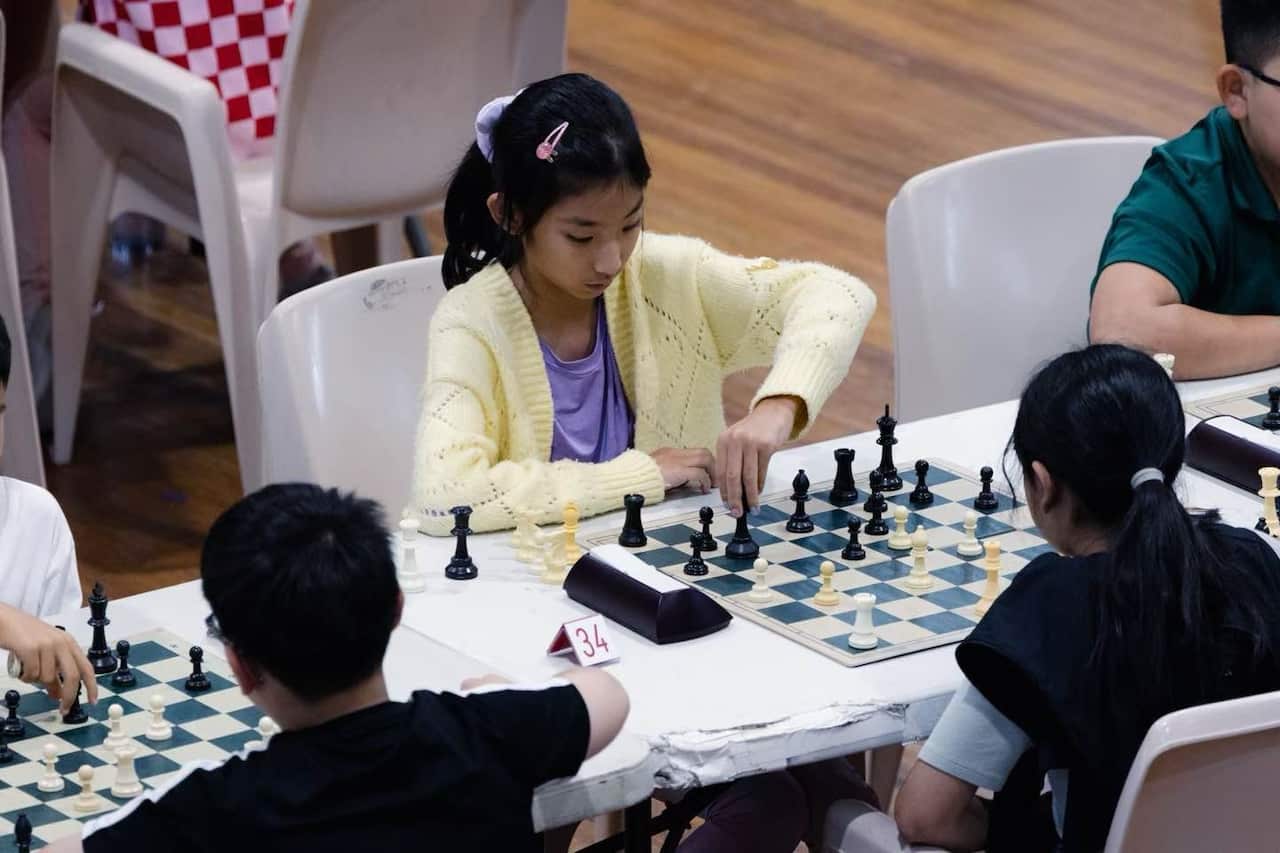
Without a word, Clarissa Liu softly shakes her opponent's hand at a chess club in Brisbane.
The room is silent — except for the offbeat clicking of chess clocks and the faint sounds of scribbling on paper.
Her fluffy pink-and-yellow cardigan stands out in the crowd, where each player is fixated on the board in front of them.
Like many times before, the nine-year-old is about to win a game of chess against a man more than twice her age.
I want to win for the girls because it just seems like there are so many more men playing chess than girls.
News that makes sense
Your trusted source for staying up-to-date with the world around you. Get free daily news updates and analysis, straight to your inbox.
"So, I like more girl chess players, and when I see people around me that are girls, I feel happy and I want to win," Liu tells SBS News.
While chess has found a new audience through pop culture and online platforms, many female players say the competitive world still feels overwhelmingly male, prompting questions around why so few girls continue playing into adulthood.
A game dominated by men
Popular streaming content, such as drama series The Queen's Gambit and a recent documentary about Hungarian chess champion Judit Polgár, has again put a spotlight on the experiences of women in the game.
Chess.com, the world's largest online chess platform, says it has surpassed 250 million members worldwide, with nearly 15 million new accounts created in the first three months of 2026 alone.
But despite chess soaring in popularity, the number of women playing at an elite level remains low.
Girls and women make up just 16.5 per cent of the world's 1.4 million active chess players, according to the International Chess Federation's (FIDE) 2026 Gender Equality in Chess Index (GECI) report.
Queensland-based Eleanor Wu is the 2025 Australian under-8 girls' chess champion.
She is also one of the few young female players at her club and says she gets frustrated when she hears chess described as a game for boys.
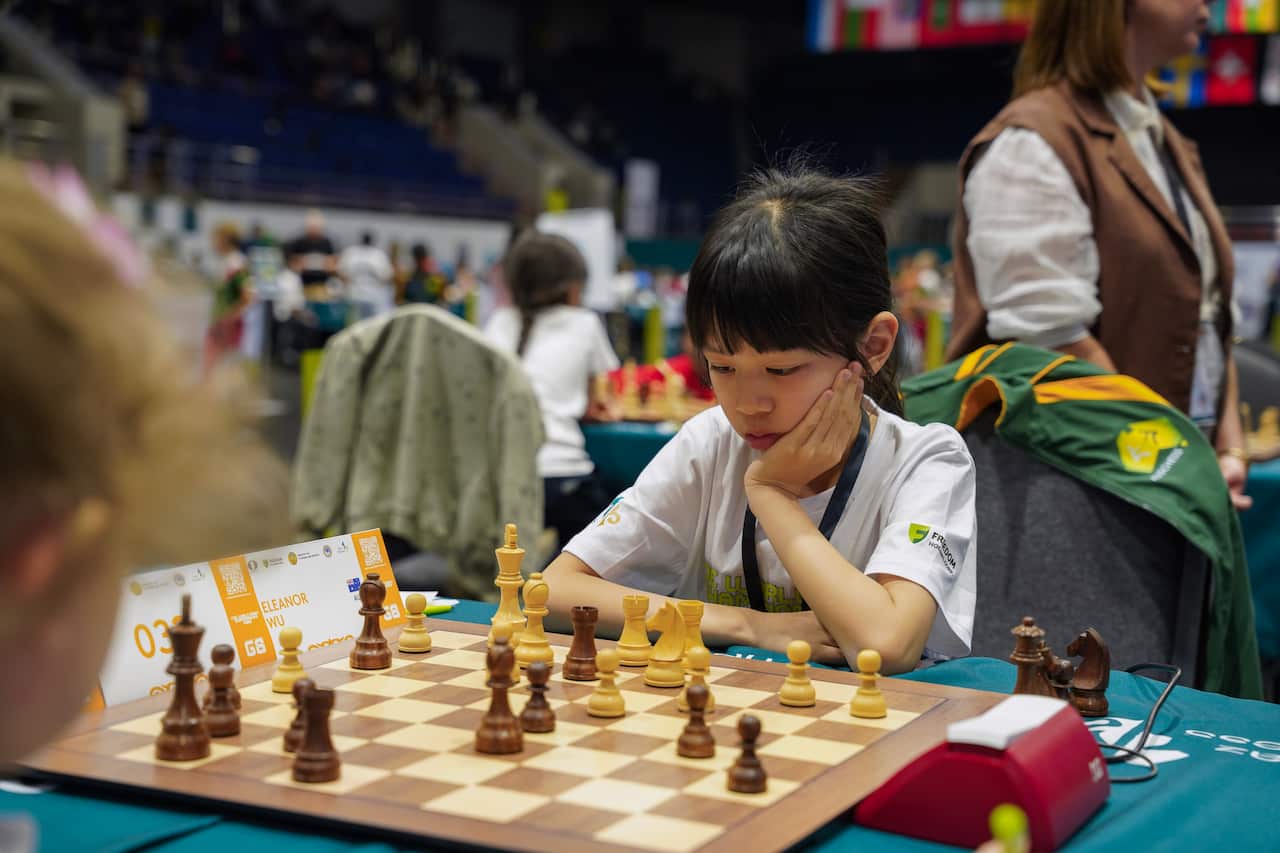
"Some of my friends say girls shouldn't play chess because they aren't smart enough," Wu tells SBS News.
"I just say 'only smart girls can play' because chess is really hard."
While there are more than 1,500 chess grandmasters worldwide — the highest title a player can achieve — less than 50 are women.
Grandmaster David Smerdon, an associate professor in the school of economics at the University of Queensland, started playing at the age of five after finding a board in his attic.
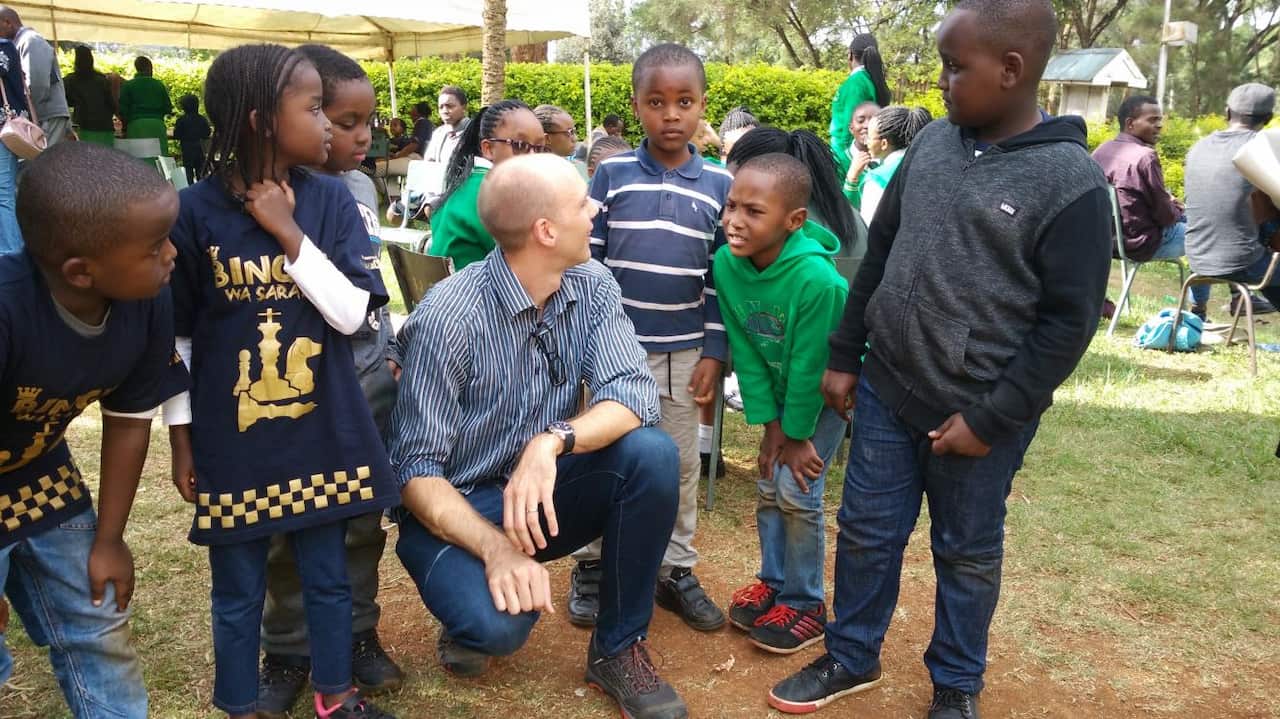
Smerdon has since represented Australia at the Chess Olympiad, an international team chess tournament organised by FIDE.
He believes women face additional barriers in competitive chess, contributing to many teenage girls dropping out of the game in Australia.
"As soon as school finishes and they have to go to their first open tournament, there might be 100 men in the room and three girls, and suddenly you don't have that same social connection," Smerdon tells SBS News.
"The real issue here is that if girls don't see role models, they don't see clear support, and they don't see a clear path forward, then they'll leave the game, even if they'd prefer to keep playing.
The challenge isn't really so much getting girls into chess, it's convincing them that it's a good place to stick around.
Some chess organisations argue that participation gaps are gradually improving, pointing to increased visibility of female players and growing junior programs aimed at girls. However, researchers and players say retention remains a significant challenge.
Australia lags in participation
Smerdon wrote the GECI report on gender-related disparities in chess, which ranked 119 countries. The rankings are based on female participation, performance and progress in each country.
Australia sits 108th on the GECI list, with participation rates at 9.64 per cent — well below the global average.
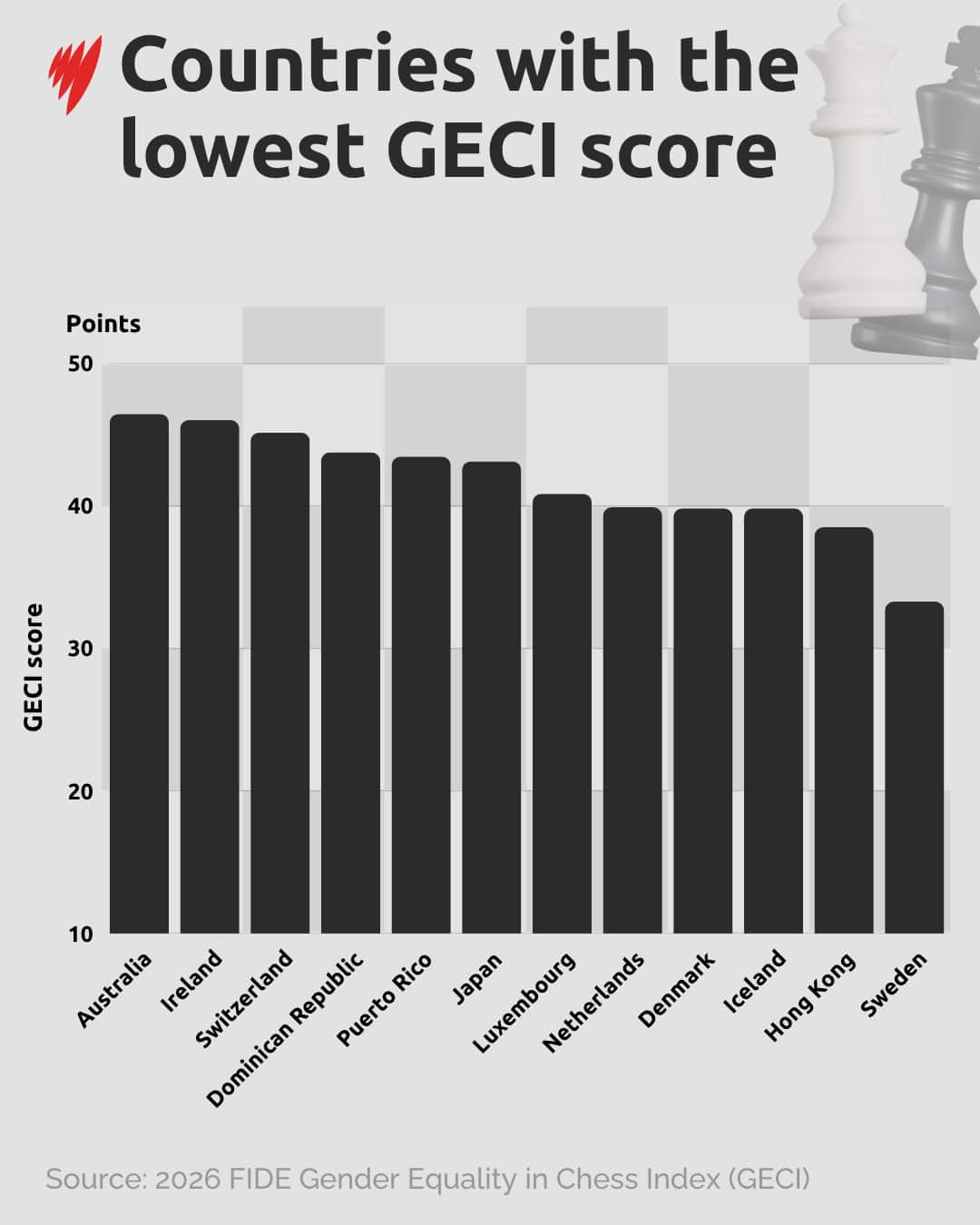
While many Australian female players stop playing chess in their youth, Smerdon's report found that the same drop-off is not happening in all countries.
Countries like Mongolia and Sri Lanka have some of the largest and highest-performing female chess communities in the world.
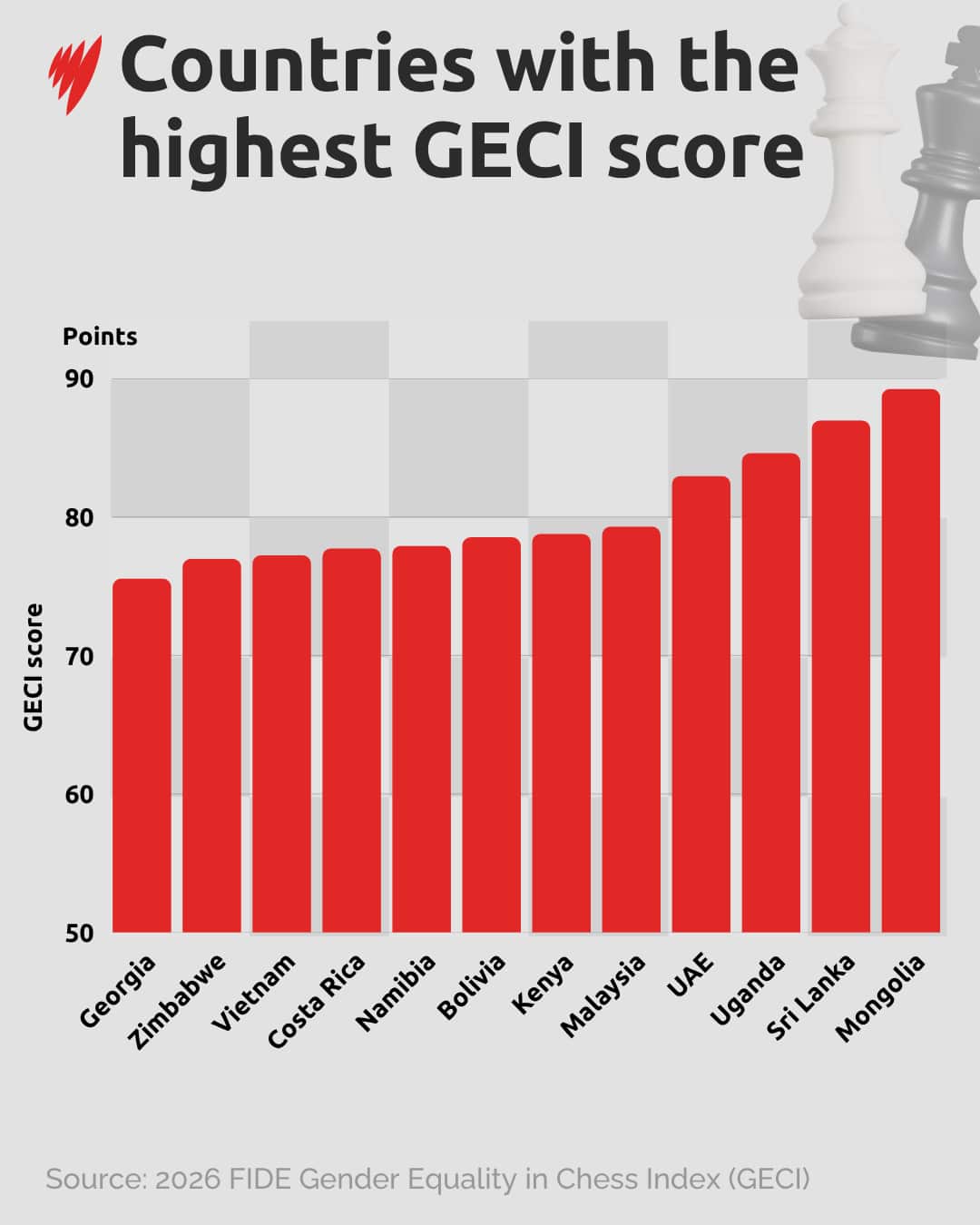
The report notes that participation rates can be shaped by a range of cultural and economic factors across different countries.
Smerdon attributes some of that success to greater funding for women's tournaments, more female players being appointed to organisational roles and clearer pathways for young players.
He's calling for Australia to follow suit.
"We have an incredibly successful school program for chess in almost every state in Australia.
"It's just that challenge of converting them to stay longer in our game, and if we can do that, we could have incredible success on the world stage and hopefully follow a similar trajectory to, say, the Matildas soccer team."
Female players still 'fighting' for funding
At a Brisbane girls' school, an eager group of students gather around an automated chessboard.
The pieces move seamlessly on their own, as teacher Matt Gilpin methodically explains the strategy at play.
These girls are nearing a pivotal age, when many young players drop out of the game.
Gilpin is the head of a chess program at Somerville House boarding school and has seen the positive impact chess can have.
"It gives the children confidence … It really changes the way that they think about things," he tells SBS News.
"If you can introduce it at an early stage and get enough students in at this level, then you can build on them and keep them at those levels and then hopefully into adulthood."
Former Australian women's champion Alexandra Jule is also a chess teacher at Somerville House.
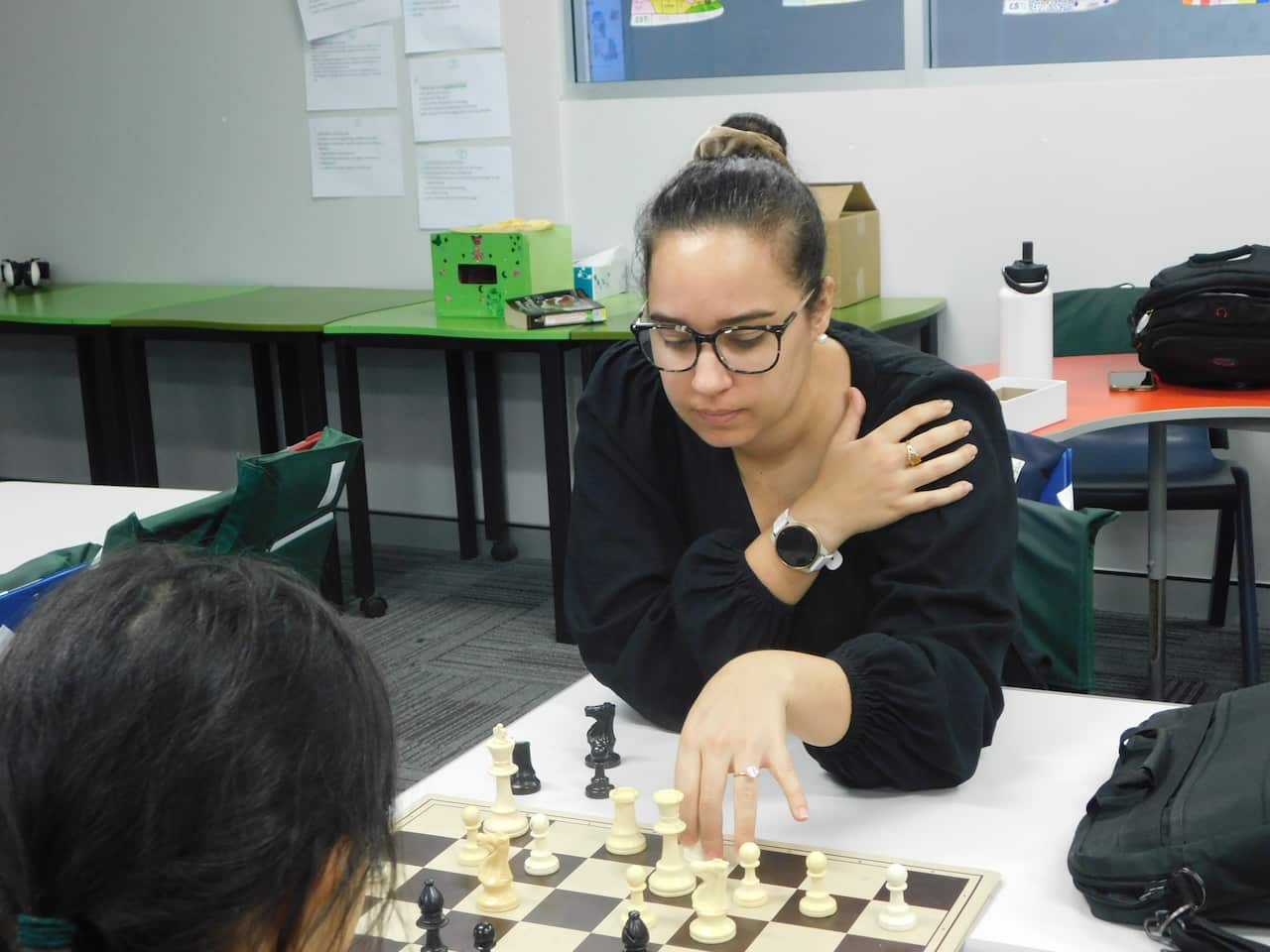
Jule, who has also played in the Chess Olympiad, is no stranger to the pressures of competing in a game historically dominated by men.
She says she was once told by a tournament organiser that she was distracting her male opponent because her hair was down.
"It's quite intimidating for female players to come in and really try and make a go of it [chess]," she tells SBS News.
"I think a combination of that and also just not having the social support is quite difficult and did lead to a big drop-off in female players as I got older."
While she believes school programs are vital, Jule is also echoing calls for the Australian Chess Federation (ACF), the country's peak body, to invest more in female players.
As a mother of a two-year-old, she says one of the biggest challenges in continuing to compete has been balancing her personal life with her chess career.
"The female players have always seemed to be fighting to get funding and assistance, and we often are all working full-time jobs," she says.
There's no reason why females can't challenge on the same level as males, and I think that extra support [is needed] to be able to incentivise them to keep going.
SBS News has contacted the ACF for comment.
Building connections for migrant families
Chess is particularly popular amongst migrant communities, fostering social connections among multicultural families.
Vicky Wu, Eleanor's mother, has noticed her daughter making a diverse friendship circle through the game.
"I think that when we put the kids in sports like chess, they come meet other migrant kids as well, some Chinese, some kids Eastern European," she tells SBS News.
"It's always good to make new friends, and it's a small world; they can know each other."
Although parents of young chess players have seen the benefits of the game, continuing in the competitive space often comes with sacrifice.
Clarissa's mother, Stephanie Liu, has travelled across Australia and internationally with her family for chess tournaments.
"Every time we travel the cost is a lot, like accommodation, the travelling, the flight ticket … I also need to take annual leave as well," Stephanie Liu tells SBS News.
"I think probably it's sort of worth it.
"I think at her age, if she can commit [to] something, we will of course try to support her [to] the best of our ability."
That support is something Clarissa is grateful for, as she prepares to compete at an upcoming international chess competition.
She dreams of becoming a grandmaster one day and has a clear message for girls considering taking up the game.
The room is filled with boys and I want more women to play chess.
"I just hope for the future that more girls will play chess and so maybe more girls would beat the boys and try and actually play it."
For the latest from SBS News, download our app and subscribe to our newsletter.







