
In brief
- New rules are set to come into place governing the use and capabilities of e-bikes.
- The ACCC is drafting the new rules, which the government hopes will address safety issues.
A nationwide crackdown on high-speed e-bikes will seek to close regulatory loopholes after years of rising accidents and injuries, the federal government has announced.
On Thursday, Labor instructed the Australian Competition and Consumer Commission (ACCC) to draft new standards for the sale of "e-micromobility" devices.
The new standards will apply to electric bikes, scooters and skateboards and are designed to prevent the sale of high-risk devices following a spike in e-bike injuries.
Assistant Competition Minister Andrew Leigh said the changes would inspire confidence in Australian consumers and send a clear message to industry.
"Nationally consistent standards will provide clearer expectations for manufacturers, retailers and consumers alike," he said.
News that makes sense
Your trusted source for staying up-to-date with the world around you. Get free daily news updates and analysis, straight to your inbox.
What rules are currently in place for e-bikes?
Currently, regulatory enforcement varies between states and territories. Retailers can exploit the resultant loopholes to sell non-compliant devices.
Last year, Australia's state transport ministers agreed to mandate the international EN 15194 standard as the primary benchmark for e-bikes.
These standards restrict e-bikes to operating primarily through pedal assistance, cap their output, and require them to cut power once they reach 25km/h.
The new rules drafted by the ACCC will aim to close existing gaps after years of concerns over injuries and accidents, including from high-powered e-bikes.
The new consumer standards were proposed at a meeting of federal, state and territory consumer affairs ministers in Darwin in July.
Are the rules likely to be effective?
Harold Scruby, chief executive at the Pedestrian Council of Australia, said the announcement was a welcome step forward, but long overdue.
"It is too late," he told the Australian Associated Press news agency.
"Technology is always 10 years ahead of the law ... (but) we saw it coming."
Any changes must be complemented by consequences for retailers who fail to meet compliance standards, Scruby said.
"We've really got to clamp down on these cowboys who are selling these things to young children," he said.
Asked whether the horse had already bolted, Leigh insisted the changes complemented state-level crackdowns.
"There's work underway through transport ministers," he told Seven's Sunrise program on Thursday.
"This is about what can be sold."
Why are e-bikes so controversial?
E-bikes have been spruiked as an environmentally friendly, cost-affordable answer to congested city streets.
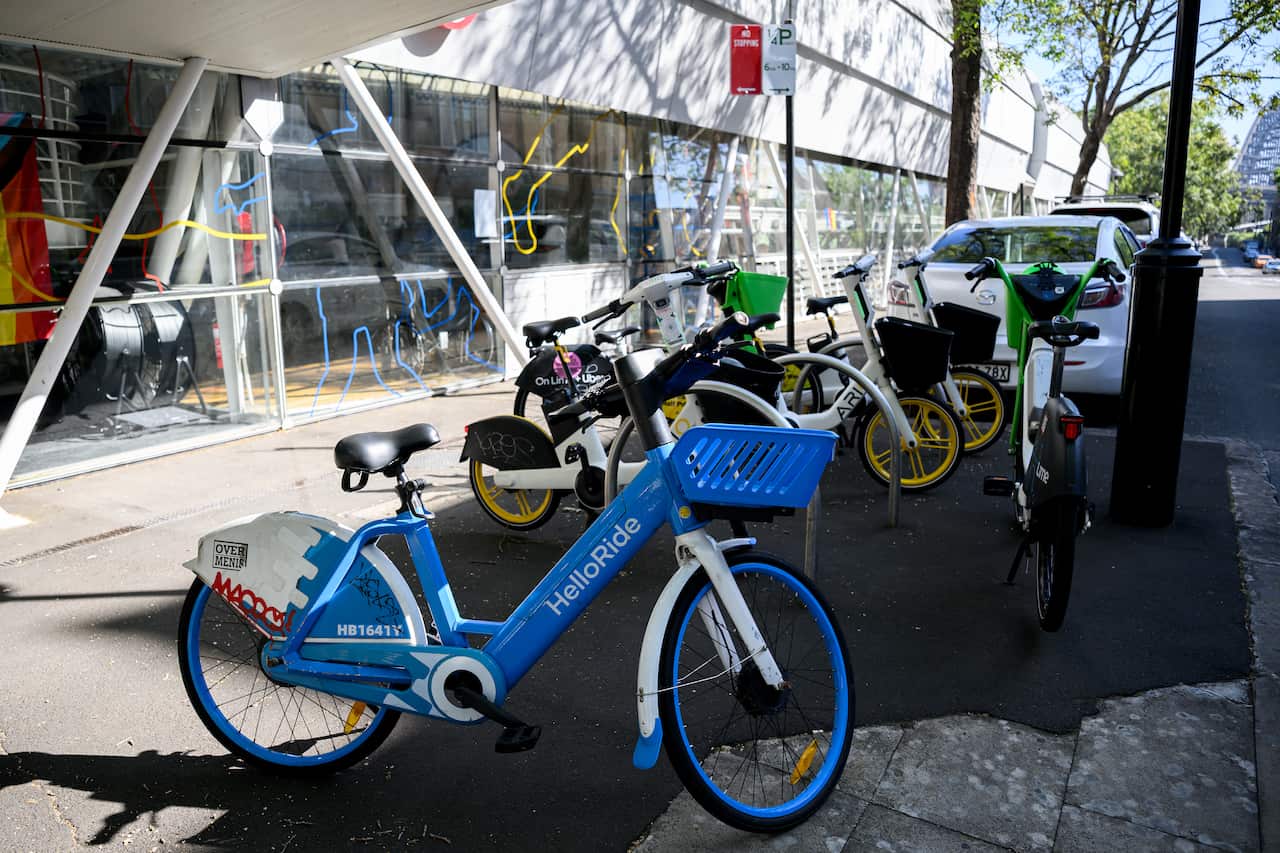
But the rollout of shared e-bike schemes — like Lime bikes and others — as well as their broader uptake across the nation have been clouded by rising injury and accident rates.
In 2024, NSW recorded 226 injuries related to e-bikes, which surged to 233 in the first seven months of 2025, including four deaths.
In Queensland, more than 6000 emergency department presentations were linked to e‑mobility devices between 2022 and 2025.
Queensland is among the states cracking down on illegal e-bikes, including with its police force's Operation Yankee Surety.
Some 249 illegal bikes were seized in the operation's first month following its launch on July 1, while riders were hit with 991 traffic infringement notices.
NSW Police and transport officers were in June granted powers to seize illegal e-bikes, to be pulverised by Transport for NSW.
Both states have been undertaking sweeping reforms of the electronic transport devices, but measures announced today will be the first nationwide effort to reform their use.
When will the new rules come into effect?
Work on the ACCC new e-micromobility standard is already underway.
Further details on enforcement timelines are unlikely to be released until consultation can be carried out with industry bodies and state regulators.
For the latest from SBS News, download our app and subscribe to our newsletter.







