IN BRIEF
- The federal government has promised AI standards and a new AI office, with legislation set for 2027.
- Large AI data centres would be required to fund new power generation and pay for additional water use.
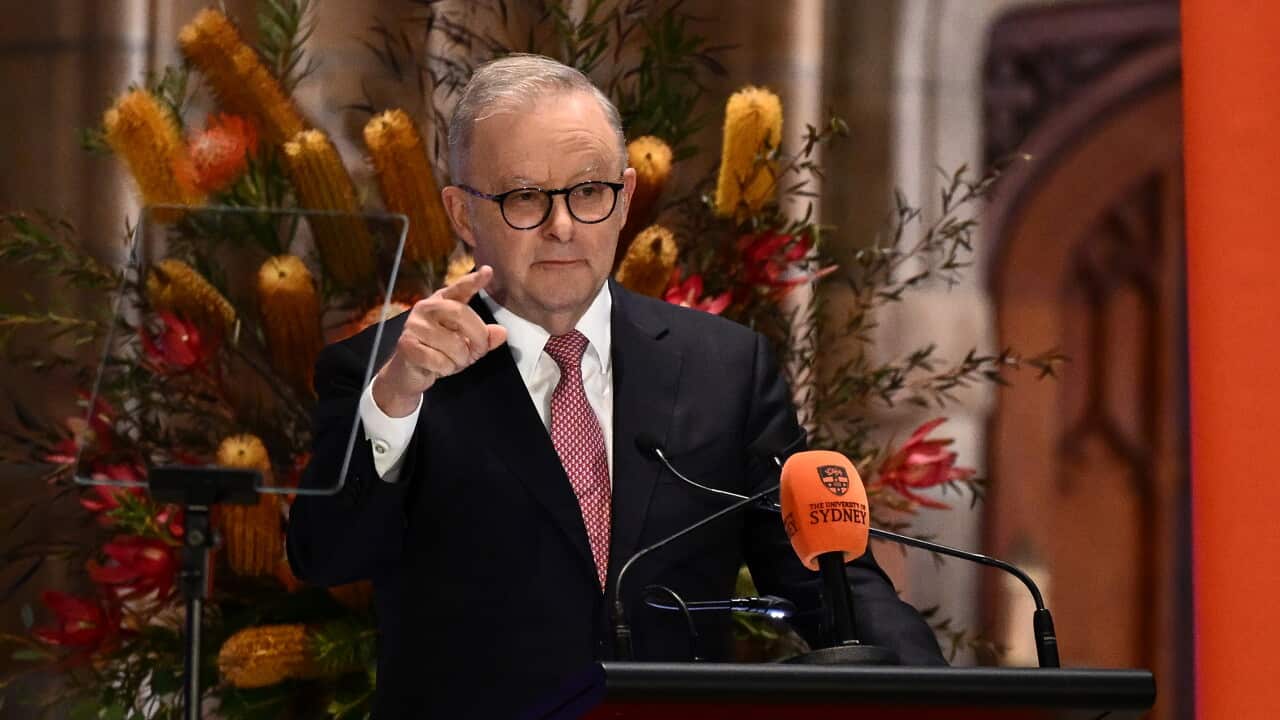
Prime Minister Anthony Albanese's shift towards tougher artificial intelligence regulation has been broadly welcomed, but pressure is building for more detail and decisive action on the risks posed by the technology.
Albanese announced on Wednesday the federal government would legislate a set of AI standards next year, including new requirements for data centres to underwrite energy generation and pay for additional water use.
An AI office would be created within Albanese's department, while national standards would cover education and training, workplace rights and productivity. The government also wants to fast-track AI investment in Australia.
The announcement marks a shift away from the federal government's previous light-touch approach to regulation, and comes after months of pressure from both the tech industry and those worried about the rapid shifts of AI on the economy.
But the prime minister provided few details about the proposals which he vowed to legislate by early 2027 after a national cabinet process with state and territory leaders.
News that makes sense
Your trusted source for staying up-to-date with the world around you. Get free daily news updates and analysis, straight to your inbox.
Albanese said getting the framework right would enable faster approvals and make Australia a more attractive destination for international investors.
"It is not our goal to try and legislate for every possible eventuality or risk," he said.
"That only creates the risk of Australia missing out on investment altogether."
Questions over the AI office's role
Monash University AI researcher Geoff Webb labelled the AI office an "important initiative" that would bolster Australia's capacity to pursue "critical" sovereign AI capabilities.
Digital Rights Watch chair Lizzie O'Shea also backed the move but was concerned fast-tracking AI data centre approvals could exacerbate community mistrust in AI.
"[By] prioritising data centres, we lose capacity to build out renewable energy projects in the climate crisis, new home construction in the housing crisis, and we likely increase the current cost of electricity and water in a cost of living crisis," O'Shea said.
But Greens senator David Shoebridge was critical, saying the office would not have statutory powers.
"What the prime minister has offered today is a single door in his office," he said. "That is not going to deliver the protections Australians have been asking for."
Opposition Leader Angus Taylor said the office would create “more bureaucracy” and hinder Australia’s adoption of the technology.
What will the rules mean for data centres?
The government released expectations for large AI data centres in March, but Albanese said these would now be strengthened through legislation.
Developers would be required to underwrite new power generation for the energy-intensive facilities and pay for additional water use.
The government said the measures would ensure the costs were not passed on to households or businesses, with operators expected to put at least as much energy into the grid as they used.
O'Shea said any deals done with big tech companies or relating to data centres should not be behind closed doors.
"There is a real opportunity for the government to consult openly with communities and work collaboratively to ensure we have the right infrastructure for the 21st century," she said.
Albanese said Australia should be designing and building AI capability, not just adopting or accommodating it.
Johanna Weaver, executive director at the Tech Policy Design Institute think tank, said choices made on AI over the next year would determine whether the technology "shapes us or we shape it".
She said Albanese's announcement needed to be "fast followed with hard decisions" on issues such as copyright, workforce transition and environmental impacts.
"Australia needs co-ordinated, ambitious and decisive leadership on AI," she said.
Green groups accused Labor of "kicking the can down the road", calling for a moratorium on data centre approvals until binding rules around energy and water use were in place.
"The prime minister is rolling out the red carpet for these water-guzzling energy vampires, with no plans to regulate them until at least 2027 - that is a betrayal of Australian communities and our national interest," Greenpeace Australia's Joe Rafalowicz said.
What will happen to copyright?
There was concern among some creative groups that copyright laws could be watered down after it emerged AI giant Anthropic had lobbied the government to provide clarity on them in exchange for $21.6 billion investment in Australia.
The Media Entertainment and Arts Alliance union, as well as the Australasian Performing Right Association and the Australasian Mechanical Copyright Owners Society both welcomed Albanese affirming creative workers would have control over how their work is used.
Specifics on copyright protections, as well as other elements of the framework, are likely to come following a consultation period.
Anthropic said it respected the government's announcement and would take its responsibility to meet the new requirements "seriously".
How does Australia compare on AI regulation?
Governments worldwide have been grappling with AI governance in various ways. In 2024, the European Union passed the AI Act by categorising AI tools into three levels of risk, and setting out regulations based on the risk levels.
Some countries, such as South Korea, have also looked into building a basic framework that incorporates all separate AI-related bills within its legal system, while Vietnam launched an AI law with details on AI authorship, innovation and risk management.
Despite being the major players in the field of AI, neither the United States nor China have established a standalone regulatory and legal framework, but rely on extending technology-related laws or fragmented specific bills to address concerns of AI in various fields.
Professor Toby Walsh from the University of New South Wales said that while Australia followed the EU and the United Kingdom to create an Office of AI to pursue a coordinated approach, Australia could also learn from the UK, which also offered additional funding into AI research.
"I would hope that we would also be looking at the upside, not just avoiding the downside, but looking at how can we see some of the profits here," he said.
"Most of the profits [of AI] went up to other places, and we need to make money in our own AI models, our own companies, our own talent. There are lots of other things in the port, not just building the data centres."
— With reporting by the Australian Associated Press.
For the latest from SBS News, download our app and subscribe to our newsletter.







