In brief
- The anti-price gouging laws will come into effect on 1 July.
- Experts say the laws will be difficult to enforce in practice as price gouging can be hard to prove.
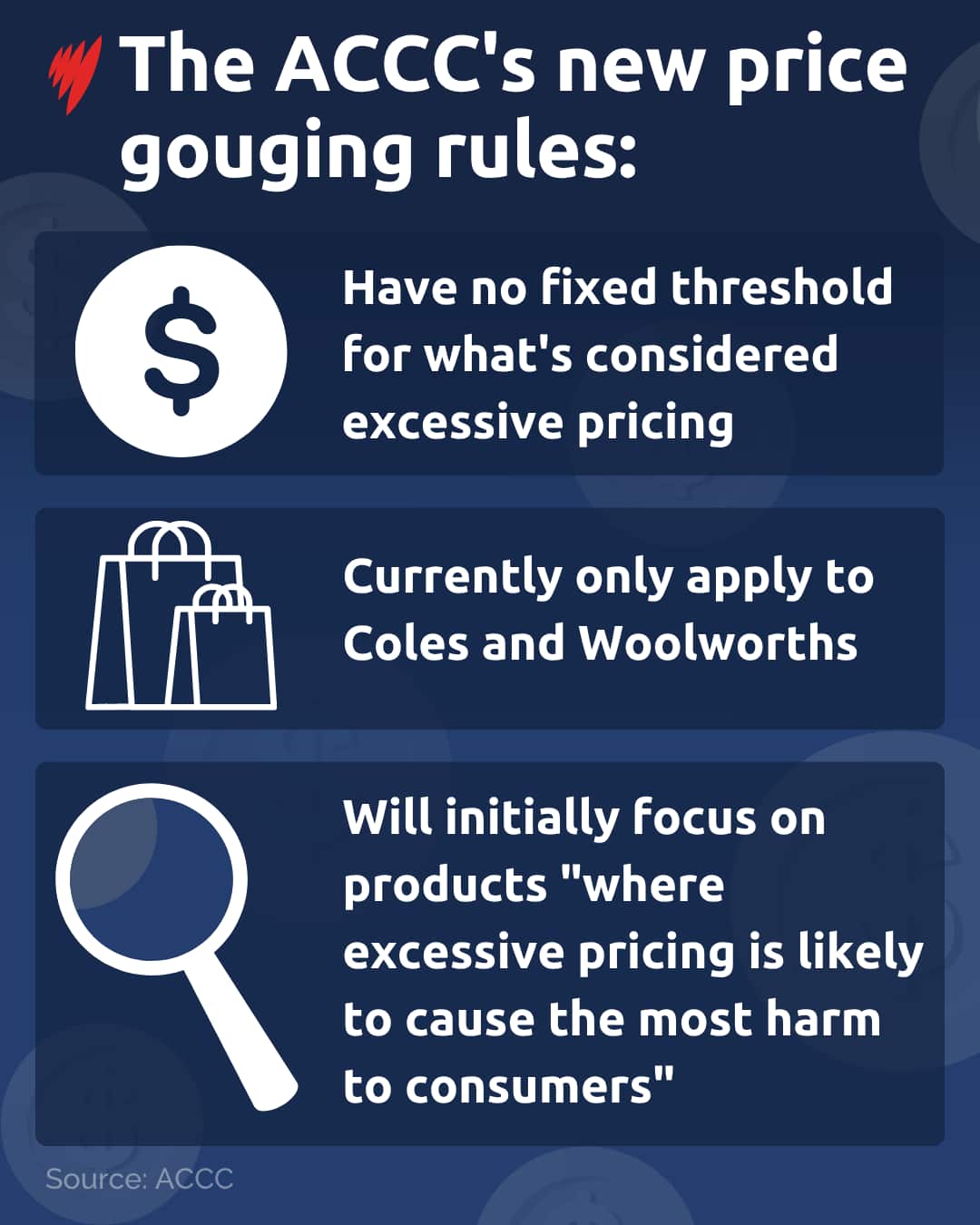
Australia's new anti-price gouging laws come into effect today, making it illegal for supermarkets with more than $30 billion in revenue to charge prices deemed significantly excessive compared with the cost of supply.
In practice, that means Coles and Woolworths — the only two supermarkets that meet the threshold — face fines of up to $10 million if found guilty of "significantly excessive" prices compared to the product's cost.
Treasurer Jim Chalmers previously said the changes would give Australians a "fairer go" at the checkout. But experts aren't so sure.
Will the new price gouging laws help lower your grocery bill?
The new laws might prevent price gouging at Australia's two biggest supermarkets, but they might not change your tally at the checkout.
News that makes sense
Your trusted source for staying up-to-date with the world around you. Get free daily news updates and analysis, straight to your inbox.
"The new laws won't make grocery bills cheaper," Lisa Asher, retail expert at the University of Sydney Business School, told SBS News.
"It will prevent [groceries] from getting more expensive due to price gouging from Coles and Woolworths only. The issue is, I don't actually think they were."
In a report last year, the Australian Competition and Consumer Commission (ACCC) found the near-duopoly of Coles and Woolworths gave them little incentive to compete vigorously, noting that they were among the most profitable supermarkets in the world.
But its report never directly accused the supermarkets of gouging customers, and it's something both Coles and Woolworths have denied.
Asher said rising grocery bills are more due to a structural lack of competition in the Australian market.
"Until there is meaningful competition in the Australian market which forces our retailers to actually compete for us, then we will continue to see higher prices," she said.
Hard to prove
Proving price gouging isn't easy.
Experts say the laws will be difficult to enforce in practice and even harder to use to win back customers' trust.
"The law's real test won't be in court; it'll be in the public's gut. Shoppers don't compare prices to a retailer's costs, they compare them to what they remember paying last time," associate professor Meg Elkins, a behavioural economist at RMIT University, said.
"The law's test is cost-based, asking whether the price is excessive relative to the cost of supply. But the public's test is memory-based, asking whether this price is higher than expected.
"A retailer can clear the legal bar easily, for entirely legitimate reasons like a bad harvest or rising freight costs, and it will still feel like gouging at the checkout."
The laws also don't define what "excessive" means or what counts as a reasonable margin — and with supermarkets selling thousands of products under shared costs, isolating any single item's true margin is difficult.
That difficulty lands at an already tense moment for supermarket trust.
Coles and Woolworths remain two of Australia's least trusted brands, according to Roy Morgan research.
In May, Coles were penalised over its 'Down Down' promotion for "misleading representation", temporarily increasing the prices of products before placing them on sale. Woolworths is being investigated for a similar practice.
"The biggest impact on supermarkets may be psychological; making them feel watched, rather than actually catching them out legally," Elkins said.
Asher said the biggest issue with the laws lies in who they don't cover.
Companies like Amazon and Wesfarmers — which owns Bunnings Warehouse, Kmart, Officeworks and Priceline, among others — sit outside the laws' parameters and get off "scot-free", she said.
"I want to see these price gouging changes applied to large retail or big retail," she said. "I think it's a little bit cheeky and a little bit sly that Coles and Woolworths got the beating."
What can shoppers actually do?
With prices unlikely to move because of the new laws, Asher said the best lever shoppers have is their own behaviour.
"Be promiscuous in your relationship until you get the right amount of value. They need to win you," she said. "When there's greater cross-shopping, stores can see that a shopper is spending less and it forces them to improve their value offer to win you back."
She also recommends shopping in-store over online, as "you're seeing a curated version online of what they want you to see".
Should shoppers notice any suspicious price rises, they should keep receipts and take photos to report to the ACCC.
For the latest from SBS News, download our app and subscribe to our newsletter.







