IN BRIEF
- Upper-quartile home prices in two Australian capital cities have fallen at more than double the rate of entry-level housing.
- Rising borrowing costs are forcing buyers toward cheaper stock, leaving luxury listings vulnerable to widening discounts.
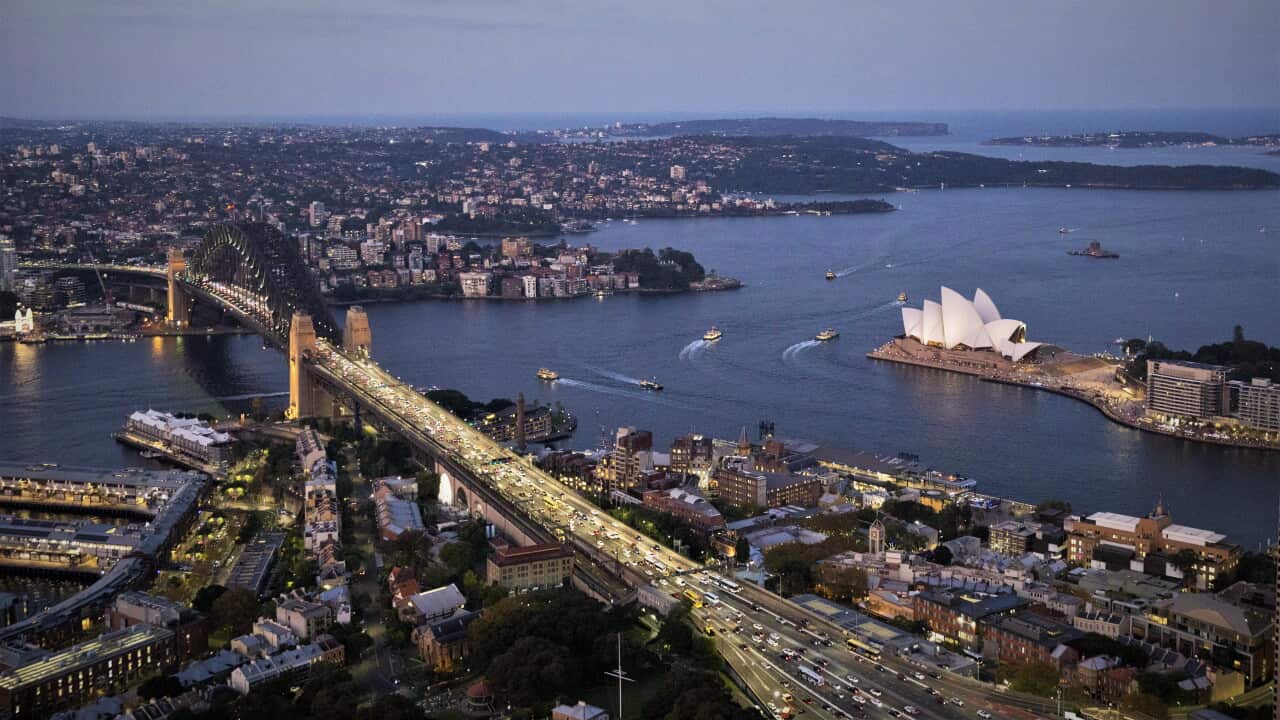
Across Australia's capital cities, prices in the upper end of the property market are dropping rapidly, with experts warning it could indicate where the rest of the sector is headed.
Recent data from property analytics firm Cotality reveals that upper-quartile house prices — those in the top 25 per cent — have fallen at more than double the rate of entry-level ones in Sydney and Melbourne.
High-end homes in both cities have seen declines of more than 10 per cent in value from their peak. By contrast, those in the lower quartile have seen declines of just 3.9 to 5.4 per cent.
In Sydney, a mansion in Balmain East sold for an extraordinary $7 million loss this month — after selling for almost $20 million in 2022, it was bought for $12.8 million.
Cotality executive research director Tim Lawless told SBS News that the top end of the housing market historically moves first in a property cycle. While the sector overall peaked in March, the upper end peaked in October/November last year.
News that makes sense
Your trusted source for staying up-to-date with the world around you. Get free daily news updates and analysis, straight to your inbox.
As the Reserve Bank's rate hikes filter through, Lawless said buyers are being hit with a severe credit crunch as borrowing rates hover around 9.5 per cent, severely weakening purchasing power.
A household on a median income is now spending more than 50 per cent of its pre-tax income to serve a median-priced mortgage. As a result, those who might have previously looked in the middle-to-upper bracket are being pushed toward cheaper stock.
"Mainstream demand is getting deflected towards lower price points where buyers can actually demonstrate an ability to service the loan," Lawless explained.
Taken together, first home buyers, investors, and price-sensitive mid-tier individuals are all now competing for limited stock, which has left high-end listings exposed.
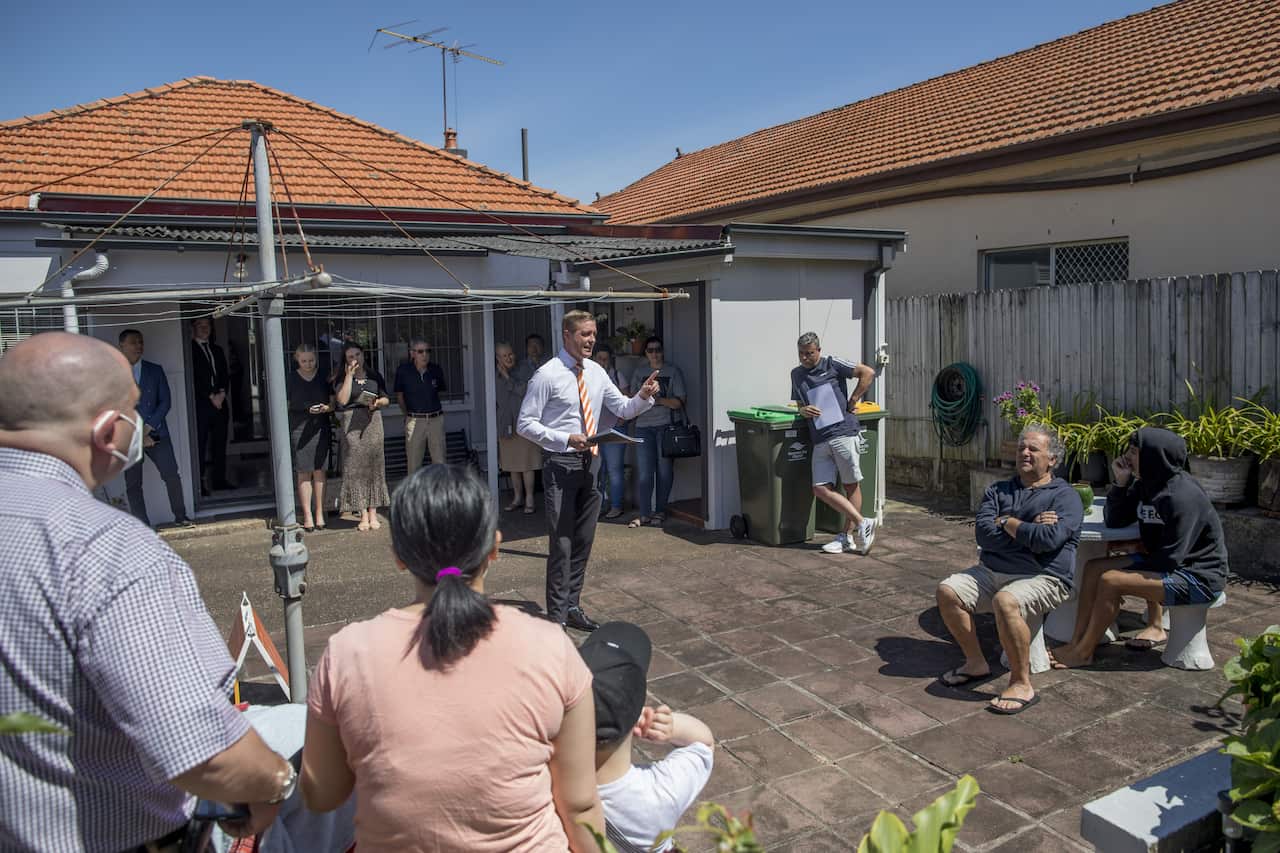
No urgency on the auction floor
The impact of the demand vacuum at the top has been visible on the ground for some time, with vendor discounting widening while time-on-the-market has lengthened.
Director and chief auctioneer at New South Wales independent AuctionWorks noted that the sharpest initial repricing has likely passed, however wealthy buyers are in no rush to step back in.
"The top end of the market has been the most affected, with significant price adjustments occurring in recent months," Davidson told SBS News.
"However, it appears that whilst we may not yet have seen the bottom of the market, the price reductions have certainly slowed."
Davidson added that buyers are beginning to recognise value, but a lack of urgency remains the defining feature of higher-end auctions at present.
"Buyers are starting to see some value, however, there is no urgency to jump in just yet," he said. "This will change in the months ahead when price reductions slow even further."
Political debate continues
The widening property slump has sparked a fierce political debate over what is driving the correction.
Opposition leader Angus Taylor and senior Coalition MPs have blamed the government's recent tax adjustments including negative gearing, saying market confidence has been "smashed".
Opposition treasury spokesperson Tim Wilson says the housing correction "doesn't help" anyone, as first-home buyers are forced to spend more while those who own their own homes see their wealth decline.
Labor leaders have strongly rejected such framing, with Treasurer Jim Chalmers pointing to Treasury modelling showing that tax changes only account for a minor fraction of the shift. He attributes the downturn to high debt levels and elevated interest rates.
Housing minister Clare O'Neil maintained that top-down adjustments are a standard feature of property cycles and pointed to softening market values as a necessary step toward restoring access for first-home buyers.
In the two decades to 2021, CoreLogic data shows the median house price in Australia increased more than sixfold, rising from $123,000 to $795,000.
The domino effect
While the top end has absorbed the initial blow, Cotality's latest figures indicate that the bottom end is starting to come down as well.
Transaction volumes have declined by more than 15 per cent nationwide as listings increase across capital cities.
"Lower-priced housing is no longer insulated," Lawless said, noting that the gap between top and bottom price changes is narrowing as broader economic headwinds take hold.
With higher-end price falls tapering off, the top-end is expected to continue to dictate the future of the market at large with the cheaper credit that fuelled price rises now vanishing.
For the latest from SBS News, download our app and subscribe to our newsletter.







