Foreign Minister Stephen Smith says the deaths of two Australian soldiers in Afghanistan are tragic but Australia remains committed to staring down terrorism in the troubled region.
Monday's deaths in a bomb blast were especially tragic for the men's families, friends and loved ones, Mr Smith told reporters in Perth.
Minister Smith said Australian troops were in Afghanistan because that country and the Afghanistan-Pakistan border area were one of the "current hotbeds or danger points" for international terrorism.
"We've never put a timetable on our commitment to Afghanistan other than to very strongly make the point that our commitment is to be there together with the rest of the international community to stare down international terrorism."
Defence named the victims as Brisbane-based soldiers Darren Smith and Jacob Moerland.
News that makes sense
Your trusted source for staying up-to-date with the world around you. Get free daily news updates and analysis, straight to your inbox.
The deaths are the first fatalities for 2010, although two dozen Australian soldiers have been wounded this year.
Mr Smith's wife Angela issued a statement on behalf of the family, describing him as a loving husband, father and remarkable human being.
"He was very passionate about his job and understood the risks involved but he was the sort of man who always put others first, and did his best for them whether it was his mates in the army or at home with his family and friends," she said.
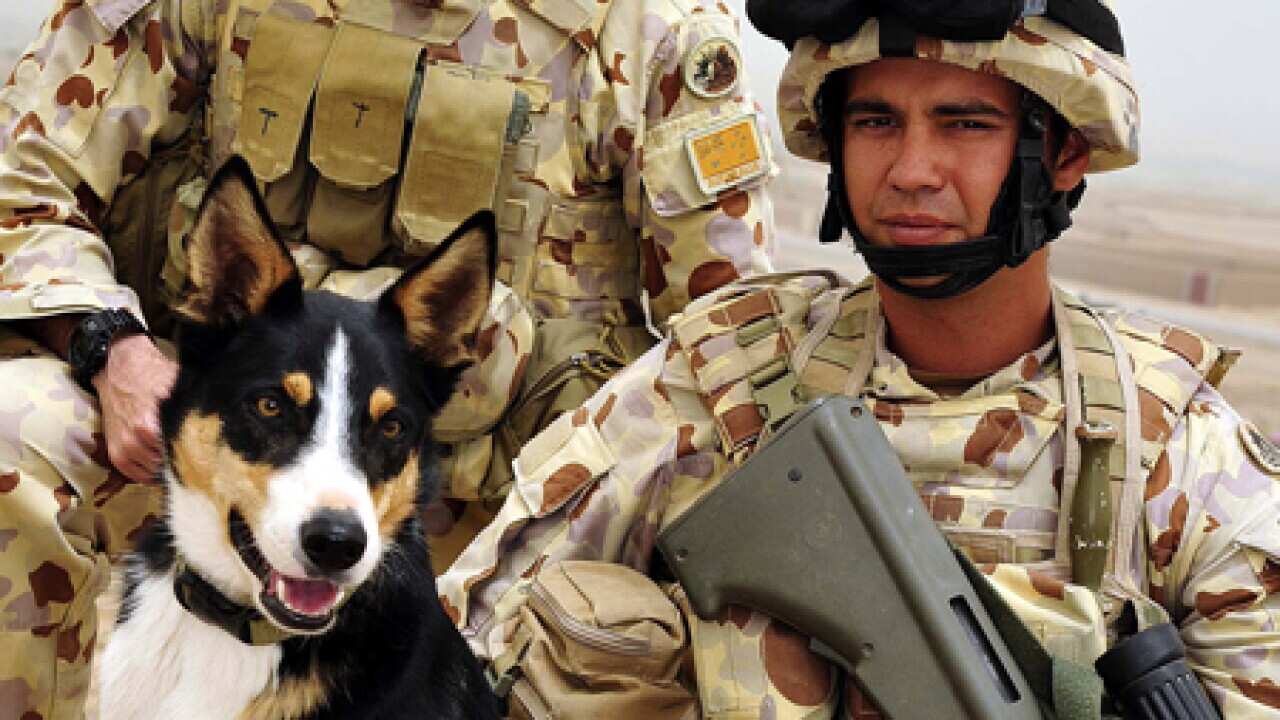
Mr Smith was named in the media as a 25-year-old explosives detection dog handler. Also killed was an explosives detection dog, Herbie.
The deaths came on a bad day for the coalition forces, with a total of 10 soldiers killed on Monday, including five US servicemen in a roadside bomb blast in eastern Afghanistan.
Lieutenant General Hurley said the two soldiers, members of the Brisbane-based 2nd Combat Engineer Regiment attached to the Mentoring Task Force, died from wounds sustained when an IED detonated as they conducted a foot patrol in the restive Mirabad Valley, east of the main Australian base at Tarin Kowt.
Lieutenant General Hurley said one soldier died instantly in the blast.
The other was given first aid by fellow soldiers then rushed by helicopter to the coalition medical facility in Tarin Kowt but died in hospital. No other Australians were hurt.
Earlier in the day, the patrol had discovered three substantial caches of insurgent weapons and munitions, including 1,600 rounds of ammunition, 23 rocket propelled grenades, five mortar rounds plus fuses.
Prime Minister Kevin Rudd said the deaths were a sobering reminder that this was a very tough military campaign.
"We are up against a determined and dangerous enemy.
However, under no circumstances can Australians afford to allow Afghanistan to become a free, operating, training base for terrorist organisations in the future," he told reporters in Sydney.
Defence Minister John Faulkner said men and women of the Australian Defence Force were undertaking hazardous tasks every day to ensure fellow Australians were safer from the threat of international terrorism.
"I certainly think that's absolutely possible, that we will see a particularly violent period ahead," Senator Faulkner told ABC Radio from Islamabad, Pakistan.
"I can only say to you that Australian troops, like other (international) forces, are at great risk." Few details of the incident have been disclosed. It's not known if the two soldiers were attempting to defuse the device when it exploded.
As with all deaths in Afghanistan, this will be investigated through a formal Defence inquiry.
A weapons intelligence team has conducted a technical inspection of the incident scene to determine the type of bomb.
Australia last experienced multiple fatalities in action in Vietnam on September 20, 1971 in what was called Operation Ivanhoe. That day, five soldiers from the composite battalion 4RAR/NZ, four of them national servicemen, died in a bitter close quarters battle with North Vietnamese forces.
That was the last major clash of Australia's war in Vietnam.







