IN BRIEF
- Experts say the proposal may preserve Trump's tariff agenda after legal setbacks.
- Australia’s direct exposure is limited, but businesses face ongoing uncertainty.
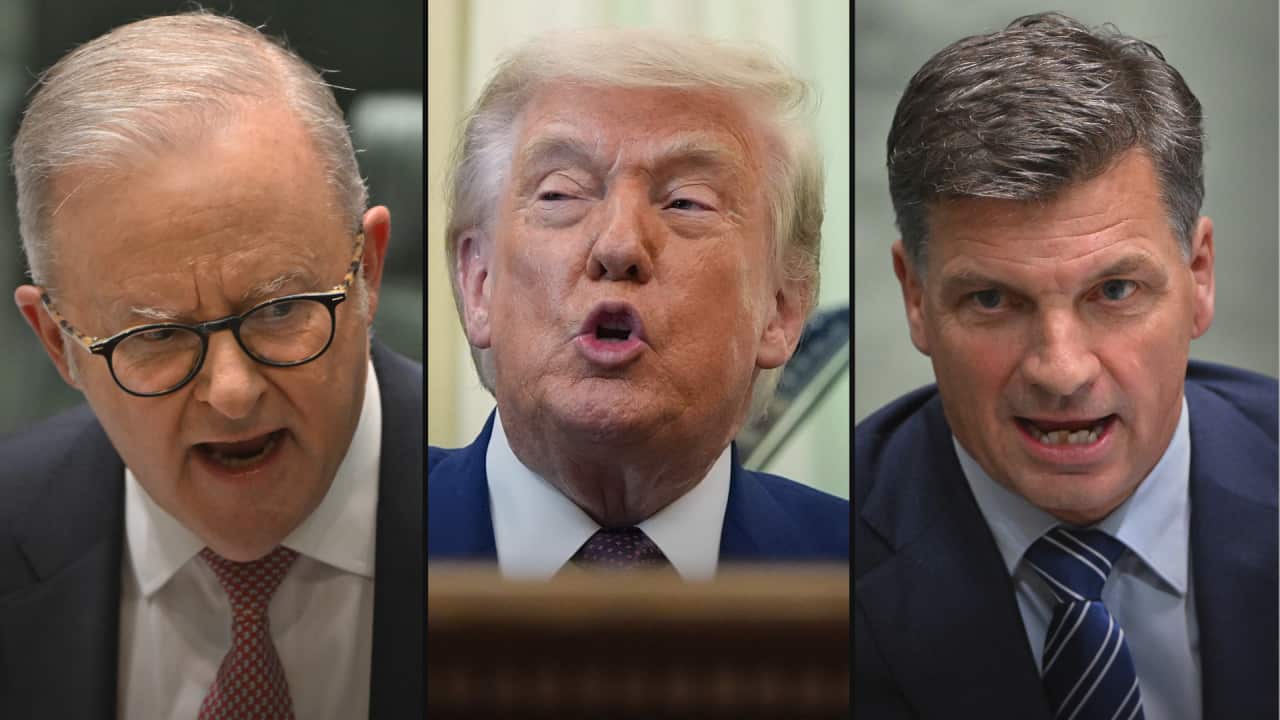
Australia has rejected fresh tariff threats from the United States tied to forced labour concerns, as the Trump administration proposes lifting levies on Australian imports to 12.5 per cent.
Prime Minister Anthony Albanese has labelled the threats from the US "unjustified", after the Trump administration proposed increasing tariffs on Australian imports to 12.5 per cent.
Australia is among 54 countries identified under a US proposal targeting trading partners accused of failing to sufficiently prevent imports linked to forced labour.
A report underpinning the proposal found Australia had "failed to impose and effectively enforce a forced labour import prohibition".
Albanese said there was an "ideological disagreement" between Australia and the US on tariffs, defending Australia's approach to forced labour and supply chain regulation.
News that makes sense
Your trusted source for staying up-to-date with the world around you. Get free daily news updates and analysis, straight to your inbox.
The comments come after Trade Minister Don Farrell met overnight with US trade representative Jamieson Greer to discuss the proposal, which would replace the existing 10 per cent tariff on Australian goods.
Greer defended the proposal on Wednesday, saying countries allowing imports linked to forced labour created unfair conditions for US workers.
"The failure of our most important trading partners to address the importation of goods made with forced labour is unacceptable," Greer said.
"This creates a dynamic where American workers are forced to compete globally on an unlevel playing field."
Australia rejects forced labour criticism
Albanese rejected the criticism underpinning the proposal and reiterated the government's position that tariffs on Australian exports were inconsistent with the Australia–US free trade agreement.
Australia had a "robust, comprehensive and world-leading legislation addressing forced labour and modern slavery," he told ABC radio on Thursday.
He also said the US administration had broken with a "decades-long understanding that tariffs are not positive for the country that is imposing them".
Australian National University economics professor Shiro Armstrong told SBS News that the proposal did not reflect a fundamental shift in US trade policy, but questioned the rationale behind the move.
"Nothing appears to have changed fundamentally in the United States. This is a continuation of trade policies that feed uncertainty globally," he said.
"It's the latest episode in the on-again, off-again US tariffs."
Armstrong questioned the administration's justification and labelled the accusations of forced labour "new but not credible".
"The European Union, Australia and other countries already go to great lengths to avoid trade that involves forced labour.
"It really could be any other excuse. President Trump wants tariffs, and his officials are finding various reasons for them."
Bruce Wolpe, senior fellow at the United States Studies Centre (USSC) at the University of Sydney, said there was "no doubt" Trump was using the trade laws to "rebuild a new pathway" to tariffs.
Wolpe said the rationale was difficult to reconcile with Australia’s existing approach.
"This issue of slave labour in Australia is jarring. It does not make any sense," he told SBS News.
What happens next?
The proposal remains subject to public consultation and review, with hearings expected to begin in July.
Countries included in the proposal will have an opportunity to make representations to the United States before any final decision is made.
Wolpe said there was still room for diplomacy and moderation.
"But we just don’t know whether Trump will be responsive to changing what he really wants to do. He loves tariffs, loves using them."
What it means for Australia
Hayley Channer, director of economic security at the USSC, told SBS News that the direct impact on Australia was likely to be limited.
"Many businesses, including beef, energy, and critical mineral exporters, are exempt," she told SBS News.
"The US only accounts for a small percentage of Australia’s goods exports, with around 5 to 6 per cent of our exports going to the US."
"While any tariff increase is damaging, many Australian businesses already face a 10 per cent or higher tariff and could learn to live with the extra 2.5 per cent."
But she said the longer-term concern was uncertainty.
"The bigger problem is the instability of US tariff rates, which makes it difficult for Australian businesses to plan long-term," she said.
Political pressure builds over tariff proposal
The latest proposal has prompted criticism across Australia's political spectrum, with former ambassador to the US and former Liberal treasurer Joe Hockey saying he was unsurprised by the latest move, arguing tariffs remain central to Trump's economic approach.
Speaking to ABC Radio National, Hockey said he had personally challenged Trump's views on tariffs during his time in Washington.
"The president of the United States is absolutely convinced that tariffs are great," Hockey said.
"I’ve argued personally with him on the issue, and he’s just not for moving."
Hockey said Trump viewed tariffs as a way to raise revenue, despite concerns they ultimately increase costs for US consumers.
Opposition leader Angus Taylor also criticised the proposal, saying Australia should not face tariffs from one of its closest allies.
"They're a great friend, and they shouldn’t do it to a friend ... We've fought with them in every major war. They shouldn't be imposing tariffs," Taylor said.
Taylor also said the Opposition would continue opposing the measures.
What does it mean for the rest of the world?
The proposal extends beyond Australia and could affect some of the US' largest trading relationships, including with the European Union, Canada, Japan and China.
If implemented, the tariffs would place additional pressure on governments already navigating shifting US trade settings and could reopen negotiations over market access and supply chain standards.
For the latest from SBS News, download our app and subscribe to our newsletter.







