
IN BRIEF
- More than 2,500 Australian died from drug-induced causes in 2024, according to a preliminary analysis.
- Unintentional drug-induced deaths surpassed 2,000 for the first time, according to the report.
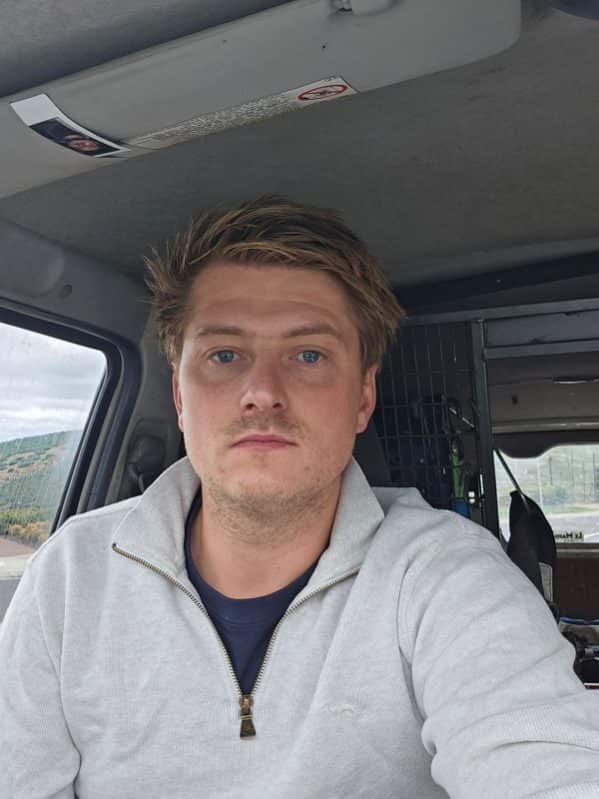
Jake Edgar was just 12 years old when he started using illicit drugs.
Living in what he described as an "unstable household" and moving from state to state with his parents who also used drugs, it wasn't until he was 15 when visiting a friend he realised his upbringing was not normal.
Now 33, Edgar is an air conditioning and refrigeration mechanic and will mark 12 years in recovery this week. But the toll of drug use has stayed with him: his father, Paul, died from an overdose in 2015.
"He was my best mate," Edgar said.
He said it doesn't surprise him to drug overdoses are killing one person every 3.5 hours in Australia — or an average of seven deaths a day, according to new research from the Melbourne-based Penington Institute.
News that makes sense
Your trusted source for staying up-to-date with the world around you. Get free daily news updates and analysis, straight to your inbox.
A preliminary analysis by the non-profit drug policy research group found some 2,596 Australian died from drug-induced causes in 2024 — what it has described as the "deadliest year on record" for overdoses.
Penington Institute CEO John Ryan told SBS News each drug overdose death is a "tragedy".
"What we’re seeing is [almost] double the number of people dying from overdose than from the road toll and so the scale of the problem is huge," he said.
"It's affecting people from all parts of the country, from all age groups and all socioeconomic backgrounds."
What's behind overdose deaths in Australia?
Some 2,091 deaths, or about 80 per cent of the total, were unintentional drug-induced fatalities, according to the preliminary asessment, which will be updated and form part of the group's annual overdose report later this year.
It was the first time the number of unintentional drug-induced deaths had surpassed 2,000, after a jump of about 15 per cent from the year before.
Opioids, including heroin, were the most commonly involved drug type, recorded in 877 unintentional deaths. Deaths involving stimulants, including ice but not cocaine, rose sharply, increasing year-on-year by 25.1 per cent to 772.
Benzodiazepines were the third most commonly involved drug type, recorded in 514 unintentional deaths.
The report noted some deaths are counted in more than one drug category because multiple substances were recorded.
"This premature loss of life is concerning, and it is preventable," said professor Amy Peacock, deputy director of UNSW's National Drug and Alcohol Research Centre, which is not involved with the Penington Institute's report.
"More broadly, we are seeing rising harms related to stimulants such as methamphetamine and cocaine. Globally, we're seeing rising availability of these substances and in Australia … increased hospitalisations and deaths."
'We've got to improve community capacity'
In the 2021-2022 financial year, nearly two-thirds of proactive government funding on illicit drugs was spent on law enforcement, according to UNSW's Drug Budget report.
Comparatively, 1.6 per cent was invested in harm reduction and 6.7 per cent on prevention.
Ryan believes this funding allocation is a "failure" by the Australian government and is calling for the implementation of a harm minimisation framework, as outlined in the federal National Drug Strategy 2017-2026.
"I'm optimistic that sooner or later the government will shift from lip service to actually doing something real and substantive in relation to the overdose toll, they just can't keep denying it," he said.
"Business as usual is clearly not working."
Peacock added that Australia is "fortunate" to have the Take Home Naloxone (THN) program, which makes the anti-opioid overdose medication naloxone freely available for people who may experience or witness an opioid overdose.
"People can access the Take Home Naloxone for free without a script from pharmacies in Australia. But this requires people to be aware of Take Home Naloxone, for it to be in stock and for them to be able to access it."
Ryan said: "We’ve got to improve community capacity to deal with drug use issues."
A health department spokesperson said the federal government "provides substantial investment" in alcohol and drug harm-reduction "programs and activities".
"The government's approach is guided by the National Drug Strategy 2017-2026 which outlines a national commitment to harm minimisation through a balanced adoption of evidence-based demand, supply, and harm reduction strategies," the spokesperson said.
Drug overdoses expected to increase
Penington Institute will release its comprehensive analysis in August this year, which will include additional suspected drug-induced deaths currently being investigated by a coroner.
In some instances, these investigations can take several years.
Ryan anticipates that with more data, the number of drug overdoses recorded in Australia in 2024 will likely increase.
But for people like Jake, behind each statistic is a human story.
He says his father Paul was a "good man" with the "kindest heart". He died after playing a game of pool — a weekly tradition with his son — at the local pub.
"He beat me on a really easy shot and taps the table and goes, 'I’m still number one!'" Jake remembers.
"I'd give anything to play one more game of pool with my Dad."
Readers struggling with their use of alcohol and other substances can contact the National Alcohol and Other Drug Hotline on 1800 250 015 for free and confidential support 24 hours a day, 7 days a week. More information is available via Lifeline.
For the latest from SBS News, download our app and subscribe to our newsletter.







