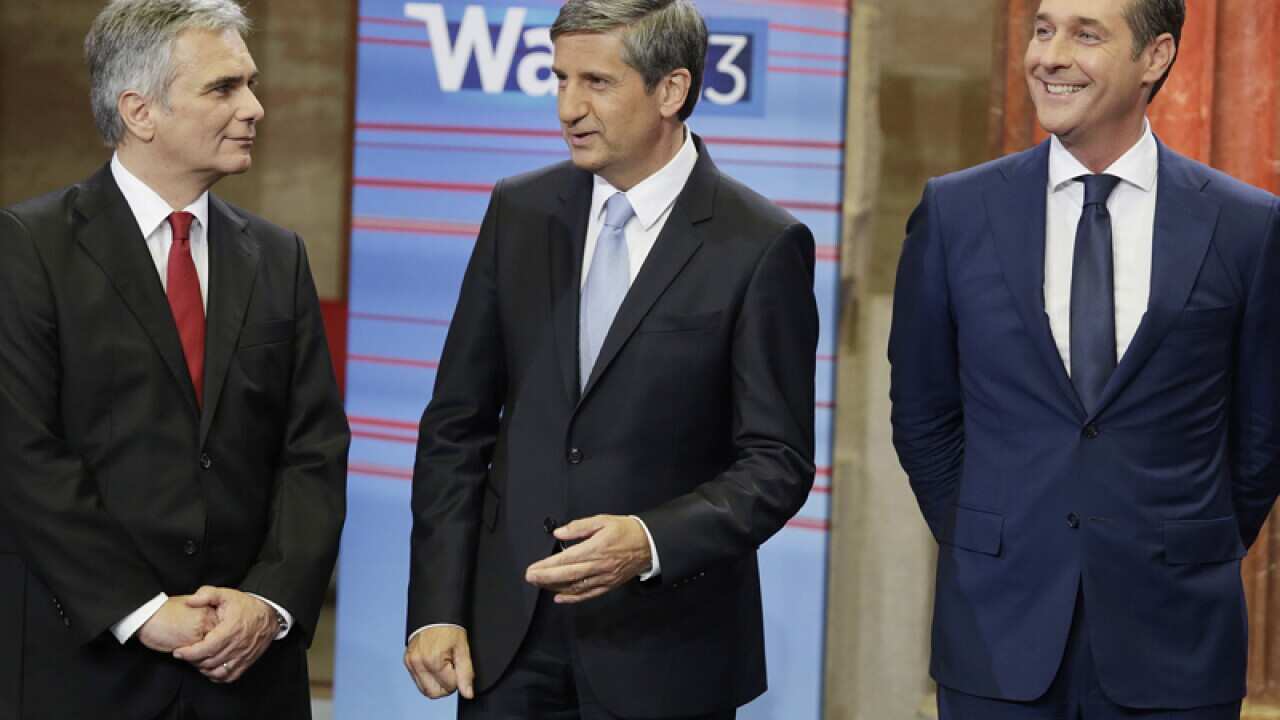
Austria's two main political parties appear to have little alternative but to continue their unloved "grand coalition" for another five years after just scraping together a majority in elections.
This is unless the conservatives attempt a repeat of their 2000 coalition with the third-placed far-right, which saw its share of the vote increase four percentage points.
In their worst result since 1945, the Social Democrats (SPOe) of Chancellor Werner Faymann, 53, won 27.1 per cent, down from 29.3 per cent at the last election in 2008, provisional official results showed.
The conservative People's Party (OeVP), Faymann's partners since 2008, fell to 23.8 per cent from 26.0 per cent, a far cry from scores comfortably over 40 per cent in decades gone by.
Heinz-Christian Strache's nationalist and eurosceptic Freedom Party (FPOe) was very close behind on 21.4 per cent, up from 17.5 per cent in 2008 but short of Joerg Haider's record 27 per cent in 1999.
News that makes sense
Your trusted source for staying up-to-date with the world around you. Get free daily news updates and analysis, straight to your inbox.
The results mean that the SPOe and the OeVP lost nine seats between them in parliament, leaving them with 99 MPs in the 183-seat parliament. The FPOe have 42, up eight.
Austria has the lowest unemployment rate in the European Union, but voters were looking for an alternative to the two long-dominant parties which appear to have achieved little since 2008.







