
"I left Swat with my eyes closed and now I am back with my eyes open," she told AFP, referring to how she was airlifted out in a coma after the attack in 2012.
"I am extremely delighted. My dream has come true. Peace has returned to Swat because of the invaluable sacrifices rendered by my brothers and sisters," she said at a school outside Mingora, the district's main town, where she was escorted by the Pakistani military.
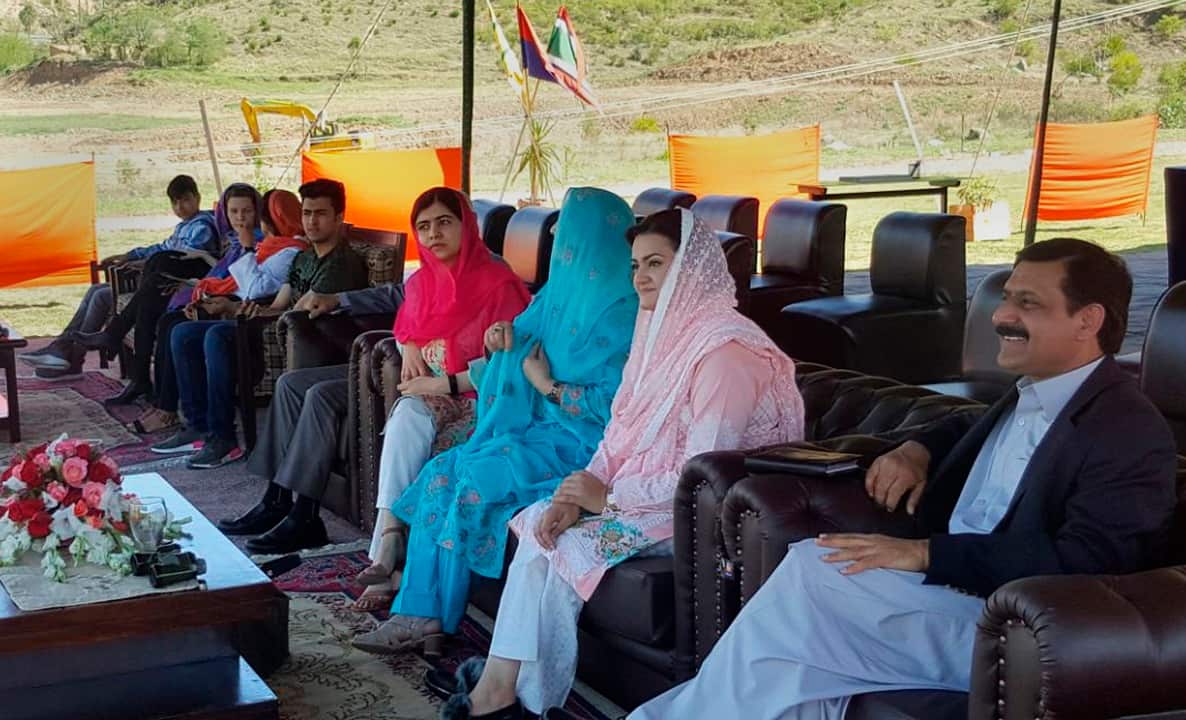
The brief trip by the 20-year-old Nobel laureate is a highly symbolic moment for Pakistan, which regularly touts Swat as a success story in its long battle with extremism as it defends itself against accusations by the US and others that its northwest remains a safe haven for militancy.
News that makes sense
Your trusted source for staying up-to-date with the world around you. Get free daily news updates and analysis, straight to your inbox.
The visit - on which she was accompanied by her father, mother, and two brothers - was kept tightly under wraps.
After flying by army helicopter from Islamabad, she met with friends and family before visiting the all-boys Swat Cadet College Guli Bagh, some 15 kilometres (nine miles) outside Mingora.
Officials had earlier said she would address students there, but she stayed only a few minutes to take photographs before leaving again to return to Islamabad.
Mingora is where Malala's family was living and where she was attending school on October 9, 2012, when a gunman boarded her school bus, asked "Who is Malala?", and shot her.
She was treated first at an army hospital then airlifted to the British city of Birmingham.
Her near-miraculous recovery, and tireless career as an education advocate, have since turned her into a global symbol for human rights, and in 2014 she became the youngest person ever to be awarded the Nobel Peace Prize when she was just 17.
Tearful homecoming
The trip comes two days after Malala, currently a student at Oxford University in the UK, made her emotional return to Pakistan, where her surprise visit has been met with widespread joy and pride.
She broke down in tears as she made a televised speech on Thursday, saying it was her "dream" to be back, and has vowed to Pakistani media that she will return permanently after she has completed her education.
However she has also been met with pockets of intense criticism. Malala is widely respected internationally, but opinion is divided in Pakistan, where some conservatives view her as a Western agent on a mission to shame her country.
There had been much speculation within the country over whether Malala would go to Swat during her visit.
The mountainous region, once a prized tourist destination famed for its pristine scenery, was overrun by the Pakistani Taliban in 2007.
The militants imposed a brutal, bloody rule, but the army drove them out in 2009. Recently restrictions on tourists visiting the area were lifted.
However security has remained fragile, as the assault on Malala three years after the military operation demonstrated. In February this year 11 military personnel were killed in an attack, and analysts have warned the militants still have a presence there.
Residents of the area have praised Malala to AFP in recent days, crediting her with helping to generate improvements in education - especially for girls - in the deeply conservative region, part of Khyber Pakhtunkhwa province.
Earlier this month an all-girls school built with money from the Malala Fund opened in Shangla district northeast of Mingora, where her family lived before moving to the city.
"This is the kind of task which was impossible to achieve even over two decades," Shangla district councillor Altaf Hussain Gulab told AFP on Friday. "Malala made it possible in a period of just a couple of years."
"We have just one Malala today but after a decade or so, we will have Malalas everywhere," agreed Farman Ullah, a shopkeeper in Shangla.







