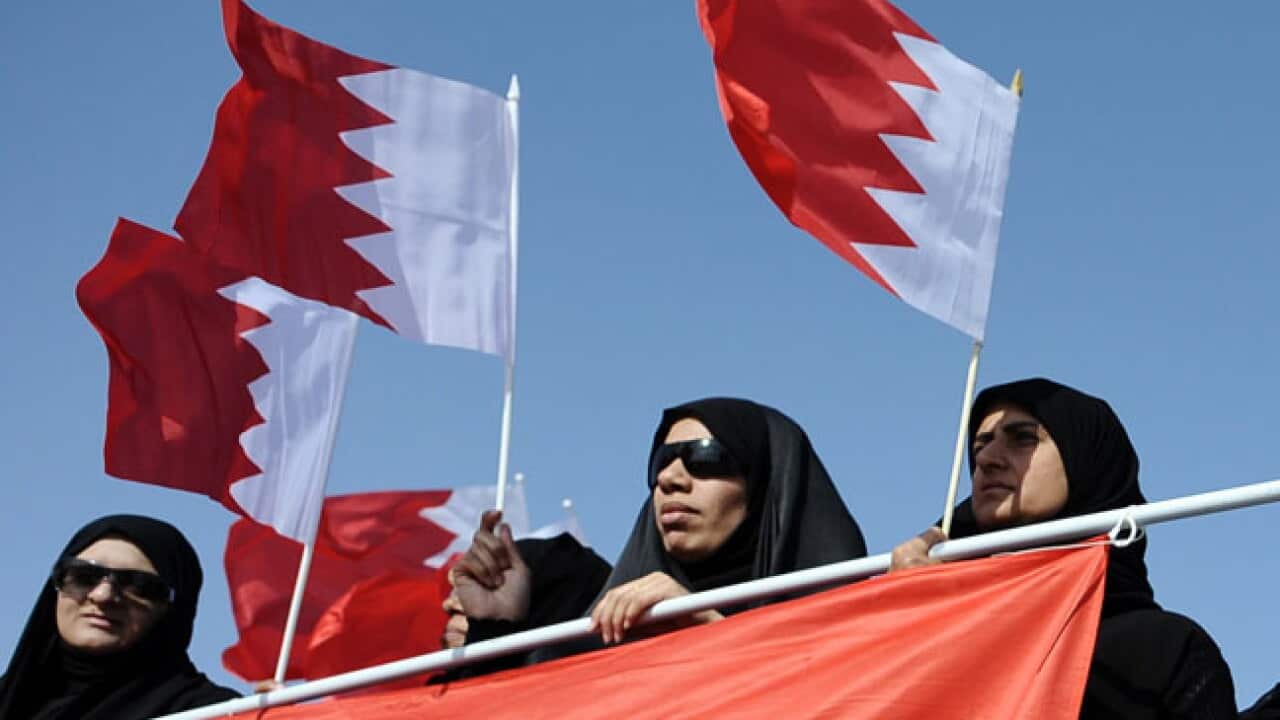
"It is difficult to predict what will happen in the coming days in Bahrain because of the diversity and fragmentation of political forces and a disturbing division between Shiites and Sunnis," Bahraini analyst Ali Fakhro told AFP.
A former education minister, Fakhro argued that treating the problem as a security matter would not solve it, and that it needed a "political plan agreed upon by all political forces and civil organisations, for a national dialogue with the government."
News that makes sense
Your trusted source for staying up-to-date with the world around you. Get free daily news updates and analysis, straight to your inbox.
Protests have become an almost daily occurrence in Bahrain following calls by the opposition and youth activists, triggering clashes with security forces that are swiftly deployed to quell demonstrations with tear gas and batons.
Security personnel are out in force ahead of Tuesday's anniversary of the protest that began last February 14, as youths vowed to return to Manama's former Pearl Square, focal point of the uprising that was crushed in mid-March.
On Sunday, security forces used tear gas and sound grenades against hundreds of protesters trying to approach the area from Shiite neighbourhoods.
In a report delivered on November 23, an independent commission of inquiry denounced the "excessive and unjustified use of force" during the crackdown which left 35 people dead, among them five civilians who died under torture.
King Hamad bin Issa al-Khalifa acknowledged the conclusions of the commission which he formed to probe the crackdown after a wave of criticism by international rights groups.
But the authorities "did not act with seriousness to implement the recommendations of the committee," said cleric Ali Salman, the head of Al-Wefaq, the main Shiite opposition group.
He was speaking during a meeting in early February with human rights expert Cherif Bassiouni who headed the commission and had returned to Manama to assess the implementation of his panel's recommendations.
"The authorities have essentially opted for the security solution, which has led to the current impasse and the resumption of large-scale protests," lamented Mansour al-Jamri, editor of the independent Bahraini daily Al-Wasat.
"A year later and we're back to square one. The crisis could escalate unless the authorities come up with a positive initiative" to resuscitate dialogue with the opposition, he told AFP.
Talks collapsed in July after Al-Wefaq briefly joined a "national dialogue" called for by the king, but then walked away saying the process did not offer "a platform adequate for reform."
Opposition formations led by Al-Wefaq have called for drastic constitutional amendments including an elected premier to replace the king's uncle, Sheikh Khalifa bin Salman al-Khalifa, who has been in office since independence in 1971.
They also demand full legislative and regulatory powers for the elected parliament.
"We are deadlocked. The situation is serious," warned an Al-Wefaq official, Abdul Jalil Khalil, citing "a lack of confidence" in those in power, who have succeeded in mobilising the Sunni minority against the protest movement.
Khalil spoke of "informal contacts" with the authorities, adding to AFP that "the regime intends to resume the dialogue but it has yet to make a serious gesture to that effect."
He called for preparatory measures to create the right environment for dialogue by "implementing the recommendations of the independent commission, including freeing political prisoners and reinstating some 1,700 employees" dismissed for joining last year's protests.
"We are ready for dialogue in a serious and comprehensive settlement, based on a national accord," Khalil said, betting on "an initiative from the king (...) that would pull the country out of the crisis."
After his accession in 1999, King Hamad began a process of political openness, topped with the restoration of the elected parliament which was dissolved in 1975, and after trouble that left at least 38 people dead between 1994 and 1999.







