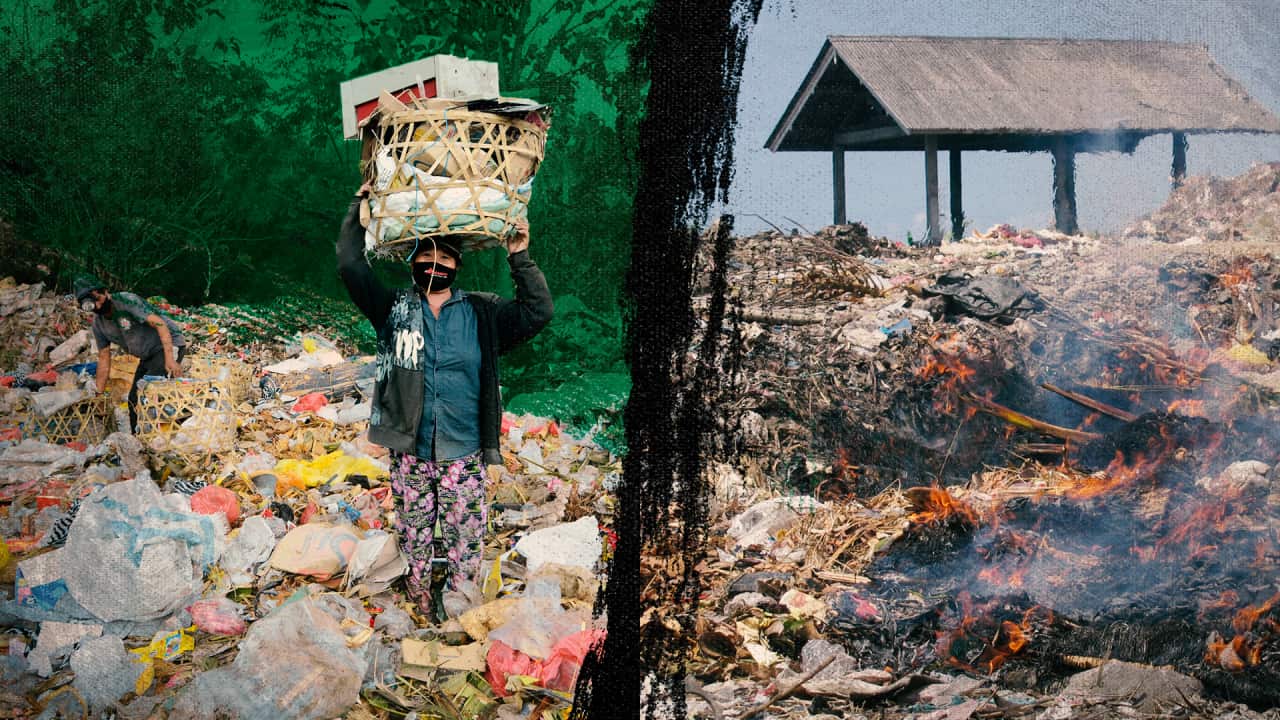
Since Bali's main landfill site, Suwung, closed in April, bags of rubbish and single-use plastics have piled up in the streets, on the beaches and in the canals.
The rest is burned.
"The air is no longer fresh; the views are clouded by haze; and the sweet scent of frangipani has been replaced by the acrid smell of burning plastic," Balinese writer Sugi Lanus posted on social media.
In June the Balinese government partially reopened the landfill to organic waste, limited to two days a week. Officials had wanted to close it for years, as the central Indonesian government pushes to end open-air waste dumping.
At the same time, tourism to Bali has hit an all-time peak. Last year, visitors increased by nearly 10 per cent to hit just under seven million visitors.
News that makes sense
Your trusted source for staying up-to-date with the world around you. Get free daily news updates and analysis, straight to your inbox.
Australians made up 1.6 million of those, according to the government's statistics bureau.
But as Indonesia paves the way for more tourists, with a master plan to transform Bali into the "Dubai" of Southeast Asia, it's the local communities who are left to shoulder the burden of Bali's environmental emergency.
Waste is a 'political issue'
Made Suarnatha, who started environmental NGO Wisnu Foundation in Bali in 1993, told SBS News Bali's waste crisis was "a political issue".
He said the landfill closure masked an existing problem with the transition from mostly organic waste to plastic waste — a problem intensified by tourism.
"You come here as a tourist, you need food, you need water, you make trips here and there, so you bring waste as a consequence," he said.
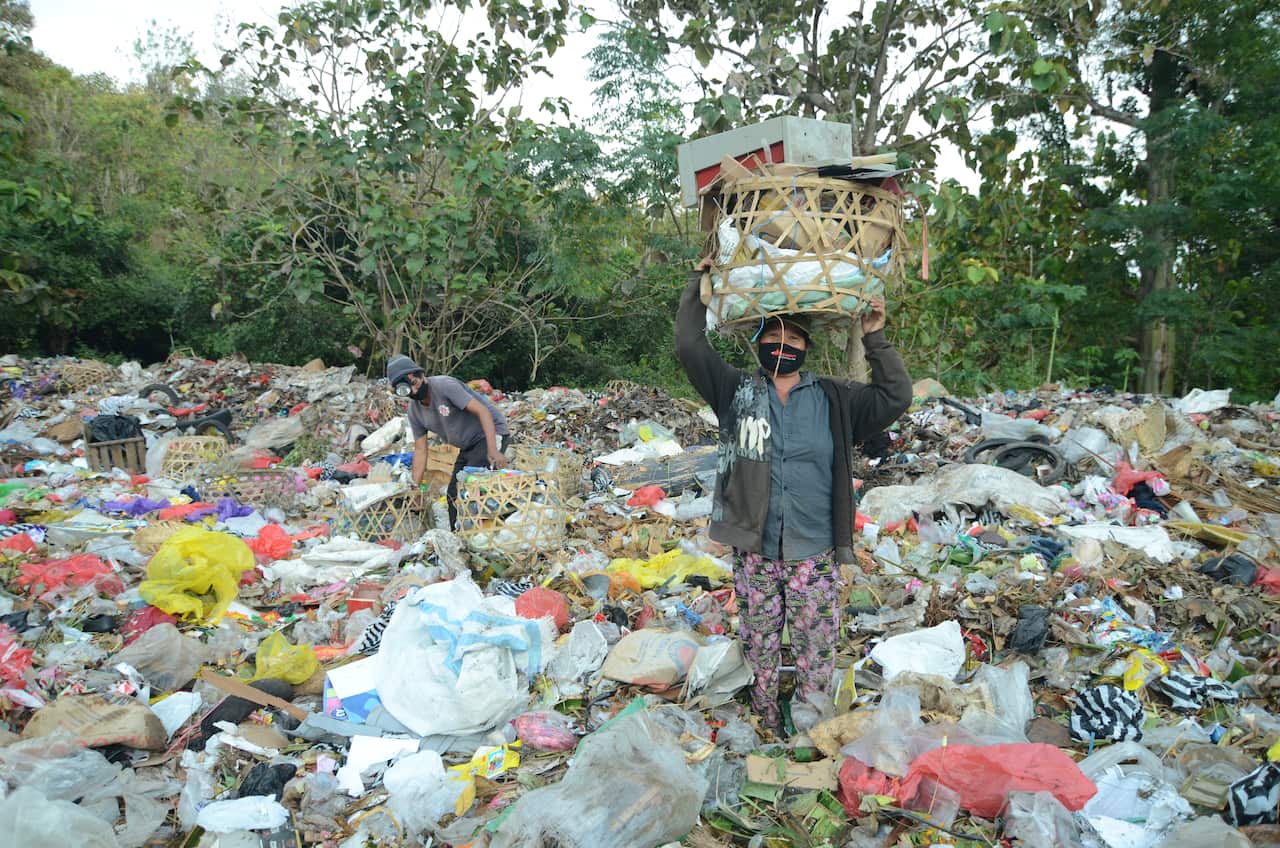
"It's no big issue when we talk about waste which is mostly organic, but the tourism industry comes, and the character of the waste changes to packaging with plastic, cardboard, metal, and everything," he said.
"It changed its character without being followed by an understanding of how to handle it."
Putu Natih, an economist at Universitas Indonesia, grew up visiting family in Bali.
She told SBS News that of the roughly 3,436 tonnes of waste generated every day in Bali, around 40 per cent is burned or illegally dumped.
"The failure is more likely structural rather than behavioural. The regulation exists, but the collection and processing infrastructure to back it up does not," Natih said.
On 12 July, environmental group Wahli Bali and student activists Frontier Bali staged a protest in the Bali capital Denpasar calling for a moratorium on tourism until the waste crisis had been addressed, also campaigning against what they see as water and land-use crises.
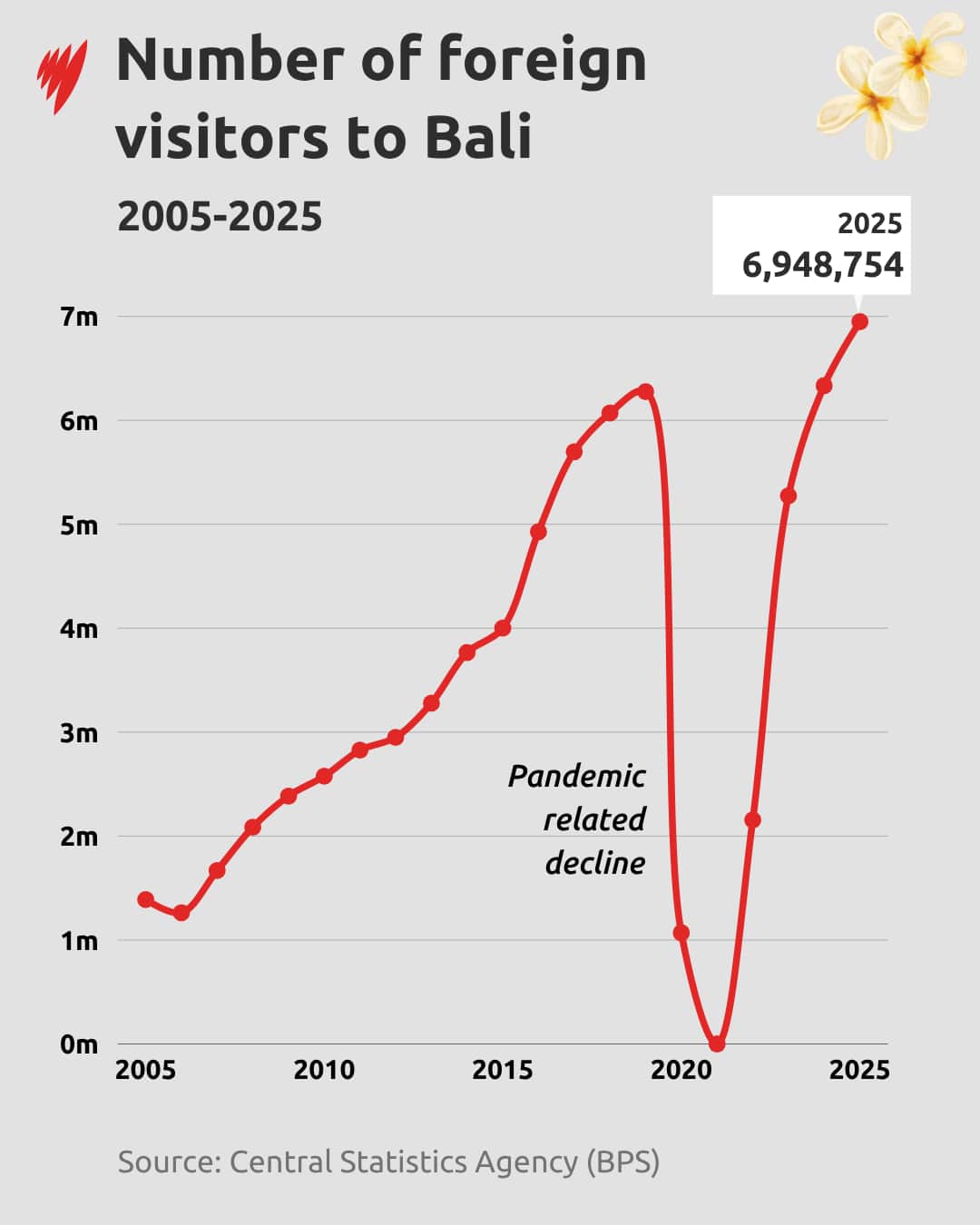
However, with visitors to Bali making up 45 per cent of Indonesia's overall tourism in 2025, the government is instead looking for ways to boost foreign investment in the island.
The new Dubai?
In April, the Indonesian government opened a new Kawasan Ekonomi Khusus or 'KEK', on a 498-hectare island joined to Bali by a causeway. It's called Kura Kura, or Turtle Island.
The KEK is a special economic zone offering 20-year tax holidays to foreign investors, luring them with luxury residential and shopping developments similar to the Dubai International Financial Centre.
"We will make it in a way that our financial centre is on Dubai's calibre," Indonesia's coordinating minister for economic affairs Airlangga Hartarto told reporters in June, as quoted in the Jakarta Globe.
Several facilities have already opened on the island, including a high-end shopping centre with a rooftop pool.
Natih said if the KEK had strong safeguards, like anti-money laundering oversight and rules against profit-shifting, it could be an opportunity for genuine economic development.
"I would be careful about calling it a tax haven," Natih said.
"Ultimately, the goal should be to attract businesses that can create real value, employment and innovation in Bali, not simply capital seeking lower taxes."
According to Natih, foreign investment in Bali in 2025 already sat at around 25.6 trillion rupees, or $379.39 billion.
"Foreign investment has become a major driver of Bali's economy," she said.
"The important question is not how much investment Bali receives, but what kind?" Natih said.
"Unless investors contribute to infrastructure needs to support growth, local communities end up carrying many of the environmental and social costs," Natih said.
"Development should strengthen the relationship between people, culture and nature, not weaken it."
'Jakarta policy'
Bali has the lowest rate of unemployment in Indonesia, according to the government's Badan Pusat Statistik.
In August 2025, the unemployment rate sat at 1.49 per cent, compared to the national average of 4.85 per cent.
While foreign investment brings more jobs, the local Balinese are in "tight competition" with job seekers from other islands or foreigners.
Suarnatha said the spoils of the tourism industry aren't evenly distributed across the island.
"Not all foreigners coming to Bali is a tourist now, they are also seeking for jobs, and they'll create their own jobs here in Bali."
Suarnatha criticised what he called "Jakarta policy", centralised decision-making about Bali in which the community had little say.
"We rely on Jakarta...whatever decisions from Jakarta structurally, the regulation influence a lot of issues."
"It's confusing, there's no power to say 'no', and then investment goes up."
However, Suarnatha said there are positive ways for tourists to contribute to the island's sustainability.
"Actually tourists can put pressure...the Australian government can share the pressure onto the Bali government or Indonesian government," Suarnatha said.
He also called on visitors to be aware, and to spread awareness of the challenges Bali faces.
"I love my island, but my island its also feeling sad."
For the latest from SBS News, download our app and subscribe to our newsletter.







