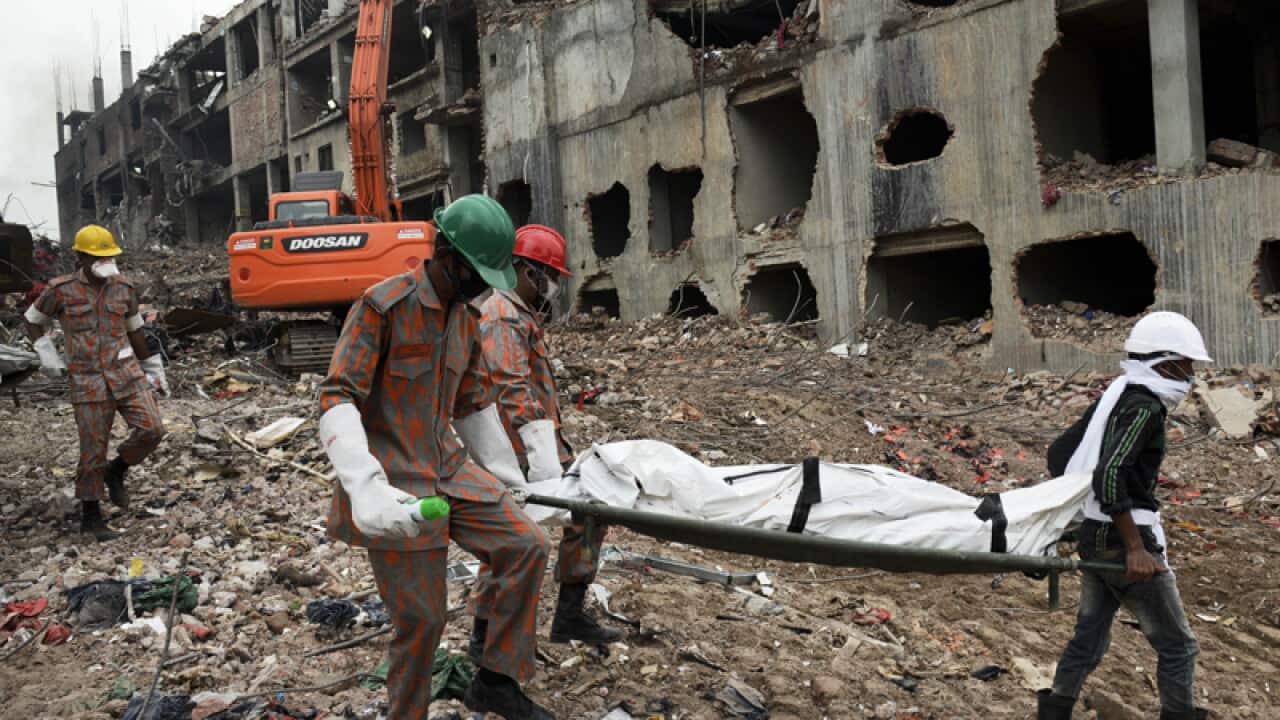
The death toll from last month's collapse of a garment factory complex in Bangladesh rose past 1,000, as piles of bodies were found in the ruins of a stairwell where victims had sought shelter.
Brigadier General Siddiqul Alam Sikder, the army officer overseeing the operation on the outskirts of the capital Dhaka, told AFP that the death toll now stands at 1,035 after dozens more remains were discovered overnight.
Alam said that many of the bodies were now little more than skeletons, 17 days on from the implosion of the nine-storey Rana Plaza compound in Savar.
News that makes sense
Your trusted source for staying up-to-date with the world around you. Get free daily news updates and analysis, straight to your inbox.
And the stench from under the rubble suggested that many more bodies are still to be located, he said.
"We have found a huge number of bodies in the stairwell and under the staircases. When the building started to collapse, workers thought they would be safe under the staircases," he said.
"Each time we moved a slab of concrete, we found a stack of bodies."
Around 3,000 workers were on shift at Rana Plaza on the morning of April 24 when the building suddenly caved in.
Most of the employees were earning around $40 a month job to make clothing for Western brands such as Britain's Primark and the Spanish label Mango.
Survivors who are now without work say the levels of compensation are inadequate and won't even cover the medical costs for victims who have suffered serious injuries, including amputations.
Efforts to identify the victims are being hampered by the decomposition of bodies, although some were found with mobile phones in their pockets or identity cards around their necks.
Recovery workers, who are drawn from the ranks of the army and fire service, are having to wear masks and use air freshener.
The preliminary findings of a government probe have blamed vibrations from four giant generators on the compound's upper floors for triggering the collapse.
The building's architect told AFP he designed the structure to house a shopping mall and offices, not factories.
Police have arrested 12 people including the plaza's owner and four garment factory owners for forcing people to work on April 24, even though cracks appeared in the structure the previous day.
Factory workers have held protests calling for those responsible for the disaster be executed, as well as demanding improved safety regulations.
The building collapse was the latest in a string of deadly accidents to hit the textile industry, with a factory fire last November killing 111 workers.
On Thursday, disaster struck again as a fire in another garment factory in Dhaka killed eight people, including its owner.
The cause of the fire was not known, but authorities said it broke out during the night on the third floor of an 11-storey building housing garment factories of the Tung Hai group in Dhaka's Darussalam district.
Fire is a common problem in the 4,500 garment factories in Bangladesh, with many operations based in badly constructed buildings with sub-standard wiring.
Bangladesh is the world's second-largest apparel maker and the $20 billion industry accounted for up to 80 percent of annual exports last year.
But it has a shocking safety record and Western retailers have been threatening to pull out unless authorities come up with a credible programme to raise standards. Disney has already done so.
Western firms have criticised the factories for not ensuring worker safety, but major brands continue to place orders and critics say they turn a blind eye to the endemic problems.







