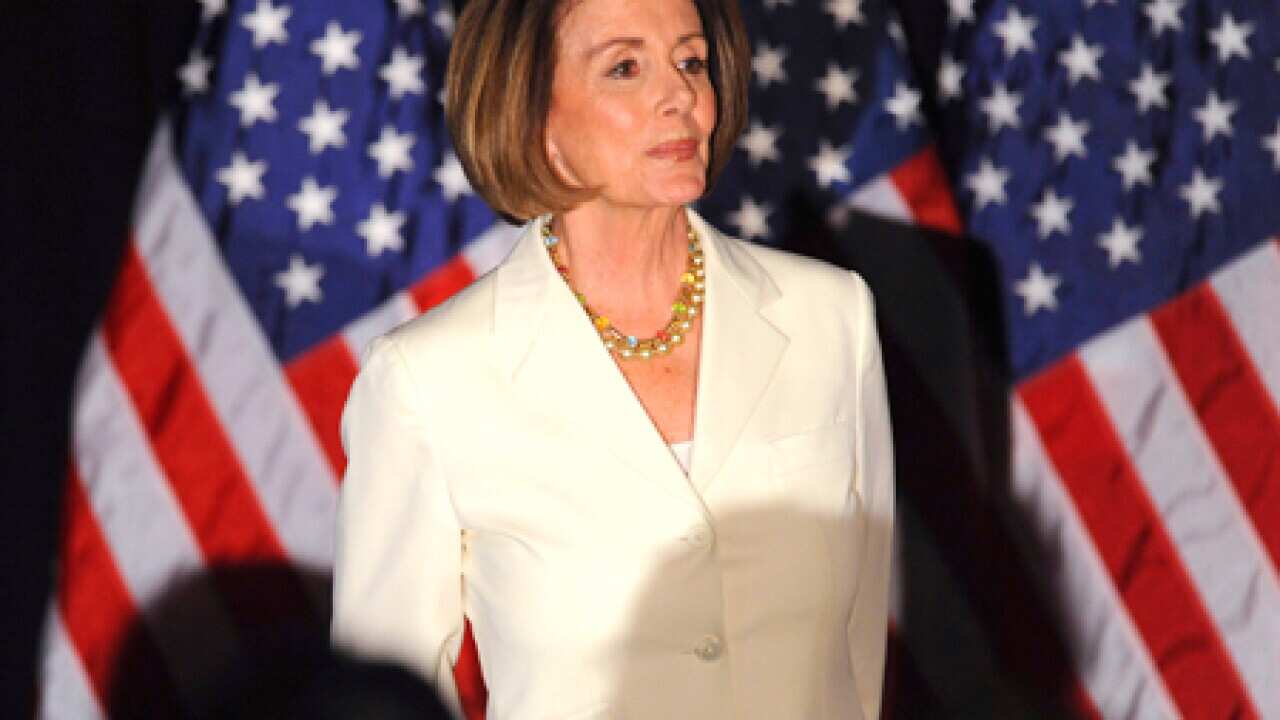
Sweeping Republican gains in the US Congress mostly won't become a reality in the Capitol until winners from Tuesday's vote are sworn in come January, giving Democrats a narrow "lame-duck" session to wrap up unfinished business.
That includes passing spending legislation to keep the government running, a measure to extend at least some tax cuts due to expire, a food safety bill, and the new Strategic Arms Reduction Treaty (START) with Moscow.
News that makes sense
Your trusted source for staying up-to-date with the world around you. Get free daily news updates and analysis, straight to your inbox.
And Obama suggested Wednesday that he might be prepared to seek an end to the "Don't Ask, Don't Tell" ban on gays serving openly in the US armed forces when a Pentagon review of the potential impact is released in early December.
The final sprint begins November 15 and, apart from a week-long break for the Thanksgiving holiday, could run to the end of the year, top Democratic aides said.
"We have a long list of things to do, and not a lot of time to do them," said Democratic Senate Majority Leader Harry Reid's spokesman, Jim Manley, who emphasized progress on key fronts "requires Republican cooperation."
It promises to be a bruising affair: The White House and top Republican leaders have paid lip service to embracing greater cooperation on critical matters, but are still far apart on government spending and the tax-cut plans.
Obama has called for extending those tax cuts, enacted in 2001 and 2003, that go to middle-class Americans and some businesses, but said the uppermost rates should be allowed to rise lest the swollen deficit balloon further.
"My goal is to make sure that we don't have a huge spike in taxes for middle-class families," the president said at a post-election press conference Wednesday, stressing he was "absolutely" willing to negotiate with Republicans.
"How that negotiation works itself out, I think it's too early to say," said Obama, who warned any approach must be one that "first of all, does no harm."
Republican House Minority Leader John Boehner, on track to replace Democrat Nancy Pelosi as House Speaker in January, stuck to his guns in insisting that all of the tax cuts be extended.
"We continue to believe that extending all of the current tax rates for all Americans is the right policy for our economy at this time," said Boehner.
Democrats hoped for action on the START pact, which has yet to draw enough support from Republicans to reach the 67 votes required for Senate ratification in what would be a major diplomatic victory for the president.
Senate Foreign Relations Committee chair John Kerry, a Democrat, still views the agreement as "an urgent imperative" and hopes "to get this done by the end of the year," said a spokeswoman, Jennifer Berlin.
The treaty -- signed by Russian President Dmitry Medvedev and Obama at an elaborate ceremony in Prague in April -- restricts each nation to a maximum of 1,550 deployed warheads, a cut of about 30 percent from a limit set in 2002.
Republicans were set to control 42 of 100 Senate seats, up from 41, in the lame-duck session after Representative Mark Kirk won a special election for Obama's old spot.
Asked about his goal of lifting the US military's gay ban, Obama noted that the Pentagon was due to release a review in early December of views inside the armed forces about doing so.
"I will look at it very carefully. But that will give us time to act -- potentially during the lame-duck session -- to change this policy," said Obama, whose push to end the restriction has drawn Republican objections.
While some Republicans have denounced plans for ambitious "lame duck" action as going around the will of the voters, the party used the weeks after the 1998 mid-term elections to impeach Democratic then-president Bill Clinton.







