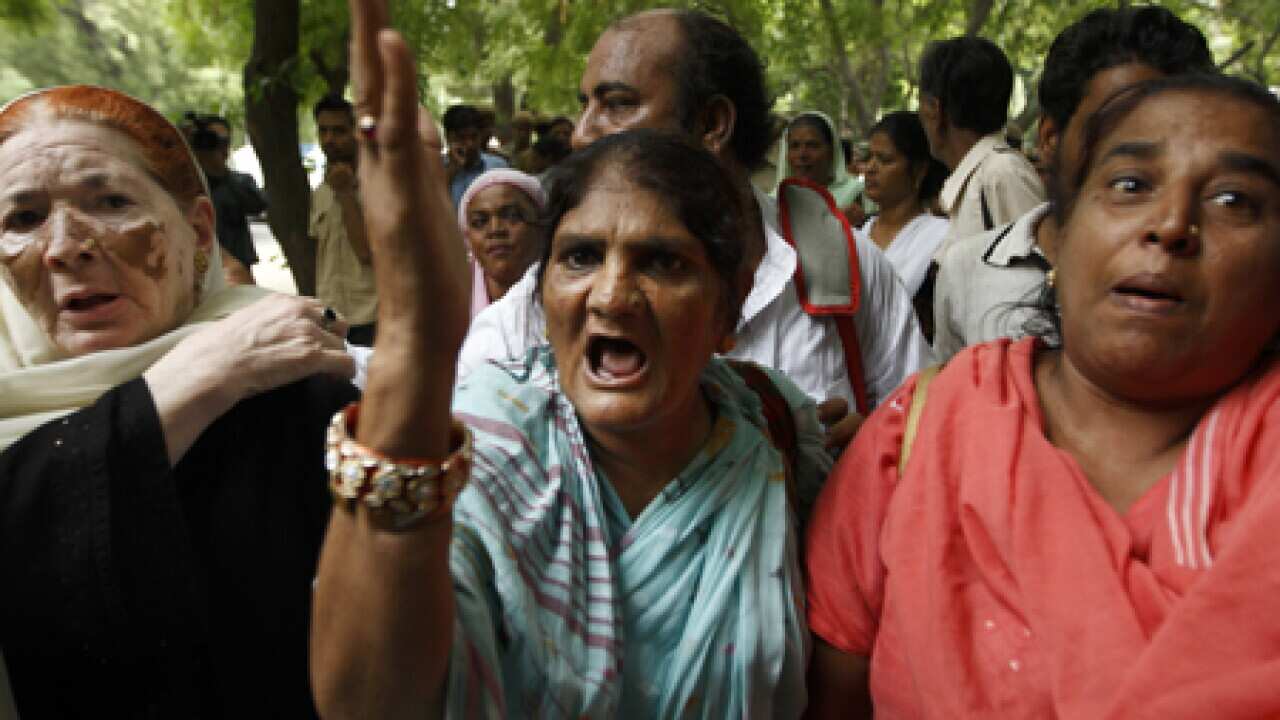
Indian campaigners have criticised a new $US 280 million government package for victims of the 1984 Bhopal gas disaster, saying it doesn't go far enough.
Satinath Sarangi, from the Bhopal Group for Information and Action, said the new measures would not help the children and grandchildren of those affected by the world's worst industrial accident.
The Indian government said on Thursday it would double the compensation for families of the dead and others suffering health problems, meaning 45,000 people would receive additional payments.
News that makes sense
Your trusted source for staying up-to-date with the world around you. Get free daily news updates and analysis, straight to your inbox.
"We are asking the group of ministers to include second and third generation individuals who suffer from contamination," Sarangi said, referring to continued pollution after the accident and congenital diseases.
"More importantly we want the government to chase Dow Chemical and hold them responsible."
25 years on
The new package, unveiled more than 25 years after the accident, comes amid public anger over the handling of the disaster by former governments, with pollution and health problems still rife in Bhopal.
The gas leak killed thousands of people instantly and tens of thousands more from its lingering effects over the following years.
The accident was caused by a pesticide plant 51-percent owned by US chemical group Union Carbide that spewed 40 tonnes of toxic gas into residential areas of Bhopal in Madhya Pradesh state in December 1984.
Union Carbide, now owned by Dow Chemical, struck a $470 million out-of-court settlement with the Indian government in 1989, which absolved it of further responsibility for the medical costs or clean-up of the site.
Protest
About 100 protestors demonstrated outside the residence of the home minister on Friday, demanding that the Indian taxpayers money must not be used for the clean-up of the gas site.
In a move certain to provoke a legal struggle with Dow Chemical, India said it will explore the possibility of extracting more compensation from the company.
It also said on Thursday it would also seek the extradition of the former Union Carbide chief executive Warren Anderson from the United States despite previous requests being turned down by Washington.
Seven local Union Carbide managers were convicted earlier this month and sentenced to two years in jail, punishments that campaigners protested were too lenient.







