Had Japan not taken the lion's share of this month's most clicked-on stories, it would have been easy and accurate to blame compassion fatigue.
But it seems news audiences are not suffering from the condition, which is caused by exposure to an excess of tragedy. Not even almost.
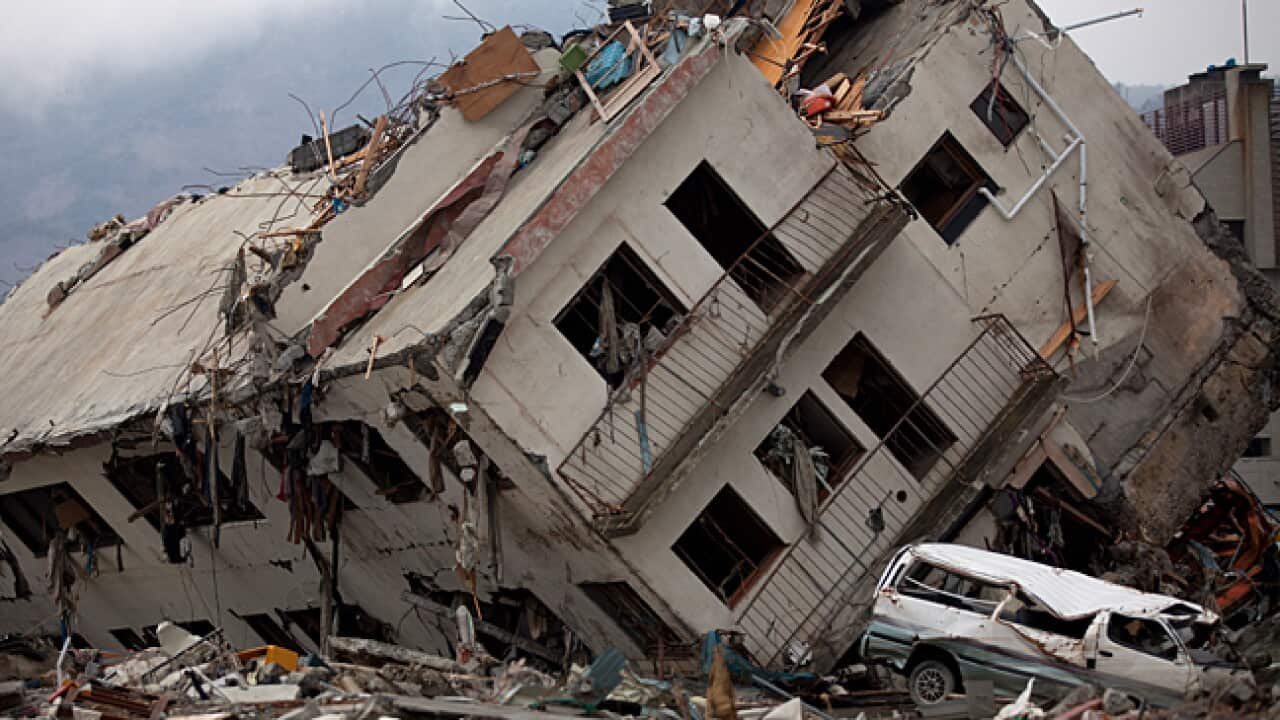
Pictures and videos were first port of call in the struggle to comprehend just how a swathe of Japan, and its residents, had disappeared under a giant wave, sparked by a record-breaking mega-quake.
Our quake and tsunami gallery and a bunch of user-generated videos of the 10-metre tsunami as it hit were good places to start.
The flood of stories coming out of the devastated nation was almost too much for us to handle, so we published an interactive feature that updates itself constantly with explainers, background information and the latest news as well.
News that makes sense
Your trusted source for staying up-to-date with the world around you. Get free daily news updates and analysis, straight to your inbox.
No-one on the SBS news team would be shy to admit feeling thoroughly overwhelmed by the triple tragedy, and our readers also dove upon an article that listed how you can help Japan get through it.
News of the death toll that began at six and has now surpassed 28,000 by some reports passed like a cloud over the dispositions of news-involved people on both sides of the screen.
But it was not so ominous as the nuclear cloud tipped to pass over Europe.
Like some sort of cruel 'flavour of the month' promotion brought to you by natural forces, Japan's quake was not the only one (though by far the biggest, taking its place in the top ten in history, too).
A 6.5-magnitude quake rattled Vanuatu - and the nerves of a quake-news-addled public, but fortunately, it amounted to nothing.
Then there was the Christchurch quake, which - despite occuring in late February - was still making headlines in March.
The most popular among them was an odd one that aroused its share of indignation. China requested extra compensation for a group of students killed in the disaster, citing its national one-child policy as the reason their loss was more significant than that of other, more procreation-happy nations.
And quakes weren't enough for those publicity-hungry forces of nature, with our interactive map of Queensland and other states' flood crisis still edging its way onto the list.
By this stage of any Top Ten list, the heavy stuff has usually given way to light, funny, or just plain weird stories.
Not so this month.
A gallery of images of murderous Libyan strongman Muammar Gaddafi - who is responsible for an unclear number of deaths as he tries to smash an impassioned uprising against him - clicked in next.
It is the last of the 'serious' items on the list, though from some of Gaddafi's outfits, you wouldn't know it.
And so to the lighter end of things*. (*Disclaimer: This IS a list of news articles, so the term 'light' must be interpreted accordingly).
Child star Macaulay Culkin was tipped to play the part of Assange in a Steven Spielberg flick about the Wikileaks saga. If you're not sure, surf on over to the article and check out our mashed-up photo of the two of them side by side.
With 400 comments and counting, next-most-popular was our message board, which asked: Does Australia need a carbon pricing scheme? It's still going strong, so if you haven't had your say, there's plenty of action over there.
Bear Grylls visited Sydney and ... well, that's all he did, but perhaps in the hope that he would drink the fluid from camel poo or some such (or perhaps in the hope that he wouldn't), news consumers flocked to him.
The list, rather poetically, finishes with a bit of dancing - or two bits, even.
A video and yarn about a St Patrick's Day flash mob that delighted Sydney crowds at Central Station came in second-last, and a gallery of ever-colourful images that emerged from Mardi Gras 2011 paraded in behind it.
In the newsroom, we're hoping for more of the dancing and less of the abject catastrophes in the month ahead, but disgracefully that's not a decision neither journalists nor their audiences have the power to make.







