A spate of deadly bombings has put Egyptian police on edge as supporters and opponents of the military-installed government prepared rival rallies for the anniversary of the 2011 Arab Spring uprising.
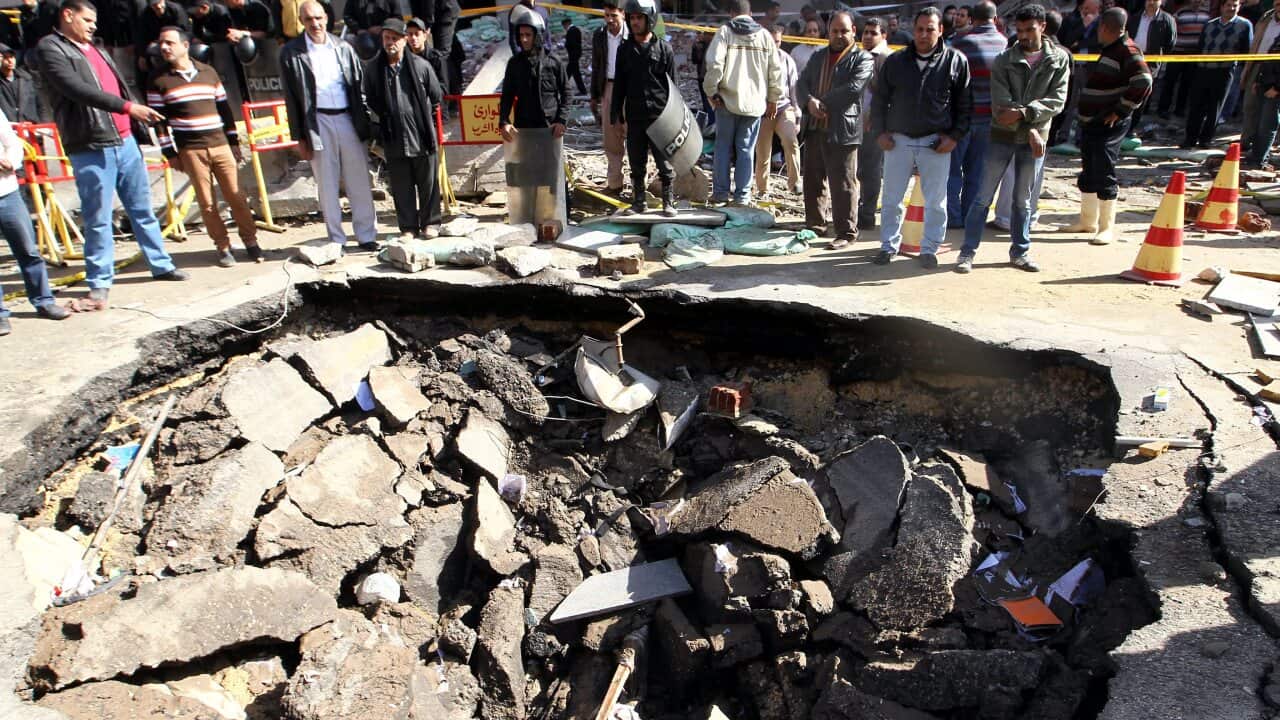
Hours before the rallies were due to start, residents of a north Cairo neighbourhood woke on Saturday to a small explosion outside a police training centre, a day after four blasts, including a car bombing outside police headquarters, killed six people.
An Al-Qaeda inspired group - Ansar Beit al-Maqdis, or Partisans of Jerusalem - claimed responsibility for the bombings, all of them targeting police, and urged ordinary Egyptian "Muslims" to stay away from police buildings.
Police sealed off the capital's main squares as supporters of ousted Islamist president Mohamed Morsi, toppled by the military in July, readied counter-demonstrations to the commemorations called by the authorities.
The Islamists have announced more than a dozen planned marches from Cairo mosques for Saturday to launch 18 days of protests.
News that makes sense
Your trusted source for staying up-to-date with the world around you. Get free daily news updates and analysis, straight to your inbox.
On Friday, clashes pitting Morsi supporters against their opponents and police killed 14 people nationwide.
Police, who have killed hundreds of Islamist protesters in street clashes since Morsi's overthrow, have vowed to put a stop to their planned demonstrations.
But they have encouraged Egyptians to turn out in support of the interim government, and some politicians called for rallies to back army chief Abdel Fattah al-Sisi, the general who overthrew Morsi in July.
Tahrir Square, epicentre of the popular revolt that toppled autocratic president Hosni Mubarak in 2011, was closed off by police and soldiers ahead of the commemorations.
Morsi's Islamist supporters condemned Friday's bomb blasts as they have previous attacks on the police and army.
But following a previous attack on a police building in December, also claimed by Ansar Beit al-Maqdis, the authorities declared Morsi's Muslim Brotherhood a "terrorist organisation", making even expressions of verbal support punishable by heavy prison sentences.
That view has been taken to heart by the Brotherhood's opponents - after each of Friday's bombings, crowds gathered brandishing posters of Sisi and shouting praise for the government he installed.
Officials in the government and military have been hinting for days that the turnout at the pro-government rallies on Saturday could be a bellwether for a run by Sisi in a presidential election promised for later this year.
Mubarak was forced to step down on February 11, 2011 after 18 days of demonstrations that left some 850 people dead, ending his three-decade rule of the Arab world's most populous country.
On his overthrow, the armed forces took power, handing the reins over 16 months later to Morsi - the country's first freely elected head of state.
But late last June, after just one year of turbulent rule by Morsi's Muslim Brotherhood, millions of Egyptians took to the streets to demand his resignation.
Three days later, Sisi announced Morsi's removal. The Islamist president has been in custody ever since and is on trial in four separate cases.
The army's political comeback signalled a return to the former regime's authoritarianism for some of the activists who led the January 25 revolution.
But for the millions who took to the street to demand Morsi's ouster last year, the interim authorities and the "democratic transition" they have announced represent a modicum of stability after three years of turmoil.
Security forces have waged a bloody crackdown on Morsi's supporters since his overthrow - at least 1000 people have been killed and thousands of Islamists arrested.
Amnesty International has denounced "state violence on an unprecedented scale over the last seven months".
"Three years on, the demands of the '25 January Revolution' for dignity and human rights seem further away than ever," the London-based watchdog said.







