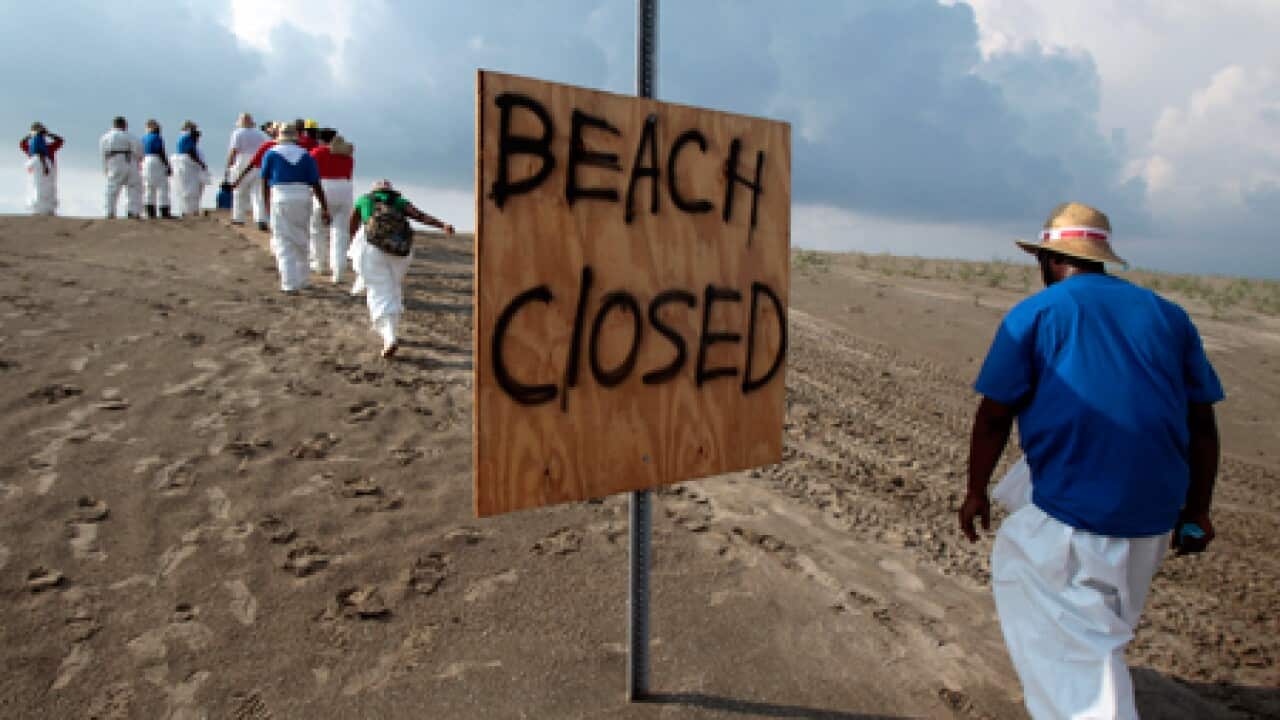
BP has resumed full siphoning operations from the ruptured Gulf of Mexico oil well, but Florida was forced to close down popular tourist beaches at the height of the summer season as more crude washed ashore.
Florida tourism under threat
The vast slick has already soiled the coastlines of Louisiana, Mississippi and Alabama, but could spell disaster for Florida, one of the world's top tourist destinations with more than 80 million visitors a year.
The state's 1,260 miles (2,000 kilometers) of western coastline is home to scores of popular beaches as well as pristine coral reefs and an important fishing industry.
News that makes sense
Your trusted source for staying up-to-date with the world around you. Get free daily news updates and analysis, straight to your inbox.
"There's oil both in the water and in the sand," said Warren Bielenberg, an official with the Gulf Islands National Seashore, one of the areas in northwestern Florida affected by the spill.
The swimming ban runs from far western Florida to the east side of Pensacola Beach through Santa Rosa Island, one of the region's most popular tourist attractions, Bielenberg said.
State officials have mounted an aggressive beach and coastline cleanup effort to stop the oil from reaching Florida beaches.
At a time of high unemployment in other sectors, tourism in Florida generates more than a million jobs, bringing the state 65 billion dollars in revenue in 2008.
Accident a major setback
Oil siphoning operations however resumed around 7:00 pm Wednesday (0000 GMT Thursday), some 11 hours after BP removed the containment cap over the gushing well after a remotely-operated submarine robots bumped into the device.
The accident shut down a vent, forcing gas up into part of the system. The device traps spewing crude and siphons it up to two surface vessels, the Discovery Enterprise and the Q4000.
The system had been capturing some 25,000 barrels of leaking oil a day, but capacity was cut for the 24 hours between midnight Tuesday and midnight Wednesday, officials overseeing the spill response said.
The setbacks were bad news for Bob Dudley who replaced gaffe-prone British CEO Tony Hayward as BP's spill response coordinator on Wednesday.
Dudley is an American who spent much of his childhood in Mississippi, one of the four southern US states currently threatened by the catastrophe.
His first day on the job was further marred by the news that two people involved in spill cleanup efforts were reported dead in separate incidents.
One was killed in what was described as a swimming pool accident, while the other, reportedly a disenchanted boat skipper, was a likely suicide, an Alabama coroner said.
Cause of the spill
The spill was triggered by an April 20 explosion onboard the BP-leased Deepwater Horizon oil rig, which killed 11 workers.
The overall amount of crude gushing from the damaged well is still unclear, with the latest government estimates ranging from 35,000 to 60,000 barrels a day.
An internal BP document released by a US lawmaker this week showed the firm had even contemplated a worst-case scenario of up to 100,000 barrels, or 4.2 million gallons, a day leaking into the sea.
America's worst previous oil spill, the 1989 Exxon Valdez disaster, dumped nearly 11 million gallons off the Alaskan coast, but even under the low end of current estimates, almost 100 million gallons have entered the Gulf.
Judge blocks drilling ban
The disaster prompted President Barack Obama to order a temporary freeze on deepwater oil drilling, but his administration has been forced to consider alternative measures after a judge in New Orleans blocked the move on Tuesday.
Judge Martin Feldman said the moratorium was "arbitrary and capricious" and Republican Louisiana Governor Bobby Jindal welcomed the end of the freeze, saying it most hurt those already being negatively impacted by the spill.
The White House pledged to appeal, but on Thursday had a suit seeking a stay in the case while government lawyers prepare to challenge the ruling turned down by the courts.
The Obama administration has pledged to reissue the order, using different language to overcome legal obstacles.
BP has spent two billion dollars so far on cleaning up the spill and compensating affected residents and businesses.
The spilling crude has so far contaminated more than 125 miles of Louisiana coast, shutting down fishing operations and triggering long-term fears for the region's already endangered wildlife.







