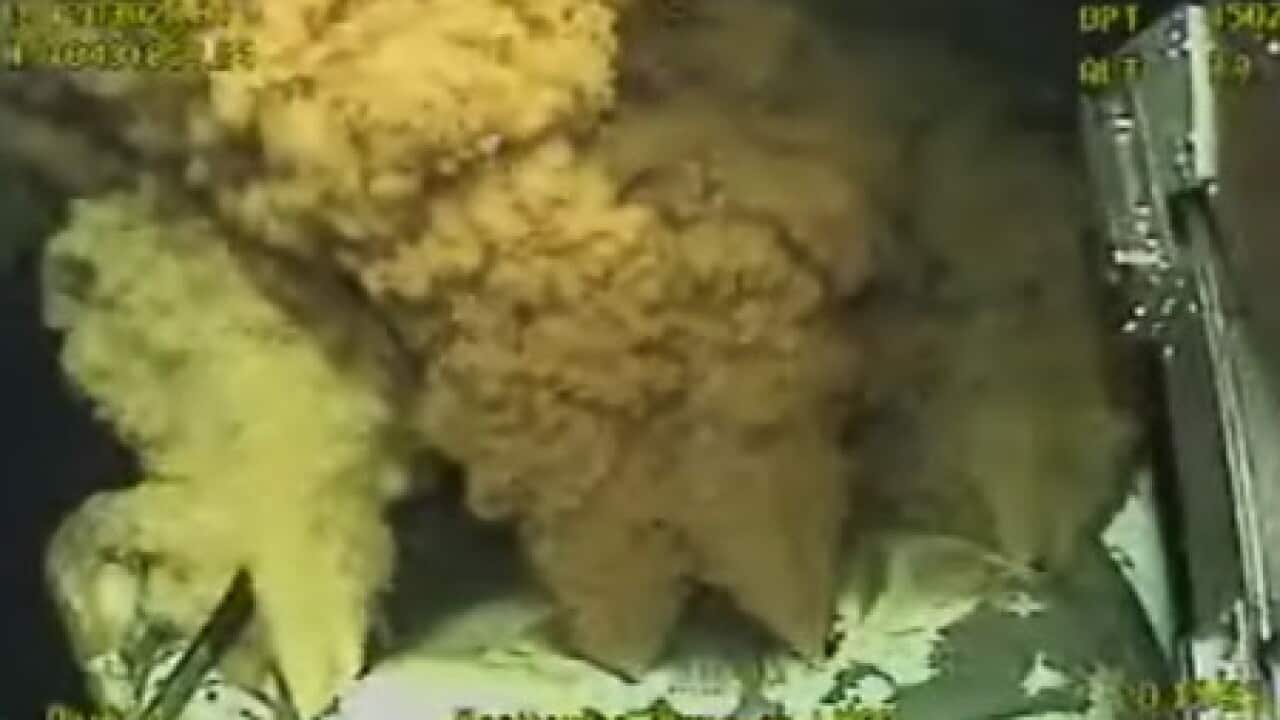
BP's robotic submarines wrestled a cap into place over the jagged end of a pipe from ruptured well deep below the Gulf of Mexico, in a dramatic bid to stem a disastrous oil spill.
Live video feed provided by BP showed the inverted, funnel-like cap being attached to the well's fractured riser pipe in near-freezing waters, nearly a mile (1,600 meters) below the surface. BP aims to then siphon the oil to a ship on the surface.
Oil and gas continued to spew out unimpeded with great force, complicating efforts to determine whether the cap was in fact a good fit. BP officials and the US Coast Guard did not immediately respond to requests for comments.
News that makes sense
Your trusted source for staying up-to-date with the world around you. Get free daily news updates and analysis, straight to your inbox.
But engineers have already acknowledged that the cap will not be a fix-all, and some of the crude will still spew out even if it is successfully placed over the gusher.
BP earlier managed to slice off the fractured well pipe with a pair of giant shears, but the cut was jagged and officials had to resort to a looser-fitting cap.
The British energy giant's chief executive, Tony Hayward, has warned it could take about a day after the cap is put in place to know if it is managing to contain the worst of the spill, amid warnings that, with the broken pipe cut off, the oil flow would initially increase by up to 20 percent.
The firm has repeatedly tried -- and failed -- to contain the disastrous leak since an April 20 explosion tore through the BP-leased Deepwater Horizon rig just off the Louisiana coast.
Between 22 million and nearly 36 million gallons of crude have already spewed into Gulf waters, threatening vulnerable coastal wetlands, wildlife and livelihoods, according to US government estimates.
After the cap, the next chance to halt the flow would not come until mid-August, when relief wells are completed.







