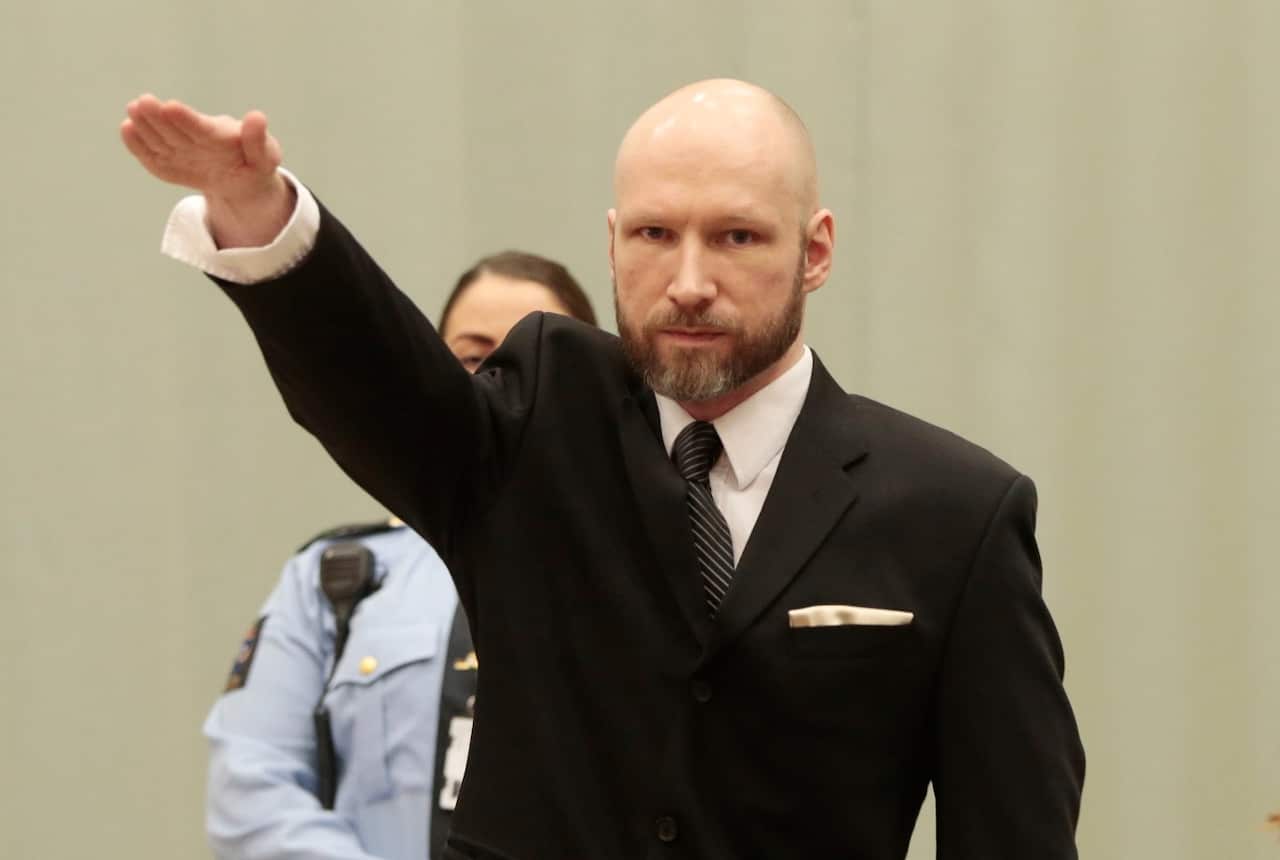
The extended arm gesture, sure to offend families of the 77 people he killed in 2011, earned Breivik a reprimand from Judge Oystein Hermansen, who described it as "offensive to the dignity of the court".
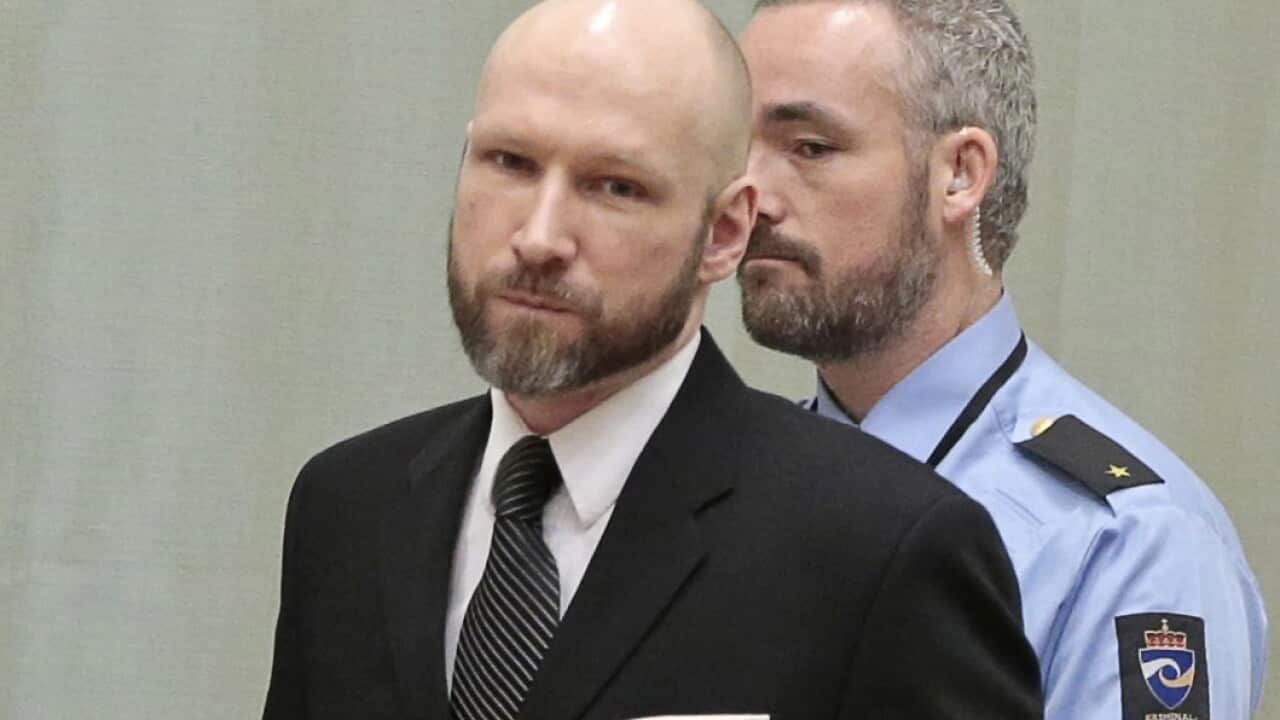
Wearing a dark suit, with a shaved head and thick beard, Breivik, 37, agreed not to repeat the salute.
The appeals court is examining Breivik's case after a lower court in Oslo ruled in April that his rights had been violated and he was subjected to "inhumane" and "degrading" treatment in prison, in breach of the European Convention on Human Rights.
The legal defeat stunned the Norwegian state, which has prided itself on respecting the rule of law after the bloodiest attack on its soil since the end of World War II.
News that makes sense
Your trusted source for staying up-to-date with the world around you. Get free daily news updates and analysis, straight to your inbox.
In prison, Breivik has a three-cell complex where he can play video games and watch television on two sets. He also has a computer without internet access, gym machines, books and newspapers.
In July 2011, Breivik gunned down 69 people, most of them teenagers, at a Labour Party youth camp on the island of Utoya, shortly after he killed eight people in a bombing outside a government building in Oslo.
The right-wing extremist said he killed his victims because they valued multiculturalism.
Victims' families have largely remained silent ahead of the appeals case and none of their representatives were present for Tuesday's three-hour hearing.
But one survivor spoke out on Twitter to complain that media coverage of the court case gives Breivik the attention he craves.
"For many of us, the relentless struggle for a good and dignified life continues... while the media incessantly give a podium to the Breivik circus," wrote Viljar Hanssen, who survived five of Breivik's bullets.
Far from 'human rights violations'
Breivik was sentenced in 2012 to 21 years in prison, which can be extended indefinitely as long as he is considered a threat.
In the lower court's ruling, the judge had pointed to Breivik's prolonged isolation -- he has been held apart from other inmates for five-and-a-half years for security reasons -- and a lack of measures to compensate for the severe regime.
Since 2011, the killer has only been allowed contact with guards and other professionals such as lawyers and doctors behind a glass pane, with the exception of one brief visit from his mother just before she died.
The lower court ruling also questioned the many potentially "humiliating" strip searches, the systematic use of handcuffs, and frequent awakenings at night, especially in the early days of his imprisonment.
Breivik's state of mind is expected to be at the centre of the six-day hearing. His lawyer Oystein Storrvik has said the killer is "mentally vulnerable" because of his prison conditions.
But the lawyer defending the state, Fredrik Sejersted, on Tuesday vehemently contested that Breivik was being treated inhumanely, noting his frequent contacts with guards, medical staff, his lawyer and a pastor.
"In many regards, he is incarcerated in better conditions than other prisoners, to compensate for the fact that he does not have any contact with the other inmates," he said.
"We're very far from human rights violations," he added, saying the strict regime was justified by Breivik's status as a highly dangerous man and adding that the extremist deliberately used provocative behaviour to bring attention to his ideological views.
The three appeals court judges are also to rule on another point raised by Breivik himself: the lower court's ruling that the state is within its rights to closely monitor and filter his correspondence to prevent him from forming a network capable of carrying out new attacks.
Breivik claims this violates his right to privacy, as guaranteed by Article 8 of the European Convention.
He is scheduled to address the court on Thursday, and the verdict is due in February.







