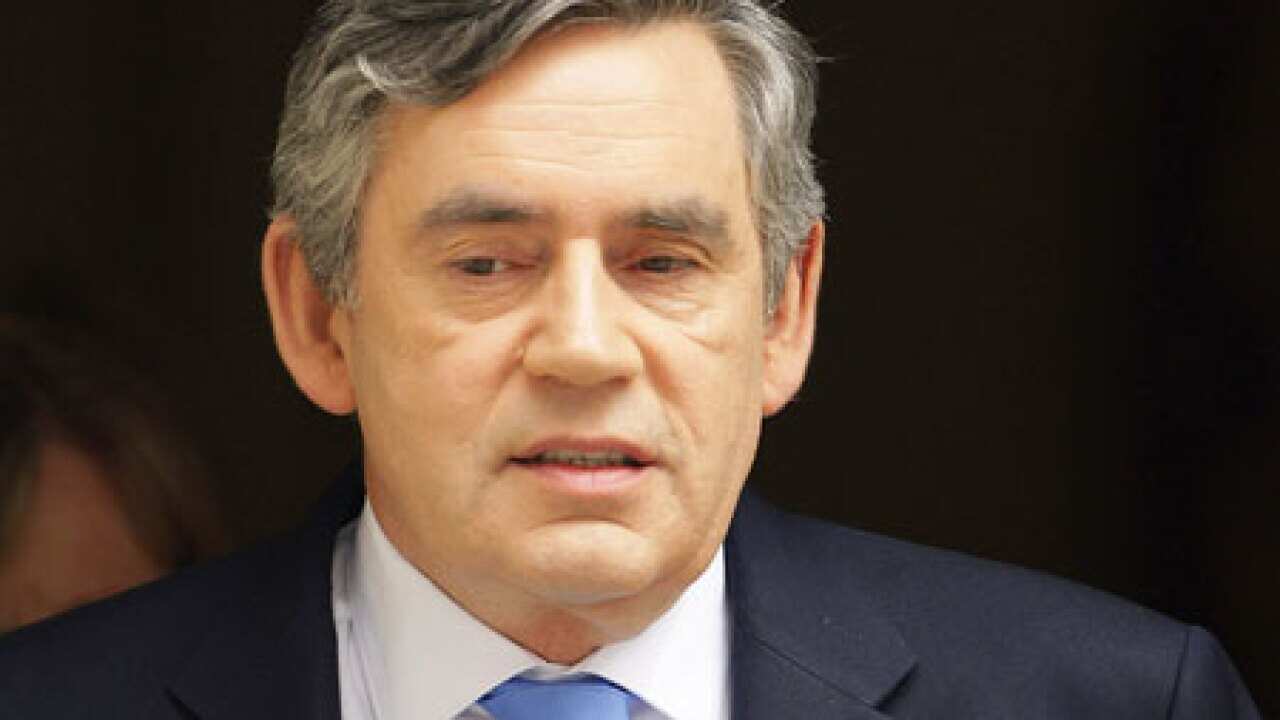
British Prime Minister Gordon Brown will pay a visit to the Queen today, in a bid to dissolve parliament and kick-start a month long election campaign culminating in a vote in May.
Earlier, the PM defended his handling of the economic recovery, as he prepared to fire the starting gun for the upcoming election.
Campaigning has effectively been in full swing for weeks, but the looming official announcement will sharpen the fight in a contest where the Conservatives, led by David Cameron, are seeking to oust the Labour party from power after 13 years in opposition.
News that makes sense
Your trusted source for staying up-to-date with the world around you. Get free daily news updates and analysis, straight to your inbox.
Recession on the agenda
Britain has edged out of its longest recession on record and the economy is set to dominate the campaign.
Brown defended his recovery plans in layman's terms Monday, comparing the economy to England football star Wayne Rooney's injured ankle as Labour accused the Conservatives of risking a "double dip" back into the red.
"Securing the recovery is the biggest issue facing our country," Brown said in his weekly podcast.
"After an injury you need support to recover, you need support to get back to match fitness.
"If we try and jump off the treatment table as if nothing had happened, we'll do more damage to the economy."
The winning party in the election will get the dubious prize of having to tackle a crippling budget deficit of at least 167 billion pounds (254 billion dollars, 188 billion euros).
Liberal Democrats play the safe card
With cuts to public services inevitable, the Conservatives, Labour and the third-largest party, the Liberal Democrats, are battling to portray themselves as the safest pair of hands with the public finances.
The Conservatives said the election was a straight choice between five more years of Brown or change under Cameron.
Their finance spokesman George Osborne hit out at a planned tax rise by Labour -- which his party has labelled a levy on jobs and pledged to largely reverse -- saying it would "stamp out the green shoots and kill the recovery.
Conservatives plan to cut wasteful spending
"Conservative plans to cut wasteful government spending and stop the jobs tax will get Britain working."
Liberal Democrat leader Nick Clegg launched his election battle bus on Monday saying he wanted to "get on" with the vote and that the British public felt "let down" after 13 years of Labour.
The centrist Lib Dems could play a key role if predictions of a hung parliament come true.
The centre-right Conservatives need a huge swing in their favour to claim a majority of seats under Britain's first-past-the-post electoral system.
They had established a commanding lead over Brown's centre-left Labour in opinion polls only to see that advantage melt away in recent weeks, raising the prospect of Westminster's first hung parliament since 1974.
But three polls in the past days showed the Conservatives appeared to have re-established a big enough lead to give them a slim working majority in the House of Commons and make Cameron the prime minister.
Labour enjoys surge in support: poll
A survey for the Guardian newspaper released late Monday, however, showed Labour had enjoyed a surge of support in the past week which left it just four points behind the Conservatives.
Such a close result would leave both the major parties struggling to form an administration and possibly reliant on the Lib Dems, according to the survey by pollster ICM. The pollster interviewed 1,001 adults from Thursday to Saturday.
Brown, 59, is fighting his first general election as prime minister, having taken over from Tony Blair in June 2007, just as the global financial crisis was brewing.
Cameron, 43, took charge of the Conservatives in December 2005 and set about overhauling the party to make it more reflective of modern Britain.







