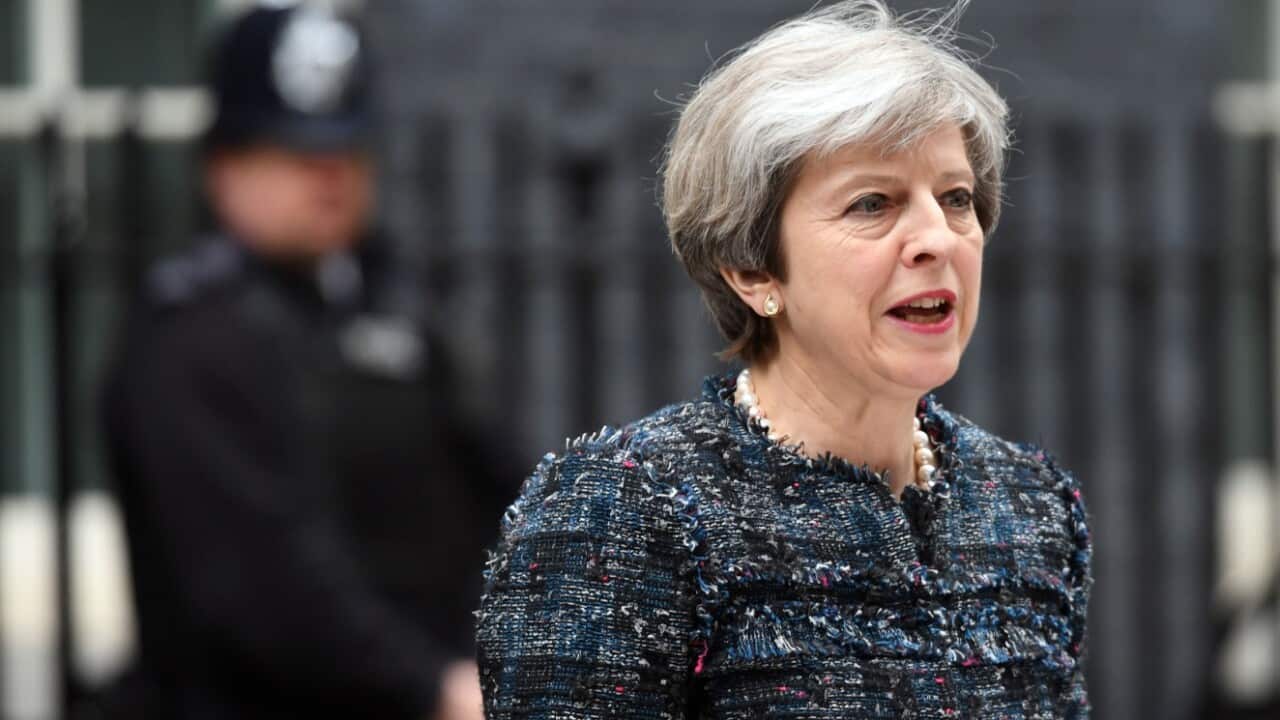
Final results showed the ruling centre-right party gaining ground across the country, with the main opposition Labour party taking a pounding and Brexit cheerleaders UKIP all but wiped out.
Despite the thumping victory, May said there was no room for complacency ahead of the June 8 general election and the negotiations that follow on Britain's withdrawal from the European Union.
"It's encouraging that we've won support across the whole of the UK but I will not take anything for granted," she said, "because there is too much at stake".
"This is not about who wins and who loses in the local elections: it is about continuing to fight for the best Brexit deal.
"Despite the evident will of the British people, we have bureaucrats in Europe who are questioning our resolve to get the right deal."
News that makes sense
Your trusted source for staying up-to-date with the world around you. Get free daily news updates and analysis, straight to your inbox.
On the eve of the vote, May lashed out at Brussels over the Brexit talks, accusing officials of hardening their position to affect the outcome of next month's election.
Eric Kaufmann, a politics professor at the University of London, said her tough stance seemed to be paying dividends with a realignment towards her party.
"The Conservatives have managed to pull in people who voted Leave (in last year's EU membership referendum) while retaining Remainers," he told AFP.
After votes were counted in all 88 local authorities being contested, the Conservatives had made a net gain of 558 seats to 1,900.
Labour lost 320 to end up with 1,151 -- prompting leader Jeremy Corbyn to acknowledge that winning next month's general election would be a "challenge on a historic scale".
Brexit party UKIP flattened
The smaller, centrist Liberal Democrats, who had been hoping to soak up anti-Brexit votes with their pro-EU stance, failed to make their hoped-for gains, losing 37 seats to end up with 441.
And it was a disastrous day for the anti-EU, anti-immigration UK Independence Party, which lost all 114 seats it was defending, and won only one new one.
UKIP's vote was "bleeding off to the Conservatives", Kaufmann said -- an analysis shared by party leader Paul Nuttall.
He said it had fallen "victim to its own success".
The result spells bad news for Nuttall's hopes to secure a seat in parliament next month.
But he said: "If the price of Britain leaving the EU is a Tory advance after taking up this patriotic cause, then it is a price UKIP is prepared to pay."
The Scottish National Party, which is seeking another referendum on seceding from the UK on the back of Brexit, won 31 seats to end up with 431.
WATCH: May will be a 'bloody difficult woman' to Juncker
The party's success in Glasgow forced Labour out of power in the city for the first time in almost 40 years.
Across Scotland, the Conservatives had the biggest gains, up 164 seats to 276 -- pointing to a revival for the party which has only one MP north of the border.
As expected, Labour won mayoral races in Manchester, Liverpool and Newcastle, but they were beaten in the West Midlands race, centred on Birmingham.
There, the Conservatives' Andy Street, formerly the director of upmarket department store chain John Lewis, claimed a narrow win.
Labour's historic challenge
Corbyn said he was "disappointed" that Labour had lost "too many" councillors, but said the party was "closing the gap on the Conservatives".
"We have five weeks to win the general election so we can fundamentally transform Britain," he said.
"We know this is no small task -- it is a challenge on an historic scale. But we, the whole Labour movement and the British people, can't afford not to seize our moment."
Labour has been languishing more than 20 points behind the Conservatives in national opinion polls, and has been damaged by deep divisions over Corbyn's left-wing leadership and its approach to Brexit.
Elsewhere on Thursday, Dave Rowntree, the drummer from pop group Blur, was elected to Norfolk County Council eastern England, representing Labour.
One seat in Northumberland, northeast England, had to be decided by drawing straws, following a tie.
WATCH: May calls for general election







