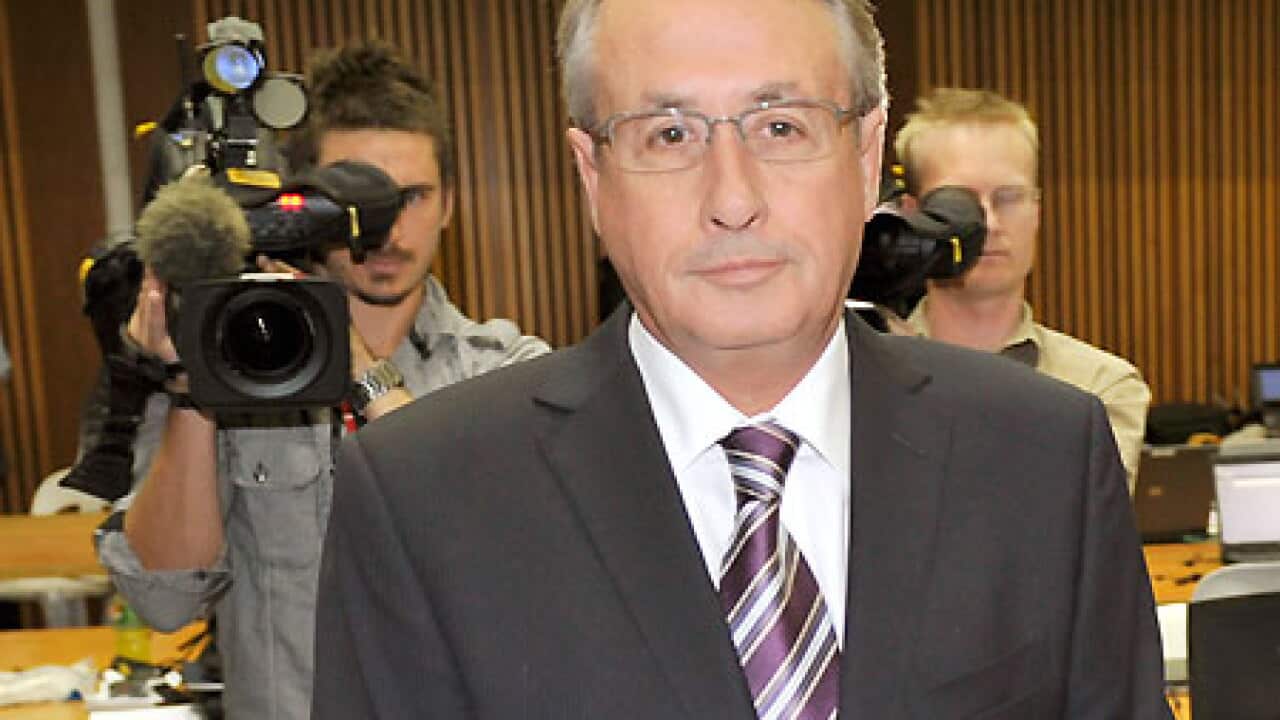
The Opposition has dismissed the Government's third budget, claiming that it is merely a 'house of cards'.
Opposition Finance Spokesman Andrew Robb dismissed the 'no frills' budget, saying it is built on assumptions and the hope that the a global emergence from financial crisis will continue.
Labour: We're a safe pair of hands
But Labour have played their hand. This budget was all about spruiking the Rudd Government's economic credentials.
Indeed, they said it themselves: people expecting a budget full of big-spending pre-election sweeteners should look elsewhere.
News that makes sense
Your trusted source for staying up-to-date with the world around you. Get free daily news updates and analysis, straight to your inbox.
Treasurer Wayne Swan handed down his third budget, but the announcement wasmissing the usual election razzle-dazzle.
The key claim of Treasurer Swan's address was that the government's spending plan will see the economy return to surplus by 2012-13, three years ahead of schedule.
"We do not easily forget this time last year, when we faced the grimmest set of global economic conditions since the Great Depression," Mr Swan told parliament in Canberra.
"This is a budget that moves from supporting the economy through the slowdown to bringing us back to surplus now that we are recovering strongly."
Labour: We're responsible
The Treasurer said a surplus will be achieved through "responsible fiscal strategy", saying the government has produced a budget that is "right for the times".
"Every dollar of new policy in this budget has been offset across the forward estimates."
The Government will cap real spending growth by an average of two per cent annually to pay off accumulated debt sooner than projected.
Mr Swan has slapped down any suggestions the government is hiding big policy announcements that may be election enticements, saying there is "no room for additional spending".
'High on policy'
He says the budget is "high on policy, not politics".
The budget address outlined three key policy areas: the return of a fully functioning pre-financial crisis economy, climate change and tackling a greying population.
Central to the growth of the economy is the government's newly-announced Resources Super Profit Tax (RSPT), which is due to come into effect on July 1.
Mr Swan says slugging mining companies will allow the fairer distribution of wealth from a shared national resource.
The RSPT will help fund a new infrastructure fund, as well as investments worth $1 billion on rail renewal projects.
Profits from RSPT will fund changes to the superannuation system, which will be increased to a guaranteed 12 per cent, assisting 8.4 million Australians.
The Treasurer has denied claims the RSPT has contributed to the early return to surplus, saying revenue from this new tax is to be used to expand capacity rather than clawing back debt.
Tax reform is also high on the agenda. The government plans to move towards a 'tick and flick' system of pre-filled tax returns through the introduction of standard tax deductions.
The standard deduction will start off as $500 available to taxpayers in 2012, increasing to $1,000 in July 2013.
Mr Swan says this new system will offer the "choice of a standard deduction instead of the hassle of shoeboxes full of receipts and the cost of professional assistance".
The second key policy area of climate change is reflected in the budget through the creation of a $652 million Renewable Energy Future Fund.
This fund is part of the wider Clean Energy Initiative, and will include incentives for businesses and individuals to reduce their energy consumption.
Health funding has been given a major boost in this budget, with the government keen to push its health and hospital reforms.
An additional $2.2 billion will be spent on health, increasing the government's spending on the area to $7.3 billion over five years.
The main focus of the additional health spending is on primary care, with funding increases for GP Super Clinics and primary care clinics.
A further $523 million will be spent on training nurses, particular for aged care and responding to the needs of Australia's rural and regional communities.







