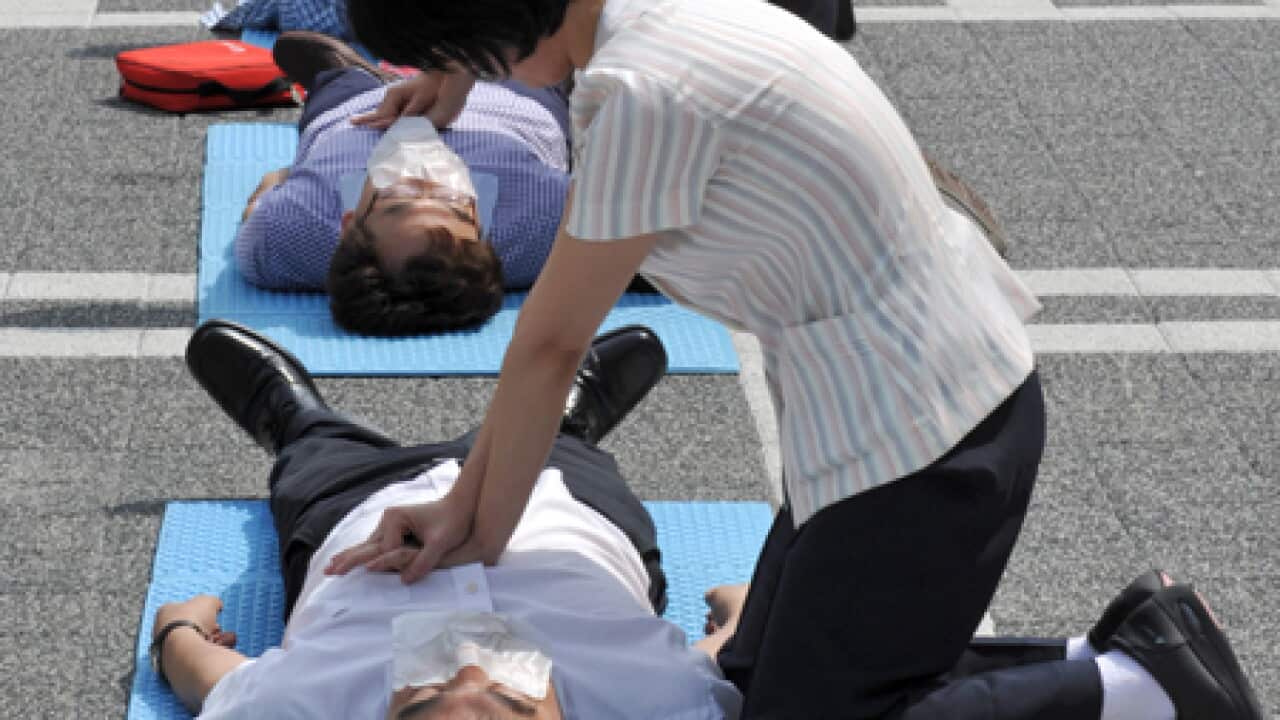
Cardio-pulmonary resuscitation done even by a passerby on someone who has had a heart attack outside a hospital setting seems to improve patient outcomes, new US research has found.
Heart attacks in non-hospital settings -- whether at home or in a public place -- are a huge medical problem affecting about 300,000 people a year in the United States, the study in the Journal of the American Medical Association noted.
The research compared outcomes in Arizona for out-of-hospital cardiopulmonary resuscitation for cardiac arrest performed by bystanders, not medical staff.
News that makes sense
Your trusted source for staying up-to-date with the world around you. Get free daily news updates and analysis, straight to your inbox.
Patients who were given compression-only CPR were found to be more likely to survive to hospital discharge than patients who had conventional CPR (with mouth-to-mouth) or no CPR, according to the study in JAMA's October 6 issue.
The southwestern US state of Arizona in 2005 launched a program aimed at improving survival rates for heart attacks outside medically equipped settings.
"These efforts included changes in the approach to the care provided by both bystanders and emergency medical services personnel and were based on the increasing evidence in favor of minimizing interruptions in chest compressions during CPR," wrote the authors, including Bentley Bobrow of the Arizona Department of Health Services.
The study encompassed 4,415 patients over the age of 18 who had out-of-hospital heart attacks in Arizona in the period from January 2005 to December 2009.
That included 2,900 who received no bystander CPR, 666 who received conventional CPR (15.1 percent), and 849 who received COCPR (19.2 percent).
Researchers found survival rates to hospital discharge were 5.2 percent for the no CPR group, 7.8 percent for conventional CPR, and 13.3 percent for COCPR.







